
What You’ll Learn in This Guide
- Key financial performance indicators every business should track
- Essential financial statements for performance monitoring
- How to calculate and interpret critical financial ratios
- Practical tools and templates for financial tracking
- Step-by-step implementation strategies
- Best practices for financial business planning
- Methods to improve cash flow and profitability
Why Tracking Financial Business Performance Matters
Effective financial tracking provides a clear picture of your business’s health and performance. Without proper monitoring, you’re essentially navigating your business blindfolded, making decisions based on intuition rather than data.
Benefits of Regular Financial Performance Tracking
- Early identification of financial issues before they become critical
- Better cash flow management and forecasting
- Improved budgeting and resource allocation
- Data-driven decision making for growth strategies
- Enhanced ability to secure financing or investment
- Clear performance benchmarks for goal setting
- Increased operational efficiency and cost control
- Better stakeholder and investor communication
Essential Financial Statements for Performance Tracking
Financial statements provide the foundation for tracking your business performance. These documents offer a structured view of your financial activities and position.
Balance Sheet: Your Financial Position Snapshot
The balance sheet provides a point-in-time snapshot of your business’s assets, liabilities, and equity. It follows the fundamental accounting equation: Assets = Liabilities + Equity.
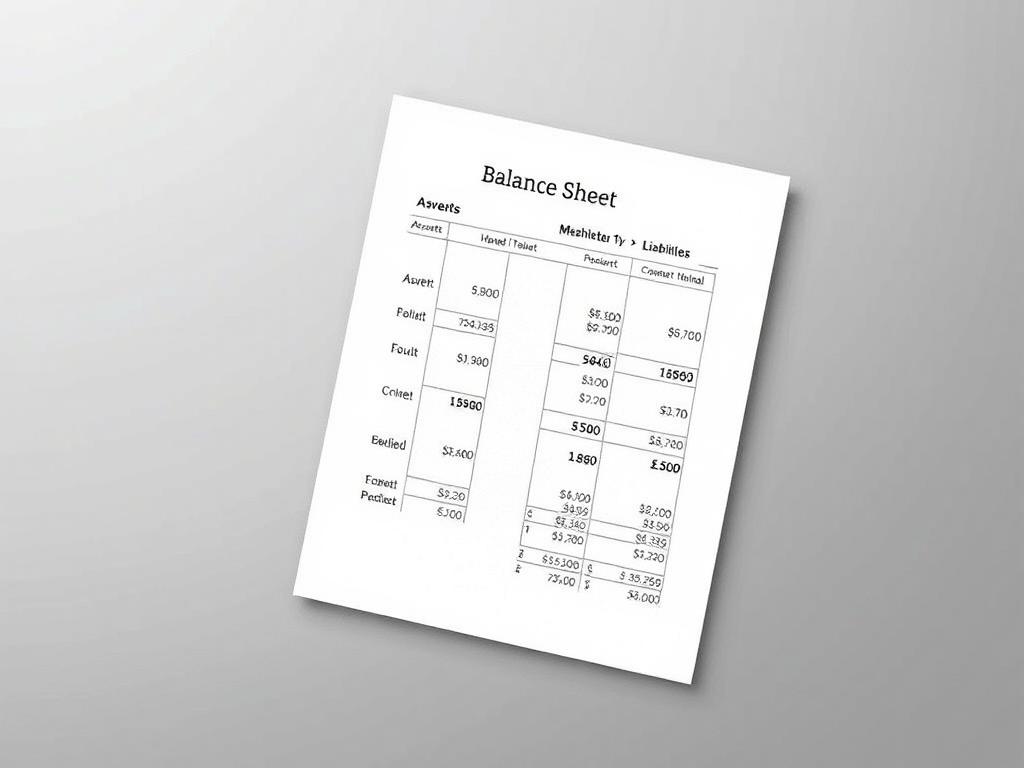
Key Balance Sheet Components:
- Assets: What your business owns (cash, inventory, equipment, property)
- Liabilities: What your business owes (loans, accounts payable, mortgages)
- Equity: The residual interest in the assets after deducting liabilities
Income Statement: Your Profitability Measure
Also known as the profit and loss statement, the income statement shows your business’s revenues, expenses, and profits over a specific period. It answers the crucial question: “Is my business profitable?”
| Income Statement Component | Description | Calculation |
| Revenue | Total income from sales before any deductions | Price × Quantity Sold |
| Cost of Goods Sold (COGS) | Direct costs associated with producing goods/services | Beginning Inventory + Purchases – Ending Inventory |
| Gross Profit | Revenue after deducting direct costs | Revenue – COGS |
| Operating Expenses | Day-to-day expenses for running the business | Sum of all operating costs (rent, salaries, etc.) |
| Net Profit | Final profit after all expenses | Gross Profit – Operating Expenses – Taxes – Interest |
Cash Flow Statement: Your Liquidity Monitor
The cash flow statement tracks the actual cash moving in and out of your business. Many profitable businesses fail due to poor cash flow management, making this statement crucial for sustainability.
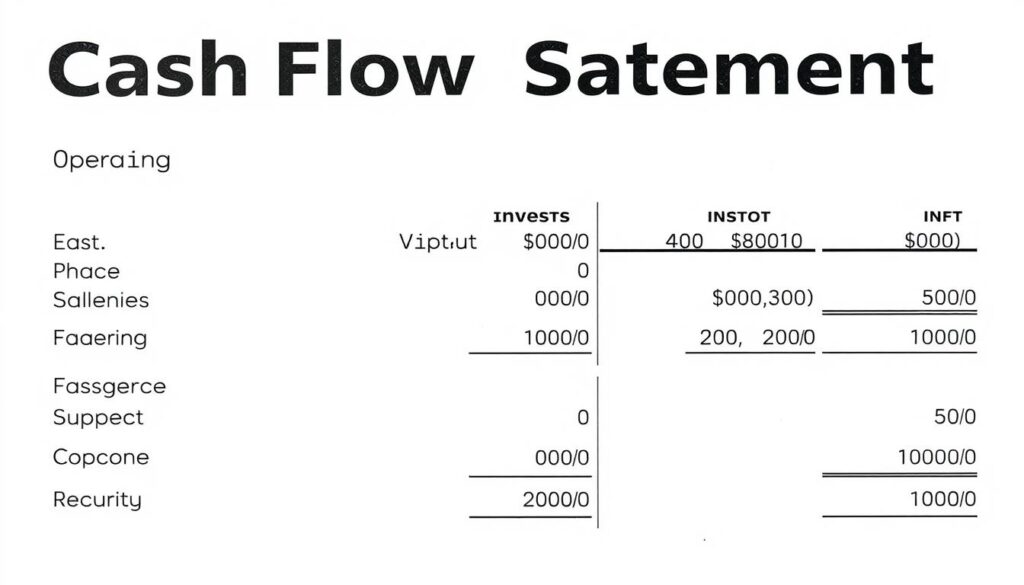
“Cash is the oxygen of business. Without proper cash flow management, even profitable companies can suffocate.”
13 Key Financial Performance Indicators to Track
Financial KPIs provide measurable values that indicate how effectively your business is achieving key objectives. Here are the most important metrics to monitor:
Profitability Ratios
These ratios measure your business’s ability to generate profit relative to revenue, assets, or equity.
1. Gross Profit Margin
Measures the percentage of revenue remaining after deducting the cost of goods sold.
Formula: (Revenue – COGS) / Revenue × 100%
Example: If revenue is $100,000 and COGS is $60,000, the gross profit margin is 40%.
2. Net Profit Margin
Shows the percentage of revenue that translates into actual profit after all expenses.
Formula: Net Profit / Revenue × 100%
Example: If net profit is $20,000 on $100,000 revenue, the net profit margin is 20%.
3. Return on Equity (ROE)
Measures how efficiently your business generates profit from shareholders’ equity.
Formula: Net Profit / Average Shareholders’ Equity × 100%
Example: If net profit is $50,000 and average equity is $250,000, ROE is 20%.
Liquidity Ratios
These ratios assess your business’s ability to meet short-term obligations and convert assets to cash quickly.

4. Current Ratio
Measures your ability to pay short-term obligations with current assets.
Formula: Current Assets / Current Liabilities
Target: Generally, a ratio of 1.5-2.0 is considered healthy.
5. Quick Ratio
Similar to the current ratio but excludes inventory, which may be difficult to liquidate quickly.
Formula: (Current Assets – Inventory) / Current Liabilities
Target: A ratio of 1.0 or higher indicates good short-term liquidity.
6. Working Capital
The capital available for day-to-day operations after paying short-term obligations.
Formula: Current Assets – Current Liabilities
Target: Positive working capital that covers operational needs.
Efficiency Ratios
These ratios measure how efficiently your business uses its assets and manages its liabilities.
7. Inventory Turnover
Measures how quickly inventory is sold and replaced during a period.
Formula: Cost of Goods Sold / Average Inventory
Interpretation: Higher ratios indicate efficient inventory management.
8. Accounts Receivable Turnover
Shows how efficiently you collect payments from customers.
Formula: Net Credit Sales / Average Accounts Receivable
Interpretation: Higher ratios indicate effective collection policies.
9. Total Asset Turnover
Measures how efficiently your business uses its assets to generate revenue.
Formula: Revenue / Average Total Assets
Interpretation: Higher ratios indicate more efficient asset utilization.
Leverage Ratios
These ratios assess your business’s debt levels and ability to meet long-term financial obligations.
10. Debt-to-Equity Ratio
Measures the proportion of debt used to finance your business relative to equity.
Formula: Total Debt / Total Equity
Target: Varies by industry, but generally below 2.0 is preferred.
11. Debt Service Coverage Ratio
Measures your ability to service debt with available cash flow.
Formula: EBITDA / (Principal + Interest Payments)
Target: A ratio above 1.25 indicates good debt servicing capacity.
12. Interest Coverage Ratio
Shows how easily your business can pay interest on outstanding debt.
Formula: EBIT / Interest Expense
Target: Higher ratios indicate stronger ability to meet interest obligations.
Cash Flow Metrics
13. Operating Cash Flow Ratio
Measures how well current liabilities are covered by the cash flow generated from operations.
Formula: Operating Cash Flow / Current Liabilities
Target: A ratio above 1.0 indicates sufficient cash generation to cover short-term obligations.
Free Financial KPI Tracking Template
Download our Excel template to easily track all 13 key financial performance indicators for your business. Simply input your financial data and get instant insights.
Financial Analysis Example: How to Track Financial Business Performance
Let’s examine a practical example of how to analyze financial performance for a small manufacturing business.

Company Profile: XYZ Manufacturing
XYZ Manufacturing is a small business that produces specialized equipment parts with annual revenue of $2.5 million. The owner wants to assess the company’s financial health and identify areas for improvement.
Step 1: Gather Financial Data
| Financial Metric | Current Year | Previous Year | Industry Average |
| Revenue | $2,500,000 | $2,200,000 | N/A |
| Cost of Goods Sold | $1,500,000 | $1,375,000 | N/A |
| Operating Expenses | $650,000 | $550,000 | N/A |
| Net Profit | $350,000 | $275,000 | N/A |
| Total Assets | $1,800,000 | $1,650,000 | N/A |
| Current Assets | $950,000 | $825,000 | N/A |
| Inventory | $450,000 | $400,000 | N/A |
| Current Liabilities | $550,000 | $500,000 | N/A |
| Total Debt | $750,000 | $800,000 | N/A |
| Equity | $1,050,000 | $850,000 | N/A |
Step 2: Calculate Key Ratios
| Financial Ratio | Calculation | Current Year | Previous Year | Industry Average | Analysis |
| Gross Profit Margin | (Revenue – COGS) / Revenue | 40% | 37.5% | 38% | Improved and above industry average |
| Net Profit Margin | Net Profit / Revenue | 14% | 12.5% | 10% | Strong improvement and above industry average |
| Current Ratio | Current Assets / Current Liabilities | 1.73 | 1.65 | 1.8 | Improving but slightly below industry average |
| Quick Ratio | (Current Assets – Inventory) / Current Liabilities | 0.91 | 0.85 | 1.0 | Improving but below target of 1.0 |
| Debt-to-Equity | Total Debt / Equity | 0.71 | 0.94 | 0.8 | Significant improvement and now better than industry average |
Step 3: Analyze Results and Identify Trends
Strengths
- Improving profit margins (both gross and net)
- Decreasing debt-to-equity ratio
- Revenue growth of 13.6% year-over-year
- Net profit growth of 27.3% year-over-year
Areas for Improvement
- Quick ratio below 1.0 (potential liquidity concern)
- High inventory levels relative to current assets
- Operating expenses growing faster than revenue
- Current ratio below industry average
Step 4: Develop Action Plan
- Improve inventory management: Implement just-in-time inventory practices to reduce inventory levels and improve the quick ratio.
- Control operating expenses: Review and optimize spending to slow the growth rate of operating expenses.
- Enhance cash management: Implement strategies to improve the current ratio, such as negotiating better payment terms with suppliers.
- Continue debt reduction: Maintain the positive trend in debt-to-equity ratio by allocating a portion of profits to debt reduction.
- Leverage strengths: Invest in areas contributing to improved profit margins to further enhance profitability.
Best Tools for Financial Business Planning and Performance Tracking
Leveraging the right tools can significantly streamline your financial tracking processes and provide deeper insights into your business performance.
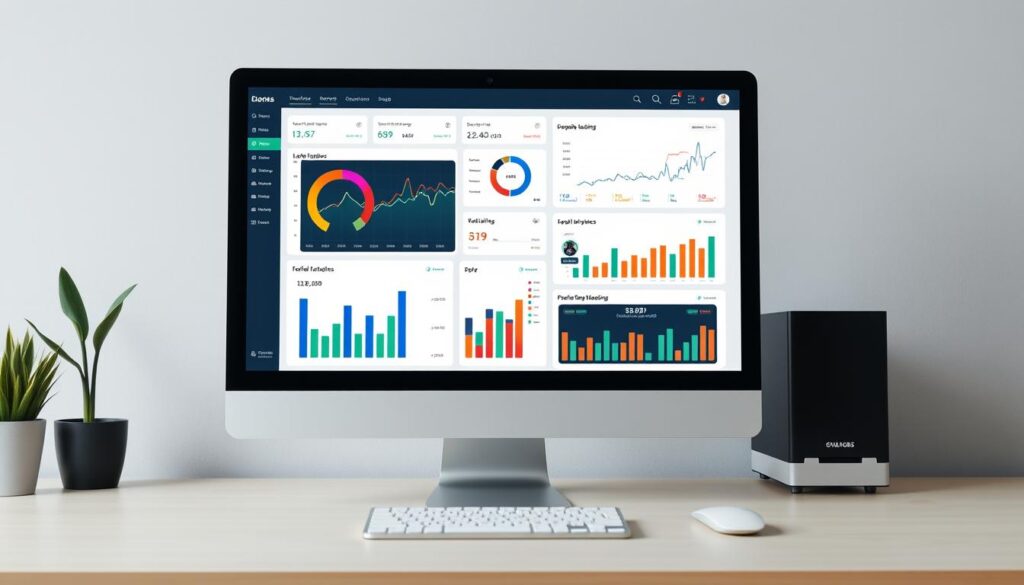
Accounting Software
| Tool | Best For | Key Features | Price Range |
| QuickBooks | Small to medium businesses | Invoicing, expense tracking, financial reporting, tax preparation | $15-$150/month |
| Xero | Growing businesses with multiple users | Bank reconciliation, inventory management, project tracking | $12-$65/month |
| FreshBooks | Service-based businesses and freelancers | Time tracking, project management, client portal | $15-$50/month |
| Sage | Manufacturing and inventory-heavy businesses | Advanced inventory, manufacturing features, HR management | $10-$200+/month |
Financial Dashboard and Reporting Tools

| Tool | Best For | Key Features | Price Range |
| Tableau | Data visualization and advanced analytics | Interactive dashboards, data blending, real-time analytics | $70-$840/user/year |
| Power BI | Microsoft ecosystem integration | Excel integration, AI-powered insights, custom visualizations | Free-$20/user/month |
| Zoho Analytics | Small businesses seeking affordable solutions | Drag-and-drop interface, automated reports, collaboration | $24-$455/month |
| Databox | KPI tracking and goal monitoring | Pre-built templates, goal tracking, mobile dashboards | Free-$248/month |
Financial Planning and Forecasting Tools
| Tool | Best For | Key Features | Price Range |
| Planful | Mid-sized to enterprise businesses | Financial planning, budgeting, forecasting, scenario analysis | Custom pricing |
| Anaplan | Large enterprises with complex planning needs | Connected planning, real-time modeling, collaborative workflows | Custom pricing |
| Prophix | Mid-market companies | Budgeting, forecasting, reporting, financial consolidation | Custom pricing |
| Float | Cash flow forecasting and management | Visual cash flow forecasting, scenario planning, budget tracking | $59-$499/month |
Free Financial Tool Comparison Guide
Not sure which financial tools are right for your business? Download our comprehensive comparison guide to find the perfect match for your needs.
Templates You Can Use for Financial Business Performance Tracking
Excel-based templates provide a cost-effective way to track financial performance without investing in expensive software. Here are some essential templates you can start using today:
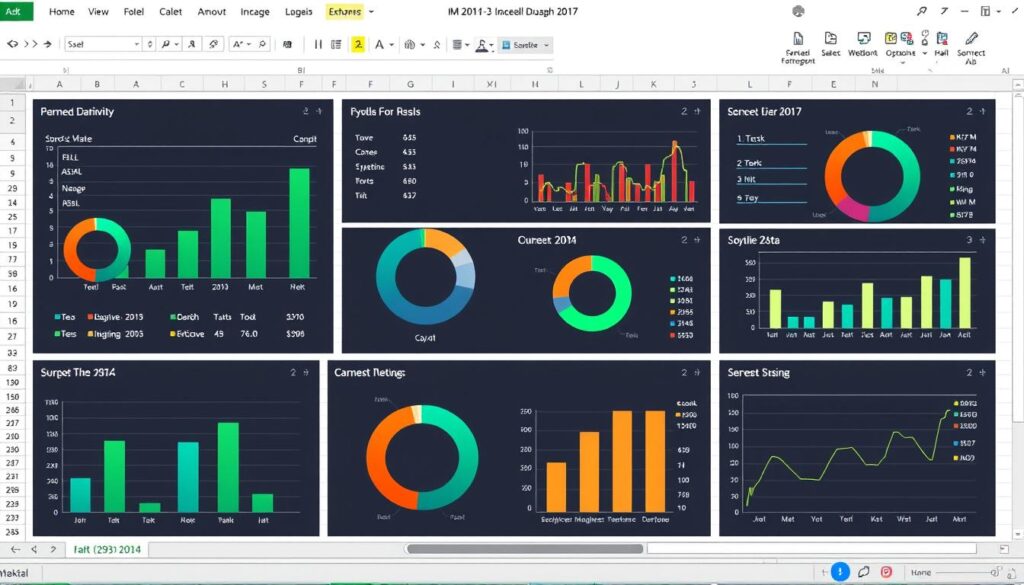
Financial Dashboard Template
A comprehensive dashboard that displays key financial metrics in one view, including profit margins, cash flow, and revenue trends.
Cash Flow Forecast Template
Project your cash position for the next 12 months with this template that tracks expected inflows and outflows.
Financial Ratio Calculator
Automatically calculate all important financial ratios by simply inputting your balance sheet and income statement data.
Budget vs. Actual Template
Track your performance against budget with variance analysis to quickly identify areas needing attention.
Break-Even Analysis Template
Calculate your break-even point and understand how changes in pricing, costs, and volume affect profitability.
Inventory Management Template
Track inventory levels, turnover, and carrying costs to optimize your inventory investment.
Step-by-Step Strategy to Track Financial Business Performance
Implementing a comprehensive financial tracking system requires a structured approach. Follow these steps to establish an effective monitoring process:

-
Define Your Key Performance Indicators (KPIs)
Identify the specific metrics that are most relevant to your business type, industry, and growth stage. Focus on a manageable set of KPIs (8-12) that provide the most insight.
-
Establish Your Baseline
Gather historical financial data to establish your starting point. This provides context for future performance and helps set realistic targets.
-
Set Up Your Tracking System
Choose the right tools for your business size and complexity. This could range from Excel templates to specialized accounting and financial management software.
-
Implement Regular Data Collection Processes
Establish procedures for consistent, accurate data collection. Assign responsibilities and set deadlines to ensure timely information gathering.
-
Create Financial Dashboards
Develop visual dashboards that present your KPIs in an easily digestible format. Include trend lines and comparisons to targets or industry benchmarks.
-
Schedule Regular Review Meetings
Set up monthly or quarterly financial review meetings with key stakeholders to analyze performance, identify trends, and make data-driven decisions.
-
Benchmark Against Industry Standards
Compare your performance metrics with industry averages to identify areas where you’re outperforming or underperforming relative to competitors.
-
Develop Action Plans for Improvement
Based on your analysis, create specific, measurable action plans to address underperforming areas and capitalize on strengths.
-
Refine Your Tracking System
Continuously improve your financial tracking processes based on what you learn. Add or remove KPIs as your business evolves and priorities change.
-
Integrate Financial Performance with Strategic Planning
Use financial insights to inform your strategic planning process, ensuring that financial realities guide your business decisions.
“What gets measured gets managed. What gets managed gets improved.”
Financial Business Forecasting Techniques
Forecasting is a critical component of financial performance tracking, allowing you to anticipate future trends and make proactive decisions.

Common Forecasting Methods
Historical Trend Analysis
Uses past performance data to project future results, assuming similar patterns will continue. Best for stable businesses with consistent growth patterns.
Multiple Scenario Planning
Creates best-case, worst-case, and most-likely scenarios to prepare for various potential outcomes. Ideal for businesses in volatile markets.
Rolling Forecasts
Continuously updates forecasts as new data becomes available, maintaining a consistent forward-looking time horizon. Perfect for rapidly changing environments.
Key Elements of Effective Financial Forecasting
- Revenue projections: Forecast sales by product line, customer segment, or geographic region.
- Cost projections: Estimate fixed and variable costs, accounting for inflation and growth.
- Cash flow projections: Predict timing of cash inflows and outflows to ensure liquidity.
- Capital expenditure planning: Anticipate major equipment purchases or facility investments.
- Sensitivity analysis: Test how changes in key variables affect overall financial performance.
Pro Tip: When forecasting, it’s better to be conservative with revenue projections and generous with expense estimates. This approach helps prevent cash flow surprises and builds in a safety margin for unexpected challenges.
Financial Business Cash Flow Improvement Tips
Cash flow is the lifeblood of any business. Even profitable companies can fail due to poor cash flow management. Here are strategies to optimize your cash position:
Accelerate Cash Inflows
- Offer early payment discounts: Incentivize customers to pay sooner with small discounts (e.g., 2/10 net 30).
- Require deposits for large orders: Collect partial payment upfront for significant projects or custom orders.
- Streamline invoicing process: Send invoices immediately after delivery and make it easy for customers to pay electronically.
- Implement stricter credit policies: Conduct credit checks on new customers and set appropriate credit limits.
- Follow up on overdue accounts: Establish a systematic process for following up on late payments.
Optimize Cash Outflows
- Negotiate extended payment terms: Work with suppliers to extend payment terms without incurring penalties.
- Time major purchases strategically: Schedule large expenditures during periods of strong cash flow.
- Review recurring expenses: Regularly audit subscriptions, services, and other recurring costs for potential savings.
- Consider leasing vs. buying: Preserve capital by leasing equipment instead of purchasing outright.
- Manage inventory levels: Implement just-in-time inventory practices to reduce cash tied up in stock.
Cash Flow Forecasting Best Practices
- Create a 13-week rolling cash flow forecast: This timeframe provides sufficient detail for short-term planning while looking far enough ahead to anticipate issues.
- Update weekly: Refresh your forecast at least weekly to maintain accuracy as conditions change.
- Track forecast accuracy: Compare actual results to forecasts to improve future projections.
- Include buffer for unexpected expenses: Build in a contingency for surprises to avoid cash crunches.
- Consider seasonality: Account for seasonal fluctuations in revenue and expenses.
Free Cash Flow Optimization Guide
Download our comprehensive guide with 25 proven strategies to improve your business cash flow and avoid liquidity challenges.
Frequently Asked Questions About Financial Business Performance Tracking
How often should I review my business’s financial performance?
The optimal frequency depends on your business type and growth stage. As a general rule:
- Daily: Cash position and sales figures
- Weekly: Accounts receivable, accounts payable, and cash flow
- Monthly: Profit and loss statement, balance sheet, and key ratios
- Quarterly: Comprehensive financial review and comparison to targets
- Annually: Full financial analysis and strategic planning
Fast-growing or financially stressed businesses may need more frequent reviews.
What are the most important financial metrics for a startup to track?
Startups should focus on metrics that help monitor runway and path to profitability:
- Burn rate: How quickly you’re spending capital
- Runway: How long your capital will last at current burn rate
- Customer acquisition cost (CAC): Cost to acquire a new customer
- Lifetime value (LTV): Expected revenue from a customer over time
- LTV:CAC ratio: Measures the return on customer acquisition investment
- Monthly recurring revenue (MRR): Predictable revenue generated monthly
- Cash conversion cycle: Time to convert investments into cash receipts
How do I track financial performance if I’m not a financial expert?
You don’t need to be a financial expert to track basic performance metrics:
- Start with user-friendly accounting software like QuickBooks or Xero
- Use pre-built templates and dashboards designed for non-financial users
- Focus on understanding a few key metrics first (revenue, expenses, profit, cash flow)
- Consider hiring a part-time bookkeeper or accountant for regular support
- Invest in basic financial literacy training or courses
- Join business groups where you can learn from peers
Remember, the goal is to have enough information to make good decisions, not to become an accountant.
What’s the difference between cash flow and profit?
Profit is the difference between revenue and expenses over a period, regardless of when cash changes hands. It’s an accounting concept that shows business performance.
Cash flow tracks the actual movement of money in and out of your business. It reflects timing of payments and receipts.
A business can be profitable on paper but have negative cash flow if, for example, customers haven’t paid their invoices yet. Conversely, a business can have positive cash flow temporarily (perhaps from a loan) while being unprofitable.
Both metrics are essential: profit indicates long-term viability, while cash flow determines day-to-day solvency.
How do I benchmark my financial performance against competitors?
Benchmarking against competitors can provide valuable context for your financial performance:
- Industry reports: Purchase reports from firms like IBISWorld, Dun & Bradstreet, or industry associations
- Public company data: Review annual reports of publicly traded competitors
- Business databases: Access resources like RMA Annual Statement Studies through your local library
- Networking: Join industry groups where members share non-sensitive financial benchmarks
- Accountants and consultants: Many have anonymized industry data they can share
Focus on comparing ratios rather than absolute numbers, as these account for differences in company size.
What financial KPIs should I include in my business dashboard?
An effective financial dashboard should include:
- Revenue metrics: Total revenue, revenue growth rate, revenue by product/service
- Profitability metrics: Gross margin, operating margin, net profit margin
- Cash metrics: Cash balance, operating cash flow, cash runway
- Efficiency metrics: Inventory turnover, accounts receivable days, accounts payable days
- Debt metrics: Debt-to-equity ratio, interest coverage ratio
- Growth metrics: Year-over-year growth rates for key indicators
Customize your dashboard based on your industry and specific business challenges. Limit it to 8-12 key metrics to avoid information overload.
How can I improve my financial business efficiency?
Improving financial efficiency involves optimizing how resources are used:
- Automate financial processes: Use software to handle routine tasks like invoicing and expense tracking
- Implement paperless systems: Reduce costs and improve accessibility with digital document management
- Conduct regular expense reviews: Systematically evaluate all expenses to identify savings opportunities
- Optimize inventory levels: Maintain just enough inventory to meet demand without excess
- Improve accounts receivable processes: Reduce days sales outstanding with better collection procedures
- Negotiate with suppliers: Seek volume discounts or better payment terms
- Outsource non-core functions: Consider outsourcing accounting, payroll, or other financial tasks
What are the warning signs of financial trouble I should watch for?
Be alert to these early warning signs of potential financial problems:
- Declining gross margins: May indicate pricing pressure or rising costs
- Consistently late payments to vendors: Suggests cash flow problems
- Increasing days sales outstanding: Shows collection difficulties
- Growing debt levels: Could indicate unsustainable operations
- Inventory buildup: May signal declining sales or poor inventory management
- Negative cash flow from operations: Core business isn’t generating cash
- Declining sales trends: Particularly concerning if industry-wide sales are growing
- Frequent bank overdrafts or maxed credit lines: Indicates severe cash constraints
Address these warning signs promptly to prevent more serious financial difficulties.
How do I create a financial business model for my company?
Building a financial business model involves these steps:
- Define your revenue streams: Identify all sources of income and how they’re calculated
- Map your cost structure: Categorize fixed and variable costs
- Create assumptions: Document key assumptions about growth rates, margins, etc.
- Build historical data: Include at least 2 years of historical data if available
- Develop projections: Create monthly projections for 1-2 years and annual projections for 3-5 years
- Include financial statements: Project income statement, balance sheet, and cash flow statement
- Add sensitivity analysis: Test how changes in key variables affect outcomes
- Create dashboard: Summarize key metrics and visualize important trends
Start simple and add complexity as needed. The model should be a tool that helps you make better decisions, not just a complex spreadsheet.
How can I manage financial business risks effectively?
Effective financial risk management includes:
- Diversify revenue streams: Reduce dependence on any single customer, product, or market
- Maintain adequate cash reserves: Aim for 3-6 months of operating expenses
- Implement strong internal controls: Prevent fraud and financial errors
- Use insurance strategically: Cover key risks like liability, property, and business interruption
- Manage debt carefully: Maintain reasonable debt levels and diversify funding sources
- Hedge against market risks: Consider strategies to mitigate currency, interest rate, or commodity price risks
- Develop contingency plans: Prepare for potential financial challenges
- Conduct regular risk assessments: Systematically identify and evaluate financial risks
Remember that risk management isn’t about eliminating all risks but understanding and managing them appropriately.
Conclusion: Taking Control of Your Financial Business Performance
Tracking financial business performance is not just about monitoring numbers—it’s about gaining actionable insights that drive better decision-making and business growth. By implementing the strategies, tools, and templates outlined in this guide, you’ll be well-equipped to understand your financial position, identify improvement opportunities, and navigate your business toward greater success.
Remember that financial tracking is an ongoing process that evolves with your business. Start with the fundamentals, establish consistent monitoring practices, and gradually add more sophisticated analyses as your needs and capabilities grow. The investment of time and resources in financial performance tracking will pay dividends through improved profitability, stronger cash flow, and sustainable growth.
Ready to Transform Your Financial Performance Tracking?
Download our complete financial performance tracking toolkit, including all templates, guides, and checklists mentioned in this article.
I’ve been using MelbetAppIndia for a while now. It’s a solid betting app, especially for sports. Lots of options, decent odds. Check them out: melbetappindia
For those who are curious about discovering your true season for private color analysis, apps like Color Analysis Pro can be a perfect starting point. They usually provide comprehensive insights such as the Deep Summer color palette, which suits cool blue undertones and offers guidance on clothing colors for yellow skin tone or olive skin. For a free alternative, there are many AI color analysis tools and quizzes online that can assist you figure out what season you are, including soft autumn, light summer, or deep winter.
If you’re already using Color Analysis Pro but want to know how to cancel or manage your subscription, it’s quite straightforward—details can normally be found on their primary site [url=https://color-analysis-quiz.org]light spring color[/url] . Whether you’re examining new hair color movements for 2026 or just want to study seasonal color palettes, grasping your skin tone and undertones is crucial. Don’t forget to sample free color analysis quizzes or virtual hair color try-on tools to play around before making major changes!