
From liquidity and profitability to efficiency and leverage, we’ll explore how these mathematical relationships reveal the story behind your business numbers. You’ll discover not just how to compute these ratios, but more importantly, how to use them to identify strengths, uncover weaknesses, and make strategic improvements that drive business success. Let’s dive into the world of financial ratio analysis and unlock the insights hidden in your financial statements.
Table of Contents
- Introduction to Financial Business Ratios
- Liquidity Ratios: Measuring Short-Term Financial Health
- Profitability Ratios: Evaluating Earning Power
- Efficiency Ratios: Assessing Operational Performance
- Leverage Ratios: Understanding Debt Position
- Market Value Ratios: Investor Perspective
- Financial Ratio Analysis Example: Comprehensive Case Study
- Excel Templates for Financial Ratio Analysis
- Step-by-Step Strategy for Implementing Ratio Analysis
- Frequently Asked Questions
Introduction to Financial Business Ratios
Financial business ratios are calculations that compare two or more figures from a company’s financial statements to measure specific aspects of business performance. These ratios transform raw financial data into meaningful metrics that help business owners, investors, and analysts evaluate a company’s financial health and operational efficiency.
Why Financial Ratios Matter for Your Business
Financial ratios provide a standardized way to analyze business performance regardless of company size. A small startup with $500,000 in revenue can be meaningfully compared to an industry leader with $50 million in revenue when using ratio analysis. This standardization makes financial ratios invaluable for:
- Tracking performance trends over time
- Benchmarking against industry standards
- Identifying operational strengths and weaknesses
- Making data-driven strategic decisions
- Communicating financial health to stakeholders
When creating a financial business plan, these ratios become essential metrics for setting realistic goals and measuring progress. They transform abstract financial concepts into practical insights that drive business strategy.

The Five Key Categories of Financial Ratios
Financial ratios can be organized into five main categories, each providing insights into different aspects of business performance:
| Ratio Category | What It Measures | Key Questions Answered | Primary Users |
| Liquidity Ratios | Short-term ability to meet obligations | Can the business pay its bills on time? | Creditors, Suppliers, Management |
| Profitability Ratios | Ability to generate earnings | How effectively does the business generate profit? | Investors, Management, Analysts |
| Efficiency Ratios | Resource utilization effectiveness | How well does the business use its assets? | Management, Operations Teams |
| Leverage Ratios | Debt usage and financial risk | How dependent is the business on debt financing? | Lenders, Investors, Management |
| Market Value Ratios | Market perception and valuation | How does the market value the business? | Investors, Analysts, Executives |
Understanding these ratio categories is the first step in developing a comprehensive financial analysis framework for your business. As we explore each category in detail, you’ll learn how to calculate, interpret, and apply these ratios to improve your business decision-making process.
Get Your Free Financial Ratio Cheat Sheet
Download our one-page quick reference guide with the most important financial ratios, formulas, and interpretation guidelines. Perfect for busy entrepreneurs and financial professionals.
Liquidity Ratios: Measuring Short-Term Financial Health
Liquidity ratios measure a company’s ability to meet short-term obligations and convert assets into cash quickly. These ratios are particularly important for managing financial business risks and ensuring operational continuity during cash flow fluctuations.
Current Ratio: The Foundation of Liquidity Analysis
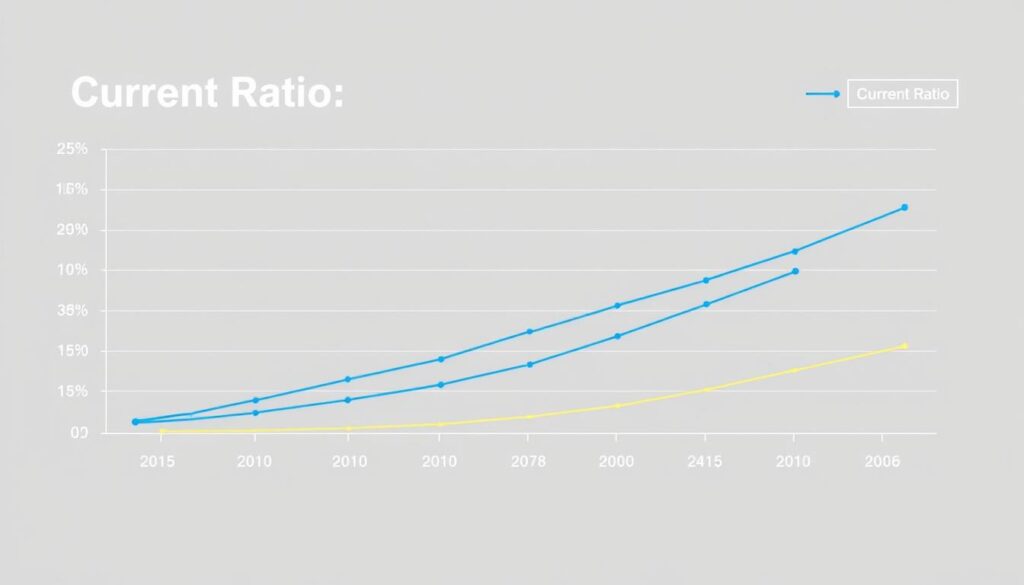
The current ratio is the most fundamental liquidity measure, comparing current assets to current liabilities. It indicates whether your business has enough resources to pay debts due within the next year.
Current Ratio = Current Assets ÷ Current Liabilities
Interpretation: A current ratio of 2:1 has traditionally been considered ideal, meaning the company has twice as many current assets as liabilities. However, appropriate ratios vary by industry:
- Ratio > 2: Strong liquidity position, potentially underutilized assets
- Ratio 1.5-2: Healthy balance for most businesses
- Ratio 1-1.5: Adequate but potentially concerning
- Ratio Potential liquidity problems, insufficient assets to cover obligations
Quick Ratio (Acid-Test): A Stricter Liquidity Measure
The quick ratio, also known as the acid-test ratio, provides a more conservative view of liquidity by excluding inventory from current assets. This ratio is especially relevant for businesses where inventory may not be quickly convertible to cash.
Quick Ratio = (Current Assets – Inventory) ÷ Current Liabilities
Interpretation: A quick ratio of 1:1 or higher indicates that a company can meet its short-term obligations without relying on inventory sales. This is particularly important for:
- Seasonal businesses with fluctuating inventory levels
- Companies with slow-moving or specialized inventory
- Businesses in industries prone to supply chain disruptions
Cash Ratio: The Most Conservative Liquidity Measure
The cash ratio considers only cash and cash equivalents against current liabilities, providing the most stringent test of short-term liquidity.
Cash Ratio = (Cash + Cash Equivalents) ÷ Current Liabilities
Interpretation: While a cash ratio of 1:1 would indicate excellent liquidity, most businesses operate with much lower cash ratios, typically between 0.2 and 0.5. Maintaining excessive cash can be inefficient from a financial business management perspective.
Working Capital to Total Assets Ratio
This ratio shows the percentage of a company’s total assets that are financed by working capital (current assets minus current liabilities).
Working Capital to Total Assets = (Current Assets – Current Liabilities) ÷ Total Assets
Interpretation: A higher ratio indicates greater financial flexibility and stronger short-term financial health. This ratio is particularly useful when tracking financial business performance over time or comparing companies within the same industry.
Practical Application: Improving Liquidity Ratios
If your liquidity ratios indicate potential cash flow challenges, consider these financial business management tips:
- Accelerate accounts receivable collection by offering early payment discounts
- Negotiate extended payment terms with suppliers
- Implement just-in-time inventory management to reduce inventory carrying costs
- Establish a line of credit before cash flow problems arise
- Review pricing strategies to improve margins and cash generation
Monitoring liquidity ratios should be a core component of your financial business planning for beginners and experienced managers alike. These ratios provide early warning signs of potential cash flow problems and help ensure your business maintains the financial flexibility needed to capitalize on opportunities and weather economic challenges.
Profitability Ratios: Evaluating Earning Power
Profitability ratios measure a company’s ability to generate earnings relative to sales, assets, and equity. These ratios are critical for evaluating business performance, attracting investors, and developing financial business growth strategies.
Gross Profit Margin: Measuring Production Efficiency
The gross profit margin reveals how efficiently a company produces its goods or services by showing the percentage of revenue that exceeds the cost of goods sold (COGS).
Gross Profit Margin = (Revenue – COGS) ÷ Revenue × 100%
Interpretation: A higher gross profit margin indicates more efficient production processes or stronger pricing power. Industry averages vary widely:
- Software/Digital Products: 70-90%
- Professional Services: 40-60%
- Retail: 25-40%
- Manufacturing: 20-35%
- Grocery/Food: 10-25%
Tracking gross profit margin over time helps identify pricing pressures, production inefficiencies, or changes in product mix that affect overall profitability.
Operating Profit Margin: Measuring Operational Efficiency
Operating profit margin shows the percentage of revenue that remains after covering both COGS and operating expenses, revealing how efficiently a company runs its core business operations.
Operating Profit Margin = Operating Income ÷ Revenue × 100%
Interpretation: This ratio excludes the effects of financing decisions, tax strategies, and non-operational income, providing a clearer picture of the profitability of core business activities. It’s particularly valuable for comparing operational efficiency between companies with different capital structures.

Net Profit Margin: The Bottom Line
Net profit margin represents the percentage of revenue that becomes profit after accounting for all expenses, including COGS, operating expenses, interest, taxes, and one-time charges.
Net Profit Margin = Net Income ÷ Revenue × 100%
Interpretation: This “bottom line” metric is closely watched by investors and reflects the overall profitability of the business. While average net profit margins vary significantly by industry, consistent improvement over time generally indicates strengthening business performance.
Return on Assets (ROA): Measuring Asset Utilization
ROA indicates how efficiently a company uses its assets to generate profits, regardless of how those assets are financed.
Return on Assets = Net Income ÷ Average Total Assets × 100%
Interpretation: A higher ROA indicates more efficient asset utilization. Capital-intensive industries (manufacturing, utilities) typically have lower ROAs (2-5%) than asset-light businesses like software companies or professional services firms, which might achieve 15-25% or higher.
Return on Equity (ROE): Measuring Shareholder Returns
ROE measures the return generated on shareholders’ invested capital, making it particularly important for investors evaluating potential investments.
Return on Equity = Net Income ÷ Average Shareholders’ Equity × 100%
Interpretation: A higher ROE generally indicates more efficient use of equity capital. However, very high ROE can sometimes result from excessive leverage rather than strong operational performance. Compare ROE with industry benchmarks and examine the company’s debt levels for proper context.
DuPont Analysis: Breaking Down ROE
The DuPont analysis breaks ROE into three components to provide deeper insights:
- Profit Margin: Net Income ÷ Revenue
- Asset Turnover: Revenue ÷ Average Total Assets
- Equity Multiplier: Average Total Assets ÷ Average Shareholders’ Equity
ROE = Profit Margin × Asset Turnover × Equity Multiplier
This breakdown helps identify whether changes in ROE stem from operational efficiency, asset utilization, or financial leverage.
Profitability ratios should be central to your financial business reporting best practices. Regular analysis of these metrics helps identify trends, benchmark against competitors, and develop strategies to improve overall business performance. When creating a financial business plan, set specific targets for these ratios based on industry standards and your company’s unique circumstances.
Boost Your Profitability Analysis
Download our Profitability Ratio Analysis Template to track your company’s performance over time and benchmark against industry standards. Includes automated calculations and visualization tools.
Efficiency Ratios: Assessing Operational Performance
Efficiency ratios, also called activity ratios, measure how effectively a company uses its assets and manages its operations. These ratios are crucial for identifying operational inefficiencies and implementing financial business cash flow improvement tips.
Inventory Turnover Ratio: Managing Stock Levels
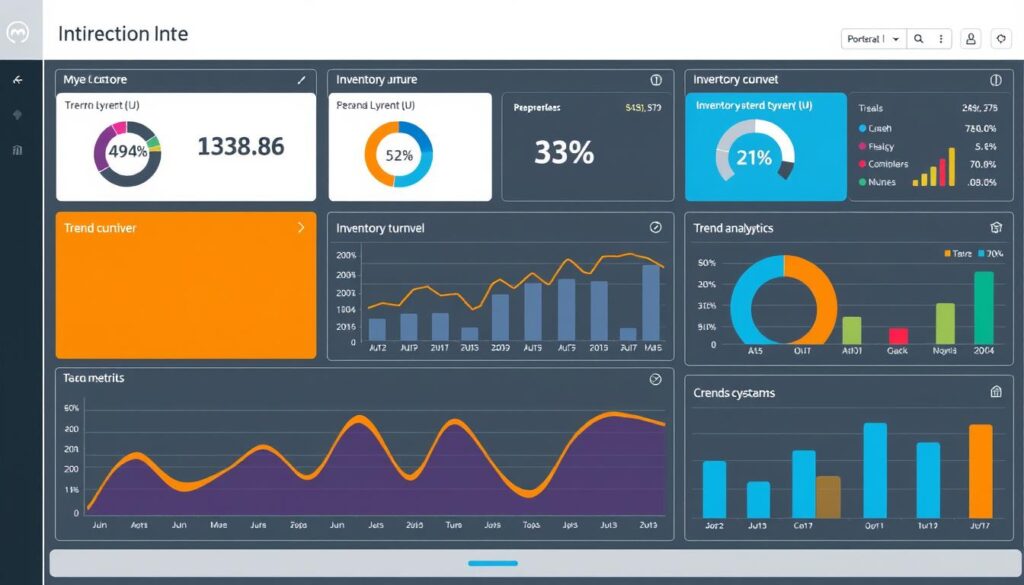
The inventory turnover ratio measures how many times a company sells and replaces its inventory during a period, indicating inventory management efficiency.
Inventory Turnover Ratio = Cost of Goods Sold ÷ Average Inventory
Interpretation: Higher turnover generally indicates efficient inventory management, while low turnover may signal overstocking, obsolescence, or declining sales. Optimal inventory turnover varies significantly by industry:
- Grocery/Perishables: 12-25 times per year
- Retail: 4-8 times per year
- Manufacturing: 3-6 times per year
- Luxury Goods: 1-3 times per year
A related metric, Days Inventory Outstanding (DIO), converts the inventory turnover ratio into the average number of days inventory is held:
Days Inventory Outstanding = 365 ÷ Inventory Turnover Ratio
Accounts Receivable Turnover Ratio: Managing Collections
This ratio measures how efficiently a company collects payments from customers who purchase on credit.
Accounts Receivable Turnover = Net Credit Sales ÷ Average Accounts Receivable
Interpretation: A higher ratio indicates more efficient collection practices or a more creditworthy customer base. The related Days Sales Outstanding (DSO) metric shows the average number of days it takes to collect payment:
Days Sales Outstanding = 365 ÷ Accounts Receivable Turnover
Reducing DSO is one of the most effective financial business cash flow improvement tips, as it accelerates the conversion of sales into usable cash.
Accounts Payable Turnover Ratio: Managing Vendor Payments
This ratio measures how quickly a company pays its suppliers.
Accounts Payable Turnover = Total Supplier Purchases ÷ Average Accounts Payable
Interpretation: A lower ratio indicates the company takes longer to pay suppliers, which can improve working capital but may strain vendor relationships. The related Days Payable Outstanding (DPO) metric shows the average payment period:
Days Payable Outstanding = 365 ÷ Accounts Payable Turnover
Asset Turnover Ratio: Measuring Overall Asset Efficiency
The asset turnover ratio measures how efficiently a company uses its assets to generate revenue.
Asset Turnover Ratio = Revenue ÷ Average Total Assets
Interpretation: Higher ratios indicate more efficient asset utilization. Asset-intensive industries like utilities or manufacturing typically have lower ratios (0.3-0.5) than retail or service businesses (1.5-2.5).
Cash Conversion Cycle: Comprehensive Efficiency Metric
The cash conversion cycle (CCC) combines inventory, receivables, and payables metrics to show how quickly a company converts investments in inventory and other resources into cash flows.
Cash Conversion Cycle = DIO + DSO – DPO
Interpretation: A shorter CCC indicates greater efficiency in managing working capital. A negative CCC is ideal, meaning a company receives payment from customers before it pays suppliers.
The Cash Conversion Cycle in Action
Consider two retailers with the following metrics:
- Company A: DIO = 60 days, DSO = 30 days, DPO = 45 days
CCC = 60 + 30 – 45 = 45 days - Company B: DIO = 30 days, DSO = 15 days, DPO = 60 days
CCC = 30 + 15 – 60 = -15 days
Company B’s negative CCC means it effectively receives an interest-free loan from its suppliers, significantly improving its working capital position.
Efficiency ratios should be a key component of how you track financial business performance. By monitoring these metrics regularly and comparing them to industry benchmarks, you can identify operational inefficiencies and implement targeted improvements to enhance cash flow and profitability.
For digital entrepreneurs and online businesses, efficiency ratios may need adaptation to reflect business models with minimal inventory or different payment cycles. Focus on metrics most relevant to your specific operations while maintaining the core principle of measuring resource utilization effectiveness.
Leverage Ratios: Understanding Debt Position
Leverage ratios measure a company’s debt levels relative to its assets, equity, or earnings. These ratios help assess financial risk and are crucial for developing strategies to manage financial business risks effectively.
Debt-to-Equity Ratio: Measuring Financial Leverage
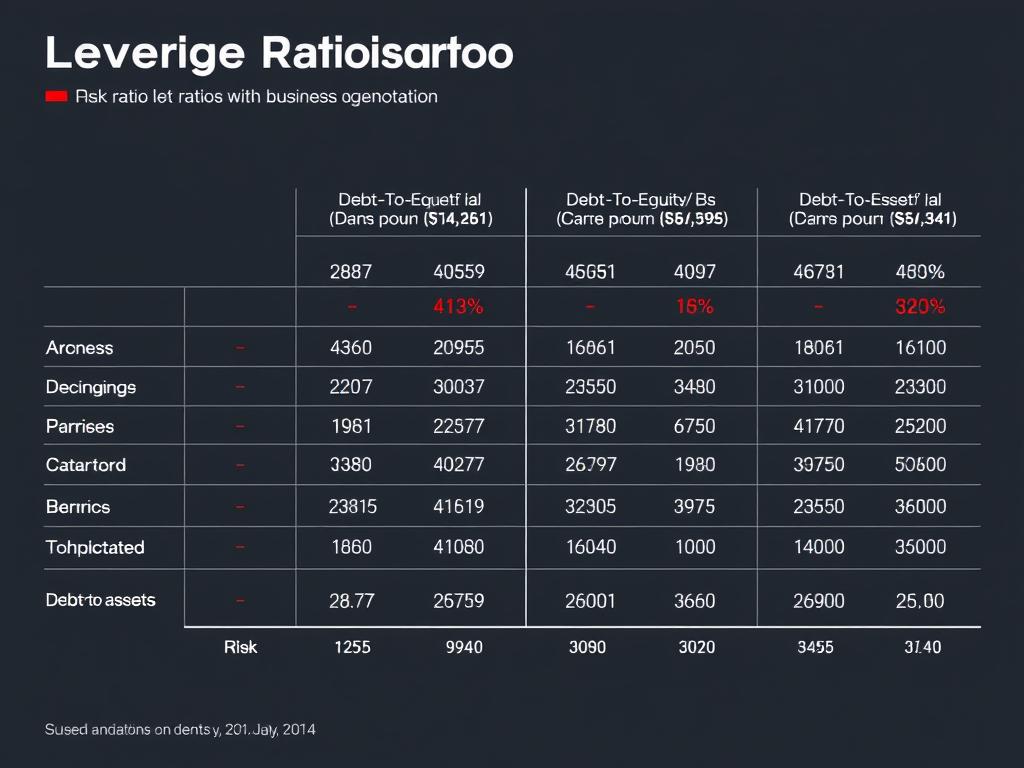
The debt-to-equity ratio compares a company’s total debt to its shareholders’ equity, indicating the extent to which the business relies on borrowed funds versus owner investments.
Debt-to-Equity Ratio = Total Debt ÷ Shareholders’ Equity
Interpretation: A higher ratio indicates greater financial leverage and potentially higher risk. However, appropriate debt-to-equity ratios vary significantly by industry:
- Technology/Software: 0.5-1.0
- Manufacturing: 1.0-2.0
- Utilities/Infrastructure: 1.5-2.5
- Financial Services: 3.0-5.0+
Debt-to-Assets Ratio: Measuring Creditor Financing
The debt-to-assets ratio shows what percentage of a company’s assets are financed by debt rather than equity.
Debt-to-Assets Ratio = Total Debt ÷ Total Assets
Interpretation: A ratio of 0.4 means 40% of the company’s assets are financed by debt. Lower ratios generally indicate less financial risk and greater borrowing capacity. However, too little debt may mean the company isn’t taking advantage of financial leverage to enhance returns.
Interest Coverage Ratio: Measuring Debt Servicing Ability
The interest coverage ratio measures how easily a company can pay interest on its outstanding debt.
Interest Coverage Ratio = EBIT ÷ Interest Expense
Interpretation: A higher ratio indicates stronger ability to meet interest obligations. Generally, ratios below 2.0 suggest potential financial distress, while ratios above 3.0 indicate comfortable debt servicing capacity. Lenders often use this ratio when evaluating loan applications as part of the business financial decision-making process.
Debt Service Coverage Ratio (DSCR): Comprehensive Debt Capacity
The DSCR measures a company’s ability to cover all debt obligations, including principal and interest payments.
DSCR = Net Operating Income ÷ Total Debt Service
Interpretation: A DSCR of 1.0 means the company generates just enough cash flow to cover its debt payments. Lenders typically require a minimum DSCR of 1.2-1.5, while a healthy business should maintain a ratio of 1.5 or higher to provide a safety margin.
Financial Leverage Ratio: Asset-to-Equity Relationship
The financial leverage ratio shows how much of a company’s assets are financed by equity.
Financial Leverage Ratio = Average Total Assets ÷ Average Shareholders’ Equity
Interpretation: A ratio of 2.0 means the company has twice as many assets as equity, indicating that half of the assets are financed by debt. Higher ratios amplify both returns and risks—when business is good, returns on equity increase, but during downturns, losses are magnified.
The Double-Edged Sword of Leverage
Consider two companies with identical $1,000,000 in assets and $200,000 in annual operating income:
- Company A: 20% debt ($200,000), 80% equity ($800,000)
Interest expense: $16,000 (8% on $200,000)
Return on Equity: ($200,000 – $16,000) ÷ $800,000 = 23% - Company B: 60% debt ($600,000), 40% equity ($400,000)
Interest expense: $48,000 (8% on $600,000)
Return on Equity: ($200,000 – $48,000) ÷ $400,000 = 38%
Company B’s higher leverage creates higher ROE during good times. However, if operating income drops to $100,000:
- Company A’s ROE: ($100,000 – $16,000) ÷ $800,000 = 10.5%
- Company B’s ROE: ($100,000 – $48,000) ÷ $400,000 = 13%
If operating income drops further to $50,000:
- Company A’s ROE: ($50,000 – $16,000) ÷ $800,000 = 4.25%
- Company B’s ROE: ($50,000 – $48,000) ÷ $400,000 = 0.5%
This demonstrates how leverage amplifies both positive and negative outcomes.
Understanding leverage ratios is essential for developing effective financial business budgeting strategies. These ratios help determine appropriate debt levels and financing structures based on your company’s risk tolerance, growth objectives, and industry norms.
When taking steps to build a financial business model, incorporate leverage ratio targets that balance growth opportunities with financial stability. Remember that optimal leverage varies based on business maturity, industry characteristics, and economic conditions.
Market Value Ratios: Investor Perspective
Market value ratios relate a company’s stock price to its earnings, book value, and other financial metrics. These ratios are particularly important for publicly traded companies and businesses seeking investment or preparing for acquisition.
Price-to-Earnings (P/E) Ratio: Valuing Earnings
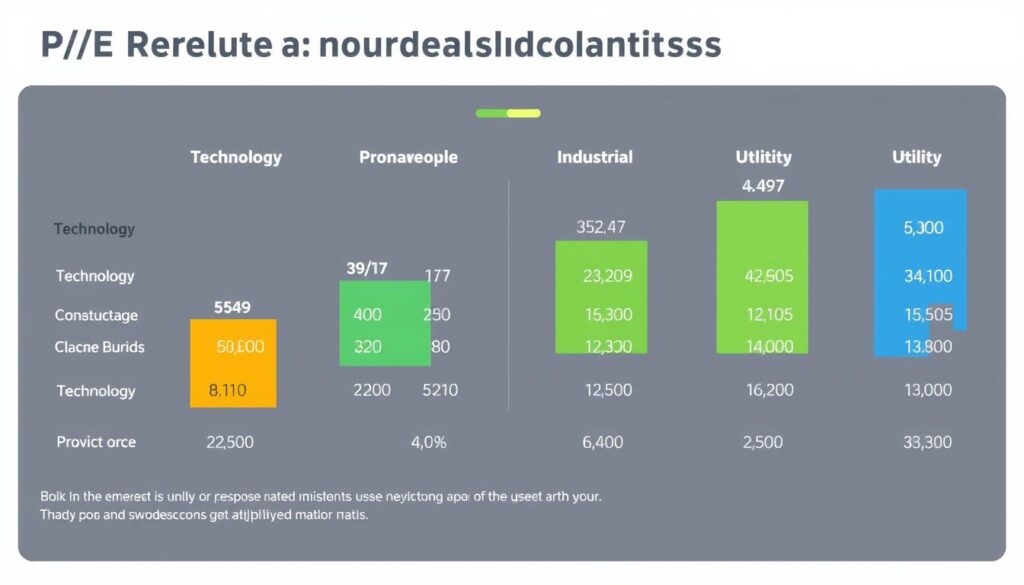
The P/E ratio compares a company’s stock price to its earnings per share (EPS), indicating how much investors are willing to pay for each dollar of earnings.
P/E Ratio = Market Price per Share ÷ Earnings per Share
Interpretation: A higher P/E ratio suggests investors expect higher earnings growth in the future. However, extremely high P/E ratios may indicate overvaluation. Average P/E ratios vary by industry and market conditions:
- High-growth technology: 25-40+
- Established consumer goods: 15-25
- Mature industrial companies: 10-20
- Utilities and regulated industries: 8-15
Earnings Per Share (EPS): Profit Allocation
EPS measures the portion of a company’s profit allocated to each outstanding share of common stock.
EPS = (Net Income – Preferred Dividends) ÷ Average Outstanding Common Shares
Interpretation: Growing EPS generally indicates improving profitability. Investors closely track both absolute EPS values and growth rates when evaluating investment opportunities.
Price-to-Book (P/B) Ratio: Valuing Net Assets
The P/B ratio compares a company’s market value to its book value (net assets).
P/B Ratio = Market Price per Share ÷ Book Value per Share
Interpretation: A P/B ratio below 1.0 may indicate undervaluation, while high P/B ratios are common for companies with strong brands, intellectual property, or growth prospects not reflected in their tangible assets. This ratio is particularly useful for evaluating financial institutions and asset-heavy businesses.
Dividend Yield: Income Return
Dividend yield shows the annual dividend income relative to a stock’s current price.
Dividend Yield = Annual Dividends per Share ÷ Market Price per Share × 100%
Interpretation: Higher yields may attract income-focused investors but could indicate limited growth prospects or market concerns about dividend sustainability. Typical dividend yields range from 1-3% for growth companies to 4-6% for mature businesses.
Price-to-Sales (P/S) Ratio: Valuing Revenue
The P/S ratio compares a company’s market capitalization to its annual revenue.
P/S Ratio = Market Capitalization ÷ Annual Revenue
Interpretation: This ratio is particularly useful for evaluating early-stage companies that aren’t yet profitable or businesses experiencing temporary earnings challenges. Lower P/S ratios generally indicate better value, though appropriate ranges vary significantly by industry based on typical profit margins.
Market Value Ratios for Private Companies
Even if your company isn’t publicly traded, market value ratios remain relevant for:
- Preparing for potential investment rounds or acquisition
- Benchmarking against public competitors
- Setting realistic valuation expectations
- Developing exit strategies
For private companies, these ratios can be calculated using estimated market values based on recent transactions in your industry or by applying appropriate multiples to your financial metrics.
Market value ratios should be incorporated into your financial business forecasting techniques, especially if you’re planning for growth financing or eventual exit. By understanding how the market values companies in your industry, you can make strategic decisions that enhance both operational performance and market perception.
For startups and growth-stage companies, tracking these ratios helps align financial business management for startups with investor expectations and market realities. This alignment is crucial for successful fundraising and long-term value creation.
Master Your Company’s Valuation
Download our Market Valuation Ratio Template to understand how investors might value your company and identify strategies to improve your valuation metrics.
Financial Ratio Analysis Example: Comprehensive Case Study
To demonstrate how financial ratios work together to provide a complete picture of business performance, let’s analyze a fictional company, TechGrowth Solutions, a software-as-a-service (SaaS) provider. This case study illustrates how to apply financial business ratios in a real-world context.
Company Background
TechGrowth Solutions offers subscription-based project management software to small and medium-sized businesses. The company has been operating for five years and is considering seeking growth capital from investors. Here are the key financial figures from their most recent year:
| Financial Metric | Current Year ($) | Previous Year ($) |
| Revenue | 5,000,000 | 3,750,000 |
| Cost of Revenue | 1,500,000 | 1,200,000 |
| Operating Expenses | 2,250,000 | 1,800,000 |
| Interest Expense | 150,000 | 120,000 |
| Net Income | 825,000 | 480,000 |
| Current Assets | 1,800,000 | 1,400,000 |
| Total Assets | 7,500,000 | 6,000,000 |
| Current Liabilities | 900,000 | 750,000 |
| Total Debt | 2,500,000 | 2,000,000 |
| Shareholders’ Equity | 4,100,000 | 3,250,000 |
| Accounts Receivable | 625,000 | 500,000 |
Ratio Analysis Results
Let’s calculate and interpret key financial ratios for TechGrowth Solutions:
Liquidity Ratios
- Current Ratio: 1,800,000 ÷ 900,000 = 2.0
- Quick Ratio: ~1.8 (minimal inventory as a SaaS company)
Interpretation: TechGrowth has strong liquidity with a current ratio of 2.0, indicating it can comfortably meet short-term obligations. This is appropriate for a growing SaaS business that needs financial flexibility.
Profitability Ratios
- Gross Profit Margin: (5,000,000 – 1,500,000) ÷ 5,000,000 = 70%
- Operating Margin: (5,000,000 – 1,500,000 – 2,250,000) ÷ 5,000,000 = 25%
- Net Profit Margin: 825,000 ÷ 5,000,000 = 16.5%
- ROA: 825,000 ÷ ((7,500,000 + 6,000,000) ÷ 2) = 12.2%
- ROE: 825,000 ÷ ((4,100,000 + 3,250,000) ÷ 2) = 22.4%
Interpretation: The company shows strong profitability with margins typical of successful SaaS businesses. The 70% gross margin reflects the scalable nature of software, while the 16.5% net margin indicates good overall profitability. The ROE of 22.4% shows excellent returns for shareholders.
Efficiency Ratios
- Asset Turnover: 5,000,000 ÷ ((7,500,000 + 6,000,000) ÷ 2) = 0.74
- Accounts Receivable Turnover: 5,000,000 ÷ ((625,000 + 500,000) ÷ 2) = 8.89
- Days Sales Outstanding: 365 ÷ 8.89 = 41 days
Interpretation: The company’s asset turnover is reasonable for a SaaS business with significant technology assets. The 41-day collection period indicates effective management of customer payments, though there may be room for improvement.
Leverage Ratios
- Debt-to-Equity: 2,500,000 ÷ 4,100,000 = 0.61
- Debt-to-Assets: 2,500,000 ÷ 7,500,000 = 0.33
- Interest Coverage: (825,000 + 150,000) ÷ 150,000 = 6.5
Interpretation: TechGrowth maintains a conservative capital structure with moderate leverage. The debt-to-equity ratio of 0.61 is appropriate for a growing technology company, providing financial flexibility while using some debt to enhance returns. The strong interest coverage ratio of 6.5 indicates comfortable debt servicing capacity.
Comparative Analysis
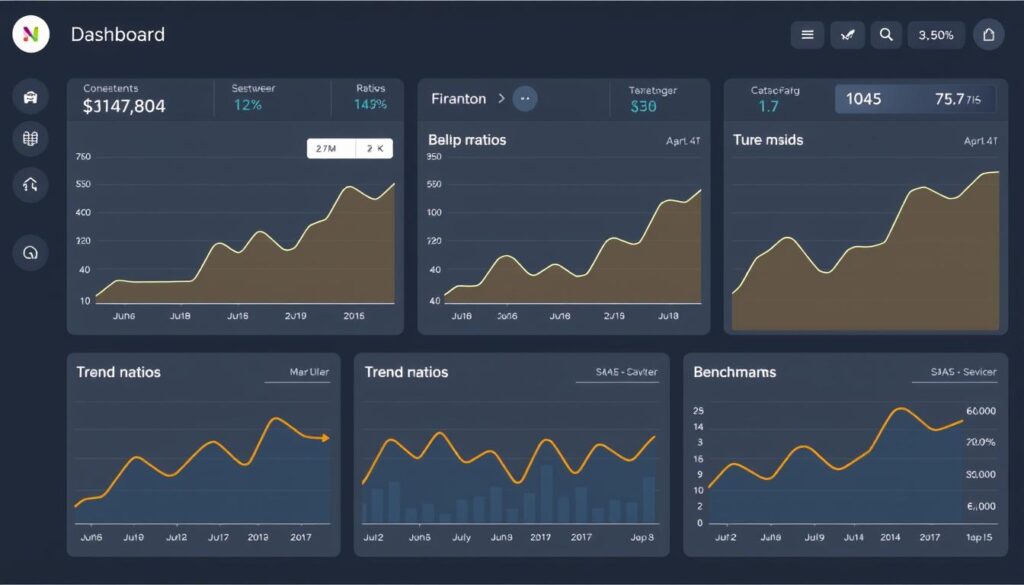
To provide context, let’s compare TechGrowth’s ratios with industry benchmarks for SaaS companies:
| Ratio | TechGrowth | Industry Average | Assessment |
| Current Ratio | 2.0 | 1.8 | Strong |
| Gross Margin | 70% | 72% | On par |
| Operating Margin | 25% | 20% | Strong |
| Net Margin | 16.5% | 15% | Above average |
| ROE | 22.4% | 18% | Excellent |
| Debt-to-Equity | 0.61 | 0.55 | Slightly higher |
| Days Sales Outstanding | 41 | 35 | Needs improvement |
Strategic Recommendations
Based on the financial ratio analysis, here are strategic recommendations for TechGrowth Solutions:
Strengths to Leverage
- Strong Profitability: The above-average operating and net margins provide financial flexibility to invest in growth initiatives.
- Solid Liquidity: The strong current ratio supports operational stability and potential expansion.
- Excellent ROE: The 22.4% return on equity makes the company attractive to potential investors.
Areas for Improvement
- Accounts Receivable Management: Implement strategies to reduce the 41-day collection period closer to the industry average of 35 days, which would improve cash flow.
- Capital Structure Optimization: Consider whether the slightly higher-than-average debt level is optimal or if debt reduction should be prioritized.
- Asset Utilization: Explore opportunities to improve the asset turnover ratio by increasing revenue without proportional increases in assets.
This comprehensive ratio analysis provides TechGrowth’s management with actionable insights for financial business management. By addressing the identified areas for improvement while leveraging existing strengths, the company can enhance its financial performance and position itself favorably for future growth and investment.
The analysis also demonstrates how different ratio categories work together to provide a holistic view of business performance. No single ratio tells the complete story—it’s the combination of liquidity, profitability, efficiency, and leverage metrics that creates a comprehensive financial picture.
Excel Templates for Financial Ratio Analysis
Implementing financial ratio analysis in your business becomes significantly easier with the right tools. Excel templates are among the best tools for financial business planning, offering flexibility, customization, and powerful calculation capabilities. Here are essential Excel templates to streamline your financial ratio analysis:
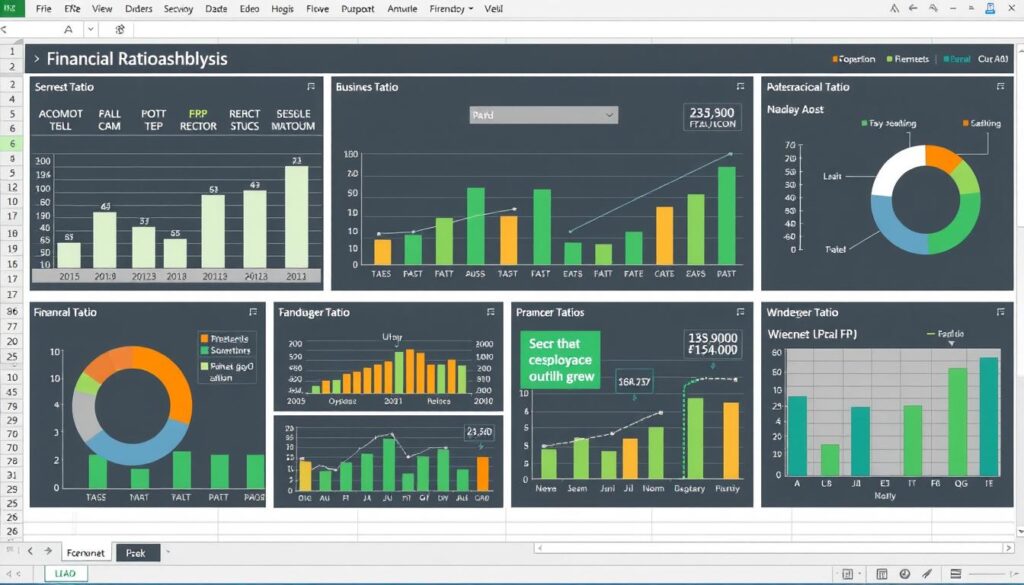
Comprehensive Financial Ratio Dashboard
This all-in-one template calculates 20+ financial ratios across all categories and presents them in an interactive dashboard with trend analysis and industry benchmarking.
- Automated calculations from financial statement inputs
- Visual trend charts for 3-5 year analysis
- Industry benchmark comparison functionality
- Customizable threshold alerts for key metrics
Liquidity & Working Capital Analyzer
Specialized template for deep-dive analysis of short-term financial health, cash flow management, and working capital optimization.
- Cash conversion cycle calculator
- Working capital requirement projections
- Scenario analysis for liquidity planning
- Receivables aging and collection efficiency tools
Profitability & Margin Analysis Tool
Detailed template for analyzing profit margins at multiple levels, identifying profit drivers, and comparing performance against targets.
- Gross, operating, and net margin calculators
- Contribution margin analysis by product/service
- Break-even analysis calculator
- Profit variance analysis tools
Debt & Leverage Ratio Calculator
Specialized template for analyzing debt structure, leverage impact, and debt capacity to optimize capital structure and manage financial risk.
- Comprehensive debt ratio calculations
- Debt service coverage analysis
- Optimal debt level calculator
- Debt restructuring scenario planner
Efficiency & Activity Ratio Tracker
Focused template for monitoring operational efficiency metrics, asset utilization, and productivity measures to identify operational improvements.
- Inventory, receivables, and payables turnover calculators
- Asset utilization analysis
- Operational efficiency benchmarking
- Cash conversion cycle optimizer
Investor & Valuation Metrics Template
Specialized template for market-based ratios, valuation metrics, and investor-focused KPIs to prepare for fundraising or exit planning.
- P/E, P/S, and EV/EBITDA calculators
- Dividend analysis tools
- Valuation multiple comparisons
- Investor presentation metrics generator
How to Automate Financial Business Processes with Excel Templates
These Excel templates can significantly streamline your financial analysis processes through:
- Data Integration: Connect templates directly to your accounting software or financial databases for automatic data updates.
- Scheduled Reporting: Set up automated monthly or quarterly ratio analysis reports using Excel’s Power Query features.
- Alert Systems: Create conditional formatting rules to highlight ratios that fall outside acceptable ranges.
- Visualization Automation: Use Excel’s charting capabilities to automatically generate visual representations of ratio trends.
- Scenario Modeling: Build what-if analysis tools to model how potential business changes might impact key ratios.
Template Customization Tips
To maximize the value of these financial business tools for entrepreneurs:
- Adjust industry benchmarks to reflect your specific sub-sector or business model
- Modify calculation periods to match your business cycle (monthly for seasonal businesses, quarterly for more stable operations)
- Add company-specific KPIs that complement standard financial ratios
- Integrate templates with your existing financial reporting systems
- Create executive summary dashboards that highlight the most critical metrics for your business
These Excel templates serve as powerful financial business tools for entrepreneurs, providing the analytical capabilities needed to transform raw financial data into strategic insights. By implementing these templates, you can establish consistent financial business reporting best practices that support informed decision-making and drive business growth.
Get the Complete Financial Ratio Analysis Toolkit
Download our comprehensive collection of Excel templates for financial ratio analysis. Includes all six specialized templates plus bonus tools for financial forecasting and business valuation.
Step-by-Step Strategy for Implementing Ratio Analysis
Implementing financial ratio analysis in your business requires a systematic approach. Follow this step-by-step strategy to establish an effective financial ratio analysis framework that drives better business decisions.

-
Identify Your Business Objectives
Begin by clarifying what you want to achieve with financial ratio analysis:
- Improving operational efficiency
- Enhancing profitability
- Optimizing capital structure
- Preparing for fundraising or acquisition
- Benchmarking against competitors
Your objectives will determine which ratios deserve the most attention and how frequently they should be monitored.
-
Ensure Financial Statement Accuracy
Reliable ratio analysis depends on accurate financial statements:
- Implement consistent accounting practices
- Reconcile accounts regularly
- Consider having statements reviewed by accounting professionals
- Document any accounting method changes that might affect ratio comparability
Remember that ratio analysis is only as good as the data it’s based on.
-
Select Relevant Ratios
Choose ratios that align with your business model and objectives:
- For manufacturing: inventory turnover, gross margin, fixed asset turnover
- For service businesses: operating margin, asset-light efficiency metrics
- For retail: same-store sales, inventory metrics, gross margin
- For SaaS/subscription: customer acquisition cost, lifetime value, churn
Focus on 8-12 key ratios rather than tracking too many metrics without sufficient analysis.
-
Establish Calculation Methodology
Develop consistent calculation methods:
- Define specific formulas for each ratio
- Determine time periods (monthly, quarterly, annually)
- Decide whether to use period-end or average values for balance sheet items
- Document all calculation decisions for consistency
Consistency in calculation methodology is essential for meaningful trend analysis.
-
Gather Industry Benchmarks
Collect relevant comparison data:
- Industry association reports
- Competitor financial statements (for public companies)
- Industry analyst reports
- Financial databases like RMA Annual Statement Studies
Ensure benchmarks reflect businesses of similar size and business model when possible.
-
Implement Tracking Systems
Set up systems to calculate and monitor ratios:
- Excel templates with automated calculations
- Financial dashboard software
- Integration with accounting systems
- Regular reporting schedules
The right tools make ratio analysis a regular part of business operations rather than an occasional exercise.
-
Analyze Trends and Patterns
Look beyond individual ratio values:
- Track ratios over multiple periods to identify trends
- Analyze relationships between different ratios
- Investigate unusual changes or outliers
- Consider seasonal factors that might affect interpretation
The most valuable insights often come from understanding how and why ratios change over time.
-
Develop Action Plans
Convert analysis into strategic initiatives:
- Identify specific operational improvements based on ratio insights
- Set target ratio values aligned with business objectives
- Assign responsibility for improvement initiatives
- Establish timelines for implementation and review
Ratio analysis creates value only when it drives concrete business improvements.
-
Communicate Results Effectively
Share insights with stakeholders:
- Create executive dashboards with key ratios
- Develop department-specific metrics relevant to each team
- Translate financial ratios into operational language
- Highlight both achievements and improvement opportunities
Effective communication ensures that ratio analysis influences decision-making throughout the organization.
-
Review and Refine Your Approach
Continuously improve your ratio analysis process:
- Periodically review which ratios provide the most value
- Update industry benchmarks as market conditions change
- Refine calculation methodologies based on experience
- Incorporate new ratios relevant to evolving business objectives
Financial ratio analysis should evolve as your business grows and market conditions change.
Implementation Timeline Example
A typical implementation schedule for establishing comprehensive ratio analysis:
- Weeks 1-2: Define objectives, select initial ratios, establish calculation methodology
- Weeks 3-4: Set up tracking systems, gather historical data, collect industry benchmarks
- Month 2: Calculate baseline ratios, identify initial insights, develop preliminary targets
- Month 3: Implement first improvement initiatives based on ratio analysis
- Month 4-6: Refine analysis approach, expand ratio coverage, develop more sophisticated reporting
- Ongoing: Monthly or quarterly ratio reviews, annual comprehensive analysis, continuous improvement
By following this step-by-step strategy, you can transform financial ratio analysis from an occasional financial exercise into a powerful driver of business performance. The key is consistency, relevance, and action—calculating ratios regularly, focusing on metrics that matter for your business, and using the insights to drive concrete improvements.
Remember that financial ratio analysis is not just for financial professionals. When properly implemented, it provides valuable insights for operations, marketing, sales, and executive teams, helping to improve financial business efficiency across the entire organization.
Frequently Asked Questions
What are the most important financial ratios for small businesses?
For small businesses, the most critical financial ratios typically include:
- Current Ratio: Measures short-term liquidity and ability to pay immediate obligations
- Gross Profit Margin: Shows production efficiency and pricing effectiveness
- Net Profit Margin: Indicates overall profitability after all expenses
- Accounts Receivable Turnover: Reflects collection efficiency and cash flow management
- Debt-to-Equity Ratio: Shows financial leverage and risk level
Small businesses should focus on ratios that help monitor cash flow, profitability, and debt management, as these areas typically present the greatest challenges for growing companies.
How often should I calculate financial ratios for my business?
The optimal frequency for calculating financial ratios depends on your business type, growth stage, and specific circumstances:
- Monthly: Liquidity ratios (current ratio, quick ratio) and basic profitability metrics for businesses with tight cash flow or rapid growth
- Quarterly: Comprehensive ratio analysis covering all categories for most established businesses
- Annually: In-depth comparative analysis with industry benchmarks and multi-year trends
Businesses experiencing significant changes (rapid growth, financial challenges, new financing) should increase the frequency of ratio analysis to provide earlier warning of potential issues and opportunities.
What are good target values for key financial ratios?
Target values vary significantly by industry, business model, and growth stage. However, some general guidelines include:
- Current Ratio: 1.5-2.0 for most businesses
- Quick Ratio: 1.0 or higher indicates solid short-term liquidity
- Debt-to-Equity: Below 2.0 for most businesses; below 1.0 for conservative operations
- Gross Margin: Varies widely by industry (20-80%)
- Net Profit Margin: 5-20% depending on industry (higher for technology, lower for retail)
- Inventory Turnover: Higher is better, but varies by industry (4-10 times annually is common)
Rather than focusing on absolute values, compare your ratios to industry benchmarks and track improvements over time. Consistent improvement often matters more than achieving specific target values.
How do financial ratios differ for service businesses versus product-based companies?
Service and product-based businesses have different operational models that affect their financial ratios:
Service Businesses:
- Typically have higher gross margins (often 40-80%)
- Lower or no inventory turnover ratios
- Asset turnover ratios focus more on human capital efficiency
- Often have lower capital intensity and higher ROA
- Key metrics include utilization rates and revenue per employee
Product-Based Businesses:
- Usually have lower gross margins (typically 20-40%)
- Inventory turnover and days in inventory are critical metrics
- Asset turnover focuses on physical asset utilization
- Often have higher capital requirements and lower ROA
- Key metrics include inventory management and supplier terms
When analyzing ratios, always compare against businesses with similar models rather than across different business types.
How can I improve my company’s liquidity ratios?
To improve liquidity ratios (current ratio, quick ratio), focus on strategies that increase current assets or reduce current liabilities:
To increase current assets:
- Accelerate accounts receivable collection through improved invoicing processes
- Offer early payment discounts to customers
- Implement more aggressive collection procedures for overdue accounts
- Convert underutilized non-current assets to cash
- Improve inventory management to reduce excess stock while maintaining adequate levels
To reduce current liabilities:
- Negotiate extended payment terms with suppliers
- Restructure short-term debt into long-term obligations
- Improve cash flow forecasting to better manage payment timing
- Consider equity financing instead of short-term debt for growth initiatives
Focus on sustainable improvements rather than temporary measures that might improve ratios momentarily but don’t address underlying issues.
What are the limitations of financial ratio analysis?
While financial ratio analysis provides valuable insights, it has several important limitations:
- Historical Focus: Ratios are calculated from past performance and may not predict future results
- Accounting Variations: Different accounting methods can affect ratio comparability between companies
- Seasonal Factors: Point-in-time measurements may be skewed by seasonal business fluctuations
- Qualitative Factors: Ratios don’t capture non-financial factors like management quality, brand strength, or market position
- Industry Specificity: Meaningful comparison requires industry-specific benchmarks
- Size Differences: Companies of different sizes may have structurally different optimal ratios
- Growth Stage Impact: Startups and high-growth companies often have ratios that would be concerning in mature businesses
To overcome these limitations, use ratio analysis as one component of a comprehensive financial analysis approach that includes qualitative factors, market analysis, and forward-looking projections.
How do financial ratios help in obtaining business loans?
Financial ratios play a crucial role in loan applications and credit decisions:
- Lender Evaluation: Banks and lenders use ratios to assess creditworthiness and risk
- Loan Covenants: Many loan agreements include ratio requirements (e.g., maintaining a minimum current ratio or maximum debt-to-EBITDA ratio)
- Interest Rates: Better ratios often qualify businesses for lower interest rates
- Loan Preparation: Understanding your ratios before applying helps you address potential concerns proactively
Key ratios that lenders typically focus on include:
- Debt Service Coverage Ratio: Shows ability to make loan payments (lenders typically require 1.25+ for approval)
- Debt-to-EBITDA: Indicates how many years of earnings would be needed to pay off debt
- Current Ratio: Demonstrates short-term liquidity
- Leverage Ratios: Show overall debt burden relative to assets or equity
Before applying for financing, analyze these ratios and take steps to improve any metrics that fall short of typical lender requirements.
How do I interpret changes in profitability ratios over time?
Changes in profitability ratios can reveal important insights about business performance:
Declining Gross Margin:
- Increasing input costs without corresponding price increases
- Price pressure from competitors
- Shift in product mix toward lower-margin offerings
- Production inefficiencies or quality issues
Declining Operating Margin with Stable Gross Margin:
- Rising overhead or administrative costs
- Decreasing operational efficiency
- Expansion costs not yet generating proportional revenue
- Increasing marketing or sales expenses without corresponding revenue growth
Declining Net Margin with Stable Operating Margin:
- Increasing interest expenses from new debt
- Higher tax rates or loss of tax advantages
- One-time expenses or write-offs
When analyzing profitability trends, examine each level of the income statement to pinpoint exactly where changes are occurring, then investigate the specific operational or market factors driving those changes.
What financial ratios are most important for investors evaluating a company?
Investors typically focus on different ratios depending on their investment strategy, but commonly prioritize:
Growth Investors:
- Revenue growth rate
- Earnings growth rate
- Return on invested capital (ROIC)
- Price-to-earnings growth (PEG) ratio
Value Investors:
- Price-to-earnings (P/E) ratio
- Price-to-book (P/B) ratio
- Dividend yield
- Free cash flow yield
Income Investors:
- Dividend payout ratio
- Dividend coverage ratio
- Dividend growth rate
- Interest coverage ratio (for bond investors)
All Investors Typically Consider:
- Debt-to-equity ratio to assess financial risk
- Return on equity (ROE) to evaluate management effectiveness
- Operating margin to assess business model strength
- Cash conversion cycle to evaluate operational efficiency
If you’re preparing for investment or acquisition, focus on improving the ratios most relevant to your target investor type while maintaining balanced overall financial health.
How can I use financial ratios for financial business tax planning?
Financial ratios can inform tax planning strategies in several ways:
- Profitability Ratios: Help forecast taxable income and plan for estimated tax payments
- Inventory Turnover: May influence LIFO/FIFO inventory method decisions that affect taxable income
- Fixed Asset Turnover: Can inform decisions about Section 179 expensing versus depreciation
- Debt-to-Equity: Helps optimize the tax benefits of interest deductions while managing financial risk
- Cash Flow Ratios: Assist in timing major purchases or investments for optimal tax impact
Effective tax planning using ratio analysis might include:
- Accelerating expenses in high-profit years (indicated by profitability ratios)
- Timing capital investments based on fixed asset efficiency metrics
- Structuring debt and equity financing to optimize after-tax cost of capital
- Planning for tax credits and incentives based on investment and R&D spending ratios
Always consult with a qualified tax professional to ensure that tax strategies based on ratio analysis comply with current tax laws and regulations.
Conclusion: Leveraging Financial Ratios for Business Success
Financial business ratios provide powerful insights that transform raw financial data into actionable business intelligence. By systematically analyzing liquidity, profitability, efficiency, leverage, and market value ratios, you gain a comprehensive understanding of your business’s financial health and performance drivers.
The true value of financial ratio analysis lies not in the calculations themselves, but in how you apply these insights to improve your business. Whether you’re developing financial business growth strategies, making operational improvements, or preparing for investment, ratio analysis provides the quantitative foundation for informed decision-making.
Remember that financial ratios work best as part of an integrated approach to financial business management. Combine ratio analysis with qualitative factors, market insights, and forward-looking projections to develop a complete picture of your business’s current position and future potential.
By implementing the templates, strategies, and best practices outlined in this guide, you can transform financial ratio analysis from an occasional exercise into a continuous improvement process that drives sustainable business success.
Master Your Business Finances Today
Download our complete Financial Ratio Analysis Toolkit and take control of your business performance. Includes all templates, step-by-step implementation guides, and industry benchmarks.