
From traditional approaches like trend analysis to sophisticated regression models, we’ll walk through the essential techniques that financial professionals, business owners, and entrepreneurs need to develop accurate projections. You’ll discover how to select the right forecasting method for your specific business needs, implement practical strategies that improve forecast accuracy, and leverage modern tools that streamline the entire process. Let’s dive into the world of financial forecasting and transform your business planning approach.
Table of Contents
- Understanding Financial Business Forecasting
- Why Financial Forecasting Matters for Business Success
- Essential Financial Business Forecasting Techniques
- Quantitative Forecasting Methods
- Qualitative Forecasting Methods
- Financial Analysis Example: Putting Techniques into Practice
- Templates You Can Use for Financial Forecasting
- Step-by-Step Strategy for Implementing Forecasting
- Best Tools for Financial Business Planning
- Common Forecasting Mistakes and How to Avoid Them
- Frequently Asked Questions
Understanding Financial Business Forecasting
Financial forecasting is the process of estimating future financial outcomes for a business based on historical data, market research, and informed assumptions. Unlike simple guesswork, effective forecasting relies on systematic analysis and proven methodologies to predict revenues, expenses, and cash flows over a specific period.
How to Create a Financial Business Plan with Forecasting
Creating a robust financial business plan starts with accurate forecasting. The process involves analyzing past performance data, identifying trends, and making projections that account for both internal factors (like operational changes) and external variables (such as market conditions). A well-constructed forecast becomes the foundation for budgeting, resource allocation, and strategic decision-making.
The key components of financial forecasting include:
Financial Statement Projections
- Income statement forecasts
- Balance sheet projections
- Cash flow predictions
- Capital expenditure plans
Operational Metrics
- Sales volume projections
- Production capacity estimates
- Staffing requirements
- Inventory turnover expectations
Effective forecasting isn’t just about producing numbers—it’s about creating a financial roadmap that guides business decisions. When done correctly, it helps businesses anticipate challenges, identify opportunities, and develop contingency plans before issues arise.
“Financial forecasting is not about predicting the future with absolute certainty. It’s about preparing your business for multiple possible futures.”
Why Financial Forecasting Matters for Business Success
Financial forecasting isn’t just a theoretical exercise—it delivers tangible benefits that directly impact business performance and sustainability. Understanding these benefits helps justify the time and resources invested in developing robust forecasting capabilities.
Financial Business Management Tips Through Forecasting

Effective financial management relies on accurate forecasting to guide decision-making. By implementing these forecasting-based management tips, businesses can strengthen their financial position:
Improved Decision-Making
Forecasts provide a data-driven foundation for strategic decisions, reducing reliance on intuition alone. When evaluating expansion opportunities, new product launches, or market entry strategies, accurate forecasts help quantify potential outcomes and risks.
Better Resource Allocation
With clear projections of future financial needs, businesses can allocate capital, staff, and other resources more efficiently. This prevents both resource shortages and wasteful overspending that erodes profitability.
Enhanced Stakeholder Confidence
Investors, lenders, and other stakeholders gain confidence when businesses demonstrate thoughtful financial planning through detailed forecasts. This can lead to better financing terms, stronger partnerships, and increased investment interest.
Early Warning System
Regular forecasting helps identify potential cash flow problems, profitability issues, or other financial challenges before they become critical. This early warning allows for corrective action while options remain available.
How to Track Financial Business Performance Against Forecasts
The true value of forecasting emerges when businesses systematically compare actual results against projections. This variance analysis reveals both forecasting accuracy and business performance insights:
| Tracking Element | Purpose | Frequency | Key Metrics |
| Revenue Variance | Evaluate sales performance and forecast accuracy | Monthly | Percentage deviation, absolute difference |
| Expense Monitoring | Control costs and identify spending anomalies | Weekly/Monthly | Category variances, unexpected expenses |
| Cash Flow Tracking | Ensure liquidity and manage working capital | Weekly | Days cash on hand, collection periods |
| Profitability Analysis | Assess overall financial performance | Monthly/Quarterly | Gross margin, net profit margin, EBITDA |
Regular tracking creates a feedback loop that continuously improves forecast accuracy while providing insights for operational adjustments. This dynamic approach transforms forecasting from a periodic exercise into an ongoing management tool.
Essential Financial Business Forecasting Techniques
Selecting the right forecasting technique depends on your business type, available data, and specific objectives. Most successful businesses employ a combination of approaches to develop comprehensive financial projections.
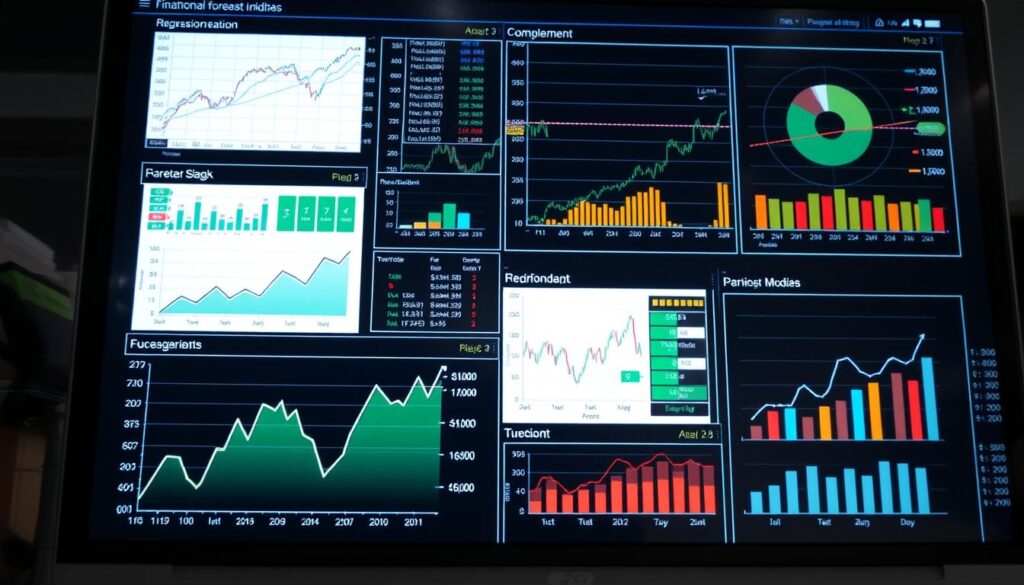
Financial forecasting techniques fall into two main categories: quantitative and qualitative methods. Quantitative approaches rely on numerical data and statistical analysis, while qualitative methods incorporate expert judgment, market research, and other non-numerical inputs.
Quantitative Forecasting Strengths
- Based on objective historical data
- Statistically rigorous and testable
- Less susceptible to personal bias
- Scalable across large datasets
- Provides specific numerical projections
Qualitative Forecasting Strengths
- Incorporates expert knowledge and intuition
- Works with limited or no historical data
- Adapts to unprecedented market changes
- Considers subjective factors like consumer sentiment
- Provides context for quantitative results
The most effective forecasting strategies combine elements from both approaches, using quantitative methods for baseline projections and qualitative insights to adjust for market conditions, competitive factors, and other variables that may not be captured in historical data.
Quantitative Forecasting Methods
Quantitative forecasting methods rely on historical financial data and statistical techniques to identify patterns and project future outcomes. These approaches are particularly valuable when you have reliable historical information and operate in relatively stable market conditions.
Simple Linear Regression for Financial Forecasting
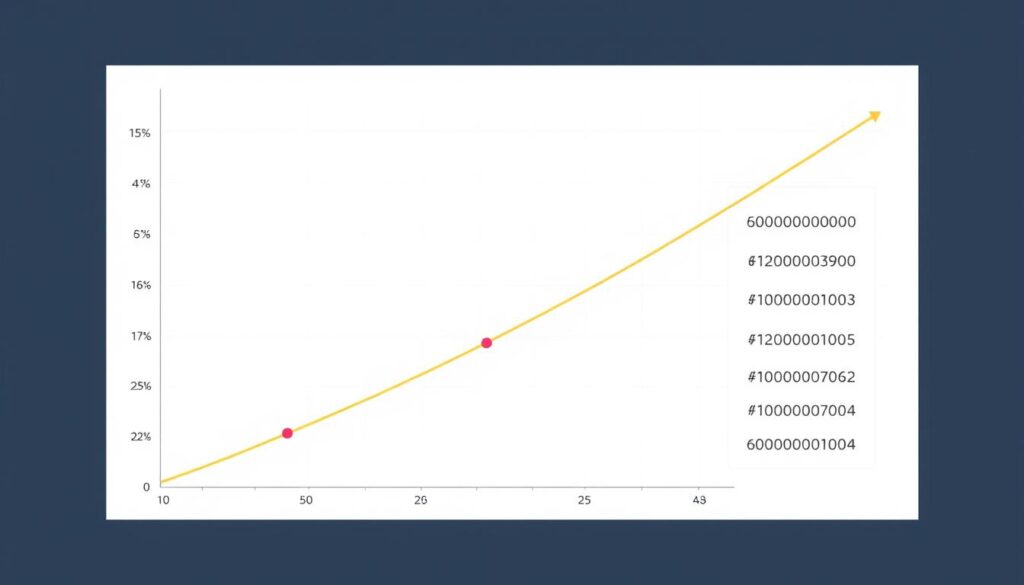
Simple linear regression is one of the most accessible yet powerful forecasting techniques. It establishes a relationship between two variables—typically time and a financial metric like revenue or expenses—to identify trends and make projections.
Simple Linear Regression Formula
Y = a + bX
Where:
- Y = Dependent variable (what you’re forecasting)
- X = Independent variable (typically time)
- a = Y-intercept (baseline value)
- b = Slope (rate of change)
For example, a retail business might use simple linear regression to forecast monthly sales based on historical data. By plotting past sales figures against time and calculating the trend line, the business can project future sales with reasonable accuracy, assuming consistent growth patterns.
Multiple Linear Regression for Complex Forecasting
When multiple factors influence your financial outcomes, multiple linear regression provides a more sophisticated approach. This technique considers several independent variables simultaneously to develop more nuanced projections.
Multiple Linear Regression Formula
Y = a + b₁X₁ + b₂X₂ + … + bₙXₙ
Where:
- Y = Dependent variable (what you’re forecasting)
- X₁, X₂, …, Xₙ = Independent variables (influencing factors)
- a = Y-intercept
- b₁, b₂, …, bₙ = Coefficients (impact of each factor)
A SaaS company might use multiple linear regression to forecast revenue by considering variables like marketing spend, customer acquisition cost, churn rate, and pricing changes. This provides a more comprehensive view of how different business drivers affect financial outcomes.
Moving Average Method
The moving average method smooths out short-term fluctuations to highlight longer-term trends. It’s particularly useful for businesses with seasonal variations or irregular patterns in their financial data.
| Type | Formula | Best Used For | Limitations |
| Simple Moving Average (SMA) | Average of n most recent periods | Smoothing irregular fluctuations | Lags behind trends; equal weight to all periods |
| Weighted Moving Average (WMA) | Weighted average with more recent data weighted higher | Reflecting recent changes while maintaining stability | Requires determining appropriate weights |
| Exponential Moving Average (EMA) | Exponentially weighted average that places more emphasis on recent data | Responsive forecasting in changing environments | More complex; sensitive to smoothing factor |
For instance, a retail business might use a 12-month moving average to forecast annual sales while accounting for seasonal variations. By calculating the average sales for the past 12 months and updating this average as new data becomes available, the business can identify underlying trends while minimizing the impact of seasonal spikes or dips.
Time Series Analysis
Time series analysis examines data points collected over time to identify patterns that can be projected forward. This approach is particularly valuable for businesses with established operating histories and recognizable patterns in their financial data.
Key components of time series analysis include:
Trend Component
The long-term direction of the data, which may be upward, downward, or flat. Identifying the underlying trend helps businesses understand their growth trajectory and make strategic adjustments.
Seasonal Component
Regular fluctuations that occur at specific intervals, such as monthly, quarterly, or annually. Recognizing seasonality allows businesses to plan for predictable variations in demand or costs.
Cyclical Component
Longer-term patterns that don’t have a fixed frequency, often related to business cycles or economic conditions. Identifying cyclical patterns helps businesses prepare for broader market shifts.
Irregular Component
Random variations that don’t fit into the other categories. While unpredictable, analyzing these outliers can reveal unexpected influences on financial performance.
A manufacturing business might use time series analysis to forecast quarterly revenue, decomposing historical data into trend, seasonal, and cyclical components. This allows the business to account for both long-term growth trends and predictable seasonal fluctuations in demand.
Qualitative Forecasting Methods
While quantitative methods rely on historical data and statistical analysis, qualitative forecasting techniques incorporate expert judgment, market research, and other subjective inputs. These approaches are particularly valuable when historical data is limited or when market conditions are changing rapidly.

Financial Business Planning for Beginners: The Delphi Method
The Delphi method is an excellent starting point for beginners in financial forecasting. It systematically collects and refines expert opinions to develop consensus-based projections.
Delphi Method Process
- Assemble a panel of experts with relevant knowledge
- Distribute questionnaires about future financial outcomes
- Collect and anonymize responses
- Share summarized results with the panel
- Allow experts to revise their forecasts based on group feedback
- Repeat until consensus emerges or stability is reached
For example, a startup without extensive historical data might use the Delphi method to forecast first-year revenue. By consulting industry experts, experienced entrepreneurs, and potential customers, the startup can develop reasonable projections despite the lack of company-specific historical information.
Market Research and Scenario Analysis
Market research combines customer surveys, competitor analysis, and industry trends to inform financial projections. When paired with scenario analysis—which explores multiple potential futures—this approach helps businesses prepare for various market conditions.
Best-Case Scenario
Projects financial outcomes under optimal conditions, such as exceeding sales targets, lower-than-expected costs, and favorable market conditions. While optimistic, this scenario helps identify maximum potential and resource requirements for rapid growth.
Base-Case Scenario
Represents the most likely outcome based on current trends and reasonable assumptions. This scenario typically serves as the primary forecast for budgeting and resource allocation decisions.
Worst-Case Scenario
Examines financial outcomes under challenging conditions, such as missed sales targets, higher costs, or market downturns. This scenario helps businesses develop contingency plans and identify minimum resource requirements.
Disruptive Scenario
Considers the impact of major market shifts, technological changes, or other transformative events. While less likely, these scenarios help businesses prepare for significant disruptions to their operating environment.
A technology company might use scenario analysis to forecast revenue under different market adoption rates for a new product. By developing financial projections for rapid adoption, moderate growth, and slow uptake scenarios, the company can create flexible resource allocation plans that adapt to actual market conditions.
How to Manage Financial Business Risks Through Expert Judgment
Expert judgment leverages the knowledge and experience of industry professionals, financial analysts, and company executives to develop forecasts when data is limited or market conditions are changing. This approach is particularly valuable for identifying and managing financial risks.
| Risk Type | Expert Input Source | Forecasting Application | Risk Management Strategy |
| Market Volatility | Industry analysts, economists | Adjust revenue projections for market fluctuations | Diversify revenue streams, build contingency reserves |
| Regulatory Changes | Legal counsel, compliance officers | Incorporate compliance costs into expense forecasts | Develop adaptable processes, budget for compliance |
| Competitive Threats | Sales team, market researchers | Adjust pricing and market share assumptions | Invest in differentiation, monitor competitor actions |
| Technology Disruption | IT leaders, industry innovators | Project potential obsolescence costs | Allocate R&D budget, develop innovation roadmap |
For instance, a healthcare provider might consult with medical professionals, insurance experts, and regulatory specialists to forecast the financial impact of healthcare policy changes. By incorporating these expert insights into their financial projections, the provider can develop strategies to mitigate regulatory risks and adapt to changing reimbursement models.
Financial Analysis Example: Putting Techniques into Practice
To illustrate how financial forecasting techniques work in real-world scenarios, let’s examine a comprehensive example for a growing e-commerce business. This case study demonstrates how different forecasting methods can be combined to develop accurate financial projections.

Small Business Financial Analysis Guide: E-Commerce Case Study
TechGadgets, an e-commerce business selling consumer electronics, needs to forecast its financial performance for the upcoming fiscal year to secure additional financing for expansion. The company has been operating for three years and has experienced steady growth, with some seasonal variations in sales.
Company Profile: TechGadgets
- Business Type: E-commerce retailer
- Products: Consumer electronics and accessories
- Years in Operation: 3 years
- Annual Revenue: $2.4 million (previous year)
- Growth Rate: 25% year-over-year
- Gross Margin: 40%
- Operating Expenses: 30% of revenue
Step 1: Historical Data Analysis
The first step involves analyzing TechGadgets’ historical financial data to identify patterns and trends. The company’s quarterly revenue for the past three years shows both growth and seasonality:
| Quarter | Year 1 Revenue | Year 2 Revenue | Year 3 Revenue | Quarter-over-Quarter Growth |
| Q1 (Jan-Mar) | $320,000 | $400,000 | $500,000 | 25% |
| Q2 (Apr-Jun) | $280,000 | $350,000 | $440,000 | 26% |
| Q3 (Jul-Sep) | $300,000 | $380,000 | $470,000 | 24% |
| Q4 (Oct-Dec) | $500,000 | $630,000 | $790,000 | 25% |
| Annual Total | $1,400,000 | $1,760,000 | $2,200,000 | 25% |
Step 2: Trend Analysis Using Simple Linear Regression
Using simple linear regression, TechGadgets can identify the underlying growth trend in its annual revenue:
Annual Revenue = $1,400,000 + $400,000 × Year
Based on this trend, the projected revenue for Year 4 would be:
$1,400,000 + $400,000 × 4 = $3,000,000
However, this simple projection doesn’t account for seasonality or potential changes in growth rate. For a more accurate forecast, TechGadgets needs to incorporate additional factors.
Step 3: Seasonal Adjustment Using Time Series Analysis
By analyzing quarterly patterns, TechGadgets identifies seasonal factors that affect revenue throughout the year:
Seasonal Factors:
- Q1: 0.95 (slightly below average)
- Q2: 0.85 (lowest season)
- Q3: 0.90 (below average)
- Q4: 1.30 (holiday season peak)
Applying these seasonal factors to the annual projection of $3,000,000 for Year 4:
| Quarter | Calculation | Projected Revenue |
| Q1 (Year 4) | $3,000,000 × 0.25 × 0.95 | $712,500 |
| Q2 (Year 4) | $3,000,000 × 0.25 × 0.85 | $637,500 |
| Q3 (Year 4) | $3,000,000 × 0.25 × 0.90 | $675,000 |
| Q4 (Year 4) | $3,000,000 × 0.25 × 1.30 | $975,000 |
| Annual Total | $3,000,000 |
Step 4: Multiple Regression for Expense Forecasting
TechGadgets uses multiple linear regression to forecast expenses based on revenue, order volume, and marketing spend. The analysis reveals that:
- Cost of Goods Sold (COGS) = 60% of revenue
- Marketing Expenses = 15% of revenue
- Fulfillment Costs = $5 per order (average order value: $120)
- Fixed Operating Expenses = $400,000 annually
Based on these relationships, TechGadgets can forecast its income statement for Year 4:
| Financial Metric | Calculation | Projected Amount |
| Revenue | From time series forecast | $3,000,000 |
| COGS | 60% of revenue | $1,800,000 |
| Gross Profit | Revenue – COGS | $1,200,000 |
| Marketing Expenses | 15% of revenue | $450,000 |
| Fulfillment Costs | $5 × (Revenue ÷ $120) | $125,000 |
| Fixed Operating Expenses | Annual estimate | $400,000 |
| Total Expenses | Sum of all expenses | $975,000 |
| Operating Profit | Gross Profit – Total Expenses | $225,000 |
Step 5: Scenario Analysis for Risk Management
To account for uncertainty, TechGadgets develops three scenarios:
Conservative Scenario
- Growth Rate: 15%
- Projected Revenue: $2,530,000
- Operating Profit: $127,000
Base Scenario
- Growth Rate: 25%
- Projected Revenue: $3,000,000
- Operating Profit: $225,000
Optimistic Scenario
- Growth Rate: 35%
- Projected Revenue: $3,470,000
- Operating Profit: $323,000
This comprehensive approach combines multiple forecasting techniques to develop a nuanced financial projection that accounts for growth trends, seasonality, expense relationships, and potential variations. By using this forecast, TechGadgets can make informed decisions about expansion plans, inventory management, staffing needs, and financing requirements.
Templates You Can Use for Financial Forecasting
Implementing financial forecasting techniques becomes significantly easier with the right templates. These pre-built tools provide structure for your forecasting process and ensure you capture all essential elements of your financial projections.
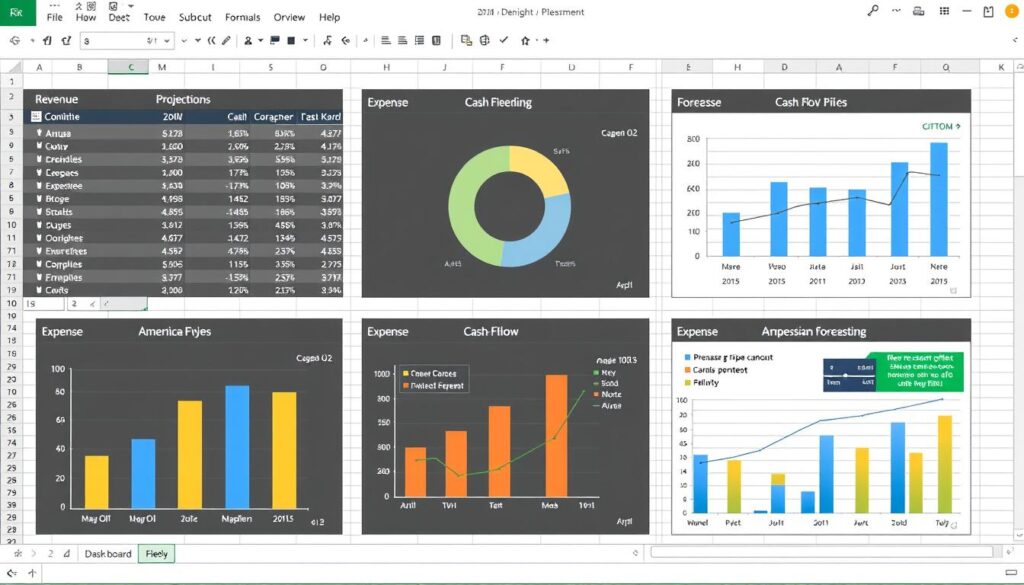
Financial Business Budgeting Strategies with Excel Templates
Excel remains one of the most versatile and accessible tools for financial forecasting. These templates help streamline the budgeting process while implementing proven forecasting techniques:
Revenue Forecasting Template
This template uses time series analysis and seasonal adjustments to project revenue across multiple product lines or service categories. It includes:
- Monthly, quarterly, and annual projections
- Seasonal factor adjustments
- Growth rate calculations
- Visualization of revenue trends
Cash Flow Projection Template
Manage liquidity and plan for cash needs with this comprehensive cash flow template. Features include:
- 13-week rolling cash forecast
- Accounts receivable aging analysis
- Payment timing projections
- Cash buffer calculations
Expense Forecasting Template
Project costs with greater accuracy using regression analysis and trend-based forecasting. This template includes:
- Fixed vs. variable cost breakdown
- Cost driver analysis
- Expense trend visualization
- Budget variance tracking
Steps to Build a Financial Business Model Template
For more advanced forecasting needs, a comprehensive financial model integrates multiple forecasting techniques into a cohesive projection system. Follow these steps to build your own custom financial model template:
- Define Model Objectives – Clarify what decisions the model will support and what outputs are needed.
- Design Model Structure – Create separate worksheets for inputs, calculations, and outputs.
- Build Revenue Projections – Implement appropriate forecasting techniques based on your business type and available data.
- Develop Expense Forecasts – Create driver-based expense projections that link to revenue and operational metrics.
- Construct Financial Statements – Build integrated income statement, balance sheet, and cash flow projections.
- Add Scenario Capabilities – Create toggle switches for different assumptions to enable scenario analysis.
- Incorporate Sensitivity Analysis – Add data tables or scenario managers to test the impact of key variables.
- Design Dashboard Outputs – Create visual summaries of key metrics and projections.
Get Your Complete Financial Forecasting Toolkit
Access our comprehensive collection of financial forecasting templates, including revenue projections, cash flow forecasts, expense models, and integrated financial statements. These Excel-based tools implement the forecasting techniques discussed in this guide and can be customized for your specific business needs.
Step-by-Step Strategy for Implementing Forecasting
Implementing effective financial forecasting requires a systematic approach that builds forecasting capabilities over time. This step-by-step strategy helps businesses develop robust forecasting processes that deliver reliable financial projections.

Financial Business Decision-Making Process with Forecasting
Implementation Roadmap
- Assess Current Capabilities – Evaluate existing forecasting processes, tools, and data availability.
- Define Forecasting Objectives – Clarify what decisions will be supported by forecasts and what metrics matter most.
- Select Appropriate Techniques – Choose forecasting methods based on your business type, available data, and specific needs.
- Gather and Prepare Data – Collect historical financial information and ensure data quality and consistency.
- Develop Initial Forecasts – Apply selected techniques to create baseline projections.
- Incorporate Business Intelligence – Adjust statistical forecasts based on market knowledge and business plans.
- Create Scenarios – Develop multiple forecast scenarios to account for uncertainty.
- Implement Regular Reviews – Establish a cadence for comparing actual results to forecasts.
- Refine and Improve – Continuously enhance forecasting methods based on accuracy analysis.
How to Improve Financial Business Efficiency Through Forecasting
Beyond basic projections, forecasting can drive significant operational efficiencies when integrated into business processes:
Inventory Optimization
Use sales forecasts to optimize inventory levels, reducing carrying costs while maintaining sufficient stock to meet customer demand. Implement just-in-time ordering based on projected sales patterns and lead times.
Staffing Alignment
Align workforce planning with projected business volume to avoid both understaffing (which limits growth) and overstaffing (which increases costs). Develop flexible staffing models that can adapt to forecast scenarios.
Cash Management
Optimize cash positions based on projected inflows and outflows, minimizing idle cash while ensuring sufficient liquidity for operations. Implement cash concentration strategies that align with forecast cash needs.
Capital Allocation
Prioritize investments based on projected returns and cash availability, ensuring capital is deployed to the highest-value opportunities. Develop a portfolio approach to capital projects with timing based on forecast cash flows.
Financial Business Cash Flow Improvement Tips Through Forecasting
Cash flow forecasting deserves special attention, as it directly impacts business sustainability and growth potential:
| Cash Flow Element | Forecasting Approach | Improvement Strategy |
| Customer Payments | Aging-based collection forecasting | Implement early payment incentives for customers with projected late payments |
| Vendor Payments | Payment timing optimization | Schedule payments based on forecast cash positions and vendor terms |
| Inventory Purchases | Sales-driven inventory forecasting | Time major purchases to align with projected cash inflows |
| Tax Payments | Profit-based tax liability forecasting | Set aside reserves based on projected tax obligations |
By implementing these strategies, businesses can transform forecasting from a periodic financial exercise into an integrated management tool that drives operational efficiency, cash flow optimization, and strategic decision-making.
Best Tools for Financial Business Planning
While techniques and strategies form the foundation of effective forecasting, the right tools can significantly enhance accuracy, efficiency, and insights. Modern financial planning tools range from accessible spreadsheet applications to sophisticated forecasting platforms.
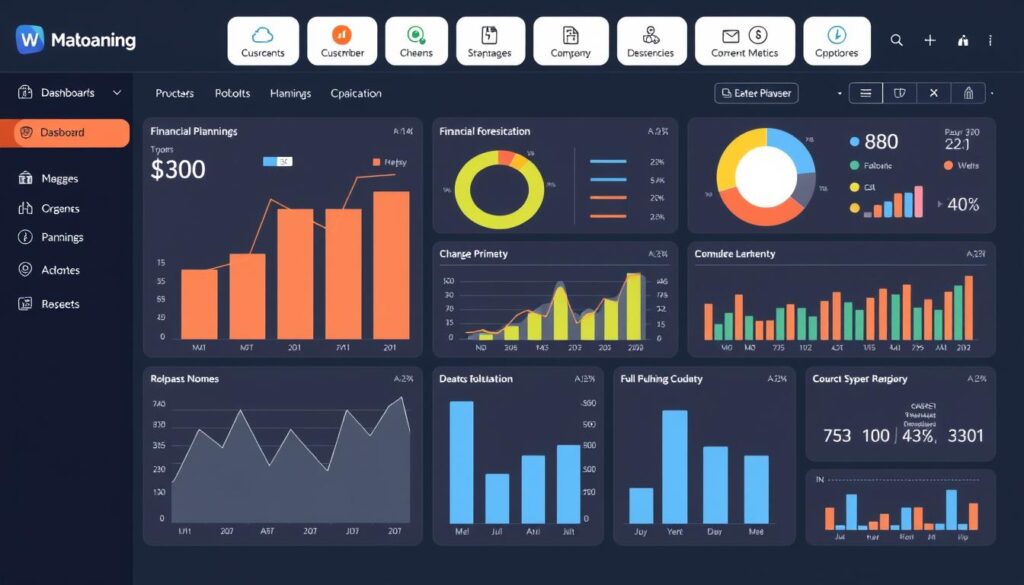
How to Automate Financial Business Processes with Tools
Automation transforms financial forecasting from a time-consuming manual process into a streamlined system that delivers timely insights with minimal effort. Key automation opportunities include:
Data Collection
Automated data feeds from accounting systems, CRM platforms, and operational databases ensure forecasts use the most current information without manual data entry. This reduces errors and saves significant time in the forecasting process.
Calculation Engines
Predefined formulas and statistical models automatically apply forecasting techniques to your data, eliminating complex manual calculations. These engines can implement multiple forecasting methods simultaneously for comparison.
Scenario Generation
Automated scenario tools create multiple forecast versions based on different assumptions, enabling comprehensive risk assessment and contingency planning without duplicating effort.
Financial Business Tools for Entrepreneurs
Entrepreneurs and small business owners need accessible yet powerful forecasting tools that don’t require extensive financial expertise. These solutions offer the right balance of capability and usability:
| Tool Category | Recommended Options | Key Features | Best For |
| Spreadsheet Applications | Microsoft Excel, Google Sheets | Flexible modeling, built-in functions, custom formatting | Businesses with basic forecasting needs and limited budget |
| Financial Planning Software | QuickBooks, Xero, FreshBooks | Accounting integration, basic forecasting, cash flow projections | Small businesses seeking integrated accounting and forecasting |
| Dedicated Forecasting Platforms | Anaplan, Adaptive Planning, Cube | Advanced modeling, collaboration, scenario planning | Growing businesses with complex forecasting requirements |
| Business Intelligence Tools | Power BI, Tableau, Looker | Data visualization, interactive dashboards, trend analysis | Data-driven businesses seeking visual insights from forecasts |
Financial Business Reporting Best Practices with Modern Tools
Effective reporting transforms forecast data into actionable insights that drive better business decisions. Modern tools enable these reporting best practices:
Visual Dashboards
Create interactive visualizations that highlight key metrics, trends, and variances. Effective dashboards present forecast information in an intuitive format that enables quick understanding and decision-making.
Exception Reporting
Configure alerts for significant variances between actual results and forecasts. This focuses attention on areas requiring investigation or intervention rather than reviewing all metrics.
Rolling Forecasts
Implement continuous forecasting that extends the projection horizon as time progresses. This maintains a consistent forward-looking view rather than waiting for periodic forecast updates.
Drill-Down Capabilities
Enable users to explore the underlying data and assumptions behind forecast figures. This transparency builds confidence in projections and facilitates deeper analysis.
Elevate Your Financial Forecasting
Discover how our comprehensive financial forecasting guide can help you implement these techniques and tools in your business. Get access to expert insights, practical examples, and customizable templates that make financial forecasting accessible and effective.
Common Forecasting Mistakes and How to Avoid Them
Even with the right techniques and tools, financial forecasting can go awry if common pitfalls aren’t addressed. Understanding these mistakes and implementing preventive measures ensures more accurate and useful forecasts.

Financial Business Growth Strategies: Avoiding Forecast Pitfalls
Overreliance on Historical Data
Mistake: Assuming past patterns will continue without considering changing market conditions or business environment.
Solution: Complement historical analysis with market research, competitive intelligence, and scenario planning that accounts for potential changes.
Ignoring Seasonality
Mistake: Projecting consistent growth or performance without accounting for seasonal variations that affect many businesses.
Solution: Analyze historical data for seasonal patterns and apply appropriate adjustments to forecasts based on these patterns.
Confirmation Bias
Mistake: Favoring information that confirms existing beliefs or desired outcomes while discounting contradictory data.
Solution: Implement structured forecasting processes that require consideration of multiple data sources and perspectives.
Inadequate Sensitivity Analysis
Mistake: Failing to test how changes in key assumptions affect forecast outcomes, leading to false confidence in projections.
Solution: Develop multiple scenarios based on different assumptions and identify which variables have the greatest impact on results.
Financial Business Management for Startups: Forecast Realism
Startups face unique forecasting challenges due to limited historical data and rapidly changing conditions. These strategies help maintain forecast realism:
Startup Forecasting Best Practices
- Start with market size – Base initial projections on realistic market penetration rates rather than arbitrary growth targets.
- Benchmark against comparables – Research similar companies’ growth trajectories to inform your projections.
- Focus on unit economics – Ensure your forecast reflects realistic customer acquisition costs, lifetime value, and conversion rates.
- Build from the bottom up – Develop detailed projections based on specific activities and resources rather than top-down targets.
- Include cash runway analysis – Always forecast how long your cash will last under various scenarios to avoid liquidity crises.
Financial Business Ratios Explained: Forecast Validation
Financial ratios provide a powerful tool for validating forecast reasonableness and identifying potential inconsistencies. Key ratios to monitor include:
| Ratio Category | Key Ratios | Validation Questions |
| Profitability | Gross margin, Operating margin, Net profit margin | Are projected margins consistent with historical performance and industry benchmarks? Do they reflect planned operational improvements? |
| Efficiency | Inventory turnover, Asset turnover, Days sales outstanding | Do efficiency metrics improve logically based on planned initiatives? Are projected improvements realistic given historical trends? |
| Liquidity | Current ratio, Quick ratio, Cash conversion cycle | Does the forecast maintain adequate liquidity throughout the projection period? Are seasonal cash needs accounted for? |
| Growth | Revenue growth rate, Customer acquisition rate, Market share | Is projected growth consistent with market conditions and company capabilities? Does it reflect realistic customer acquisition and retention? |
By regularly reviewing these ratios as part of your forecasting process, you can identify potential issues before they affect business performance and make appropriate adjustments to ensure your projections remain realistic and achievable.
Frequently Asked Questions
What is the most accurate financial forecasting technique?
There is no single “most accurate” technique, as the best approach depends on your business type, available data, and specific forecasting needs. For businesses with substantial historical data and stable operations, quantitative methods like multiple regression or time series analysis often provide high accuracy. For new ventures or rapidly changing markets, qualitative methods that incorporate expert judgment may be more reliable. Many successful businesses use a combination of techniques, leveraging the strengths of each approach while mitigating their limitations.
How far into the future should financial forecasts extend?
The appropriate forecasting horizon varies based on your business needs and industry characteristics. Short-term forecasts (1-3 months) are typically used for operational planning and cash management. Medium-term forecasts (3-12 months) support budgeting and resource allocation. Long-term forecasts (1-5 years) inform strategic planning and major investments. As a general rule, forecast accuracy diminishes with time, so longer-term projections should focus more on trends and scenarios rather than precise figures. Many businesses implement rolling forecasts that maintain a consistent forward-looking period (e.g., always projecting 12 months ahead) and update regularly.
How often should financial forecasts be updated?
Update frequency depends on your business volatility and the forecast’s purpose. Operational forecasts typically require monthly or even weekly updates, while strategic forecasts might be reviewed quarterly. The key is establishing a regular cadence that balances the need for current information with the effort required for updates. Many businesses implement a tiered approach: weekly updates for cash forecasts, monthly for revenue and expense projections, and quarterly for comprehensive financial models. Regardless of the schedule, forecasts should also be updated when significant events or changes occur that invalidate previous assumptions.
What financial business tax planning tips should be incorporated into forecasts?
Effective tax planning in financial forecasts involves several key considerations. First, incorporate accurate tax rate assumptions based on your business structure and jurisdictions. Second, model the timing of tax payments to ensure proper cash flow planning. Third, project the tax implications of major business decisions like equipment purchases (potential depreciation benefits) or international expansion (different tax regimes). Fourth, consider scenario analysis for potential tax law changes, especially during election years or periods of significant legislative activity. Finally, work with tax professionals to identify optimization opportunities that can be built into your forecasts, such as R&D credits, investment incentives, or strategic timing of income and expenses.
How can small businesses implement financial forecasting with limited resources?
Small businesses can implement effective forecasting without extensive resources by focusing on simplicity and core metrics. Start with basic spreadsheet templates that forecast cash flow, revenue, and key expenses. Focus initial efforts on short-term cash forecasting to ensure business sustainability. Leverage free or low-cost tools like Google Sheets or basic accounting software with forecasting capabilities. Consider outsourced expertise through fractional CFOs or financial consultants for periodic forecast development or review. As your business grows, gradually increase forecast sophistication by adding more detailed projections, additional metrics, and eventually more advanced tools. Remember that even simple forecasts, consistently maintained and reviewed, provide significant value over having no forward-looking financial visibility.
What are the key differences between financial forecasting and financial modeling?
While related, financial forecasting and modeling serve different purposes. Financial forecasting specifically focuses on predicting future financial outcomes based on historical data, trends, and assumptions. It typically produces specific projections for metrics like revenue, expenses, and cash flow. Financial modeling, by contrast, is a broader process that creates a mathematical representation of a business or project to simulate various scenarios and decisions. Models often incorporate forecasts but extend beyond them to analyze relationships between variables, test different assumptions, and evaluate strategic alternatives. In essence, forecasting predicts what is likely to happen, while modeling explores what could happen under various conditions and decisions.
How can I improve the accuracy of my financial forecasts?
Improving forecast accuracy requires both technical and process enhancements. First, ensure data quality by implementing consistent definitions, validation procedures, and source systems. Second, select appropriate forecasting techniques based on your specific business characteristics and available data. Third, incorporate both quantitative analysis and qualitative business intelligence, combining statistical rigor with market knowledge. Fourth, implement regular variance analysis to understand why actual results differ from forecasts and use these insights to refine future projections. Fifth, develop multiple scenarios that account for different potential outcomes rather than relying on single-point forecasts. Finally, create a culture of forecast integrity that values accuracy over wishful thinking or political considerations.
What role does artificial intelligence play in financial forecasting?
Artificial intelligence is transforming financial forecasting by enhancing accuracy, processing more variables, and identifying complex patterns that traditional methods might miss. Machine learning algorithms can analyze vast datasets to detect subtle relationships between business drivers and financial outcomes. AI can automatically select the most appropriate forecasting method for different metrics and time horizons. Natural language processing can incorporate unstructured data like news, social media, and customer feedback into forecasts. Predictive analytics can identify early warning signs of changing conditions that might affect financial performance. While AI offers powerful capabilities, it works best when combined with human judgment to interpret results, provide context, and make final decisions based on both algorithmic outputs and business knowledge.
How do I forecast for a new business with no historical data?
Forecasting for new businesses requires alternative approaches when historical data isn’t available. Start with market-based forecasting by researching industry benchmarks, competitor performance, and market size to establish realistic parameters. Develop bottom-up projections based on specific operational plans, such as sales capacity, production capabilities, and marketing activities. Create detailed customer acquisition models that project how marketing efforts will translate into customers and revenue. Use analogous forecasting by studying similar businesses’ early growth trajectories and adapting them to your specific circumstances. Implement scenario planning with multiple projections based on different assumptions about market response and business execution. Finally, establish key milestones and regularly reassess forecasts as you gather actual performance data, adjusting projections based on real-world feedback.
What are the most important metrics to include in financial forecasts?
While specific metrics vary by industry and business model, comprehensive financial forecasts typically include several core elements. Revenue projections broken down by product line, service category, or customer segment provide visibility into top-line growth. Gross margin forecasts by offering help assess product profitability. Operating expense projections by department or function enable cost management. Cash flow forecasts with timing of receipts and disbursements ensure liquidity. Working capital metrics like inventory levels, accounts receivable, and accounts payable project balance sheet impacts. Capital expenditure forecasts outline investment needs and timing. Customer metrics such as acquisition cost, lifetime value, and churn rates drive revenue projections. Finally, industry-specific KPIs relevant to your business model (e.g., occupancy rates for hotels, subscription metrics for SaaS) provide additional context for financial projections.
Conclusion: Mastering Financial Business Forecasting Techniques
Effective financial forecasting is not just about predicting numbers—it’s about creating a roadmap for business success. By implementing the techniques, tools, and strategies outlined in this guide, you can develop forecasts that inform better decisions, optimize resource allocation, and prepare your business for both challenges and opportunities.
Remember that forecasting is an ongoing process rather than a one-time exercise. The most successful businesses continuously refine their forecasting approaches, learn from variances between projections and actual results, and adapt their methods as business conditions evolve. This dynamic approach transforms forecasting from a compliance activity into a strategic advantage that drives sustainable growth and profitability.
Whether you’re a startup founder creating your first financial projections or an established business seeking to enhance forecast accuracy, the investment in developing robust forecasting capabilities delivers significant returns through improved decision-making, optimized operations, and stronger stakeholder confidence.
Take Your Financial Forecasting to the Next Level
Ready to implement these financial business forecasting techniques in your organization? Download our comprehensive Financial Forecasting Toolkit, complete with Excel templates, implementation guides, and expert tips that make advanced forecasting accessible to businesses of all sizes.