
What You’ll Learn About Business Finance Strategies
- How to create a comprehensive financial business plan
- Essential financial management techniques for small businesses
- Effective budgeting and forecasting strategies
- Cash flow optimization methods
- Risk management approaches for financial stability
- Tools and resources for financial business planning
- Step-by-step implementation of growth-focused financial strategies
How to Create a Financial Business Plan for Growth
A well-structured financial business plan serves as your roadmap for growth. It outlines your current financial position, sets clear objectives, and details the strategies to achieve them. Let’s explore the key components of an effective financial business plan.
Essential Components of a Financial Business Plan
- Executive Summary: A concise overview of your financial goals and strategies
- Business Description: Your business model and how it generates revenue
- Market Analysis: Understanding of your industry, competitors, and target market
- Financial Statements: Current balance sheets, income statements, and cash flow projections
- Funding Requirements: Capital needed for growth initiatives
- Financial Projections: Forecasts for revenue, expenses, and profitability
- Risk Assessment: Potential financial challenges and mitigation strategies
Financial Business Planning for Beginners
If you’re new to financial business planning, start by gathering accurate data about your current financial position. Track all income sources and expenses for at least three months to establish baseline metrics. Next, set realistic financial goals that align with your overall business objectives. These might include increasing revenue by a specific percentage, reducing operational costs, or securing funding for expansion.
Use financial planning software to simplify the process. Tools like QuickBooks, Xero, or FreshBooks can help you organize financial data and generate reports. Remember that your financial plan should be a living document that evolves as your business grows and market conditions change.
Financial Business Management Tips for Sustainable Growth
Effective financial management is crucial for sustainable business growth. By implementing these proven strategies, you can optimize your financial operations and create a solid foundation for expansion.
Separate Business and Personal Finances
One of the most important financial business management tips is to maintain strict separation between personal and business finances. Open dedicated business bank accounts and credit cards to track business transactions accurately. This separation not only simplifies accounting and tax preparation but also provides a clearer picture of your business’s financial health.

Implement Regular Financial Reviews
Schedule monthly financial reviews to assess your business’s performance against projections. Analyze key metrics such as revenue growth, profit margins, and expense ratios. These regular check-ins allow you to identify trends, spot potential issues early, and make timely adjustments to your financial strategies.
Build Strong Vendor Relationships
Developing strong relationships with vendors can lead to more favorable payment terms, discounts, and priority service. Negotiate extended payment periods to improve cash flow while maintaining timely payments to build trust. Consider consolidating vendors where possible to increase purchasing power and potentially secure volume discounts.
Need Expert Financial Guidance?
Our team of financial experts can help you implement these strategies and customize them to your specific business needs.
Best Tools for Financial Business Planning and Growth
Leveraging the right financial tools can streamline your planning process and provide valuable insights for growth-focused decision-making. Here are some essential tools for small business financial management:
| Tool Category | Recommended Options | Key Features | Best For |
| Accounting Software | QuickBooks, Xero, FreshBooks | Invoicing, expense tracking, financial reporting | Day-to-day financial management |
| Budgeting Tools | PlanGuru, Float, Prophix | Budget creation, scenario planning, variance analysis | Financial forecasting and planning |
| Cash Flow Management | Pulse, Cushion, Runway | Cash flow projections, payment tracking, alert systems | Optimizing working capital |
| Financial Analysis | Fathom, Spotlight Reporting, Jirav | KPI dashboards, trend analysis, custom reporting | Performance monitoring and strategic planning |
| Tax Management | TaxJar, Avalara, TaxCloud | Tax calculation, filing assistance, compliance monitoring | Tax planning and compliance |
Financial Business Tools for Entrepreneurs
Beyond the core financial management tools, entrepreneurs should consider specialized solutions that address specific business needs:
Expense Management
Tools like Expensify or Ramp help track and manage business expenses, simplifying reimbursement processes and providing insights into spending patterns. These platforms often integrate with accounting software for seamless financial tracking.
Inventory Management
For product-based businesses, inventory management tools such as Sortly or inFlow help optimize stock levels, reducing tied-up capital while ensuring product availability. These systems can track inventory costs and integrate with financial reporting.

How to Track Financial Business Performance Effectively
Monitoring your business’s financial performance is essential for identifying growth opportunities and addressing potential issues before they impact your bottom line. Implementing a structured approach to performance tracking enables data-driven decision-making.
Key Financial Metrics to Monitor
- Revenue Growth Rate: Measures how quickly your sales are increasing
- Gross Profit Margin: Indicates the efficiency of your core operations
- Net Profit Margin: Shows overall profitability after all expenses
- Operating Cash Flow: Reveals cash generated from regular business activities
- Accounts Receivable Turnover: Measures how quickly customers pay
- Inventory Turnover: Indicates how efficiently inventory is managed
- Customer Acquisition Cost: Shows the expense of gaining new customers
- Customer Lifetime Value: Estimates the total revenue from a typical customer
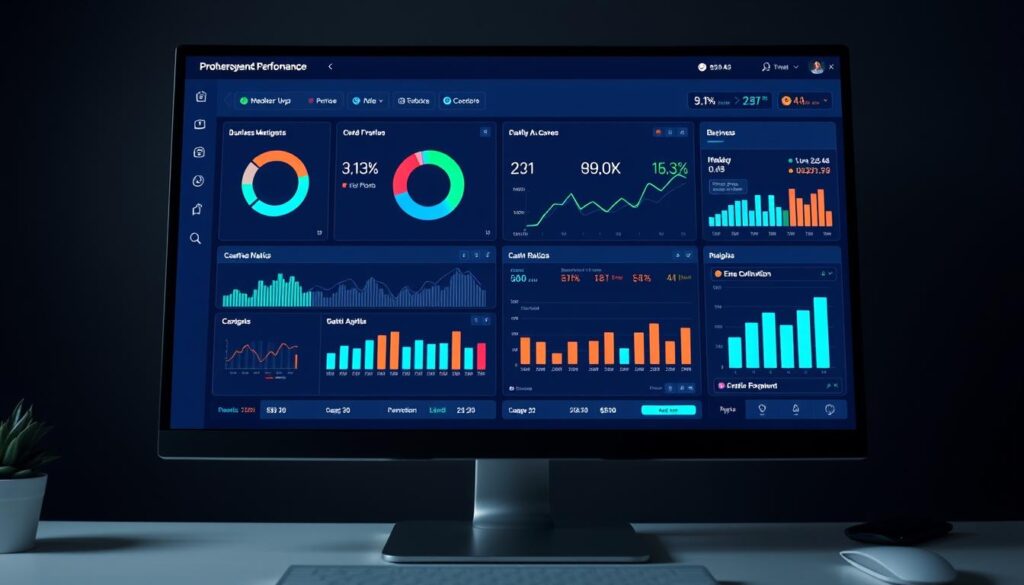
Creating Effective Financial Dashboards
Develop customized dashboards that display your most important financial metrics at a glance. These visual tools help you quickly assess performance and identify trends. Include both lagging indicators (what has already happened) and leading indicators (predictive metrics) for a comprehensive view of your business’s financial health.
Implementing Regular Financial Reviews
Establish a consistent schedule for reviewing financial performance. Monthly reviews should focus on operational metrics and short-term goals, while quarterly reviews should examine broader trends and progress toward strategic objectives. Annual reviews should include comprehensive analysis and planning for the upcoming year.
Financial Business Forecasting Techniques for Growth Planning
Accurate financial forecasting is crucial for planning growth initiatives and ensuring your business has the resources to support expansion. By implementing proven forecasting techniques, you can make more informed decisions about investments, hiring, and market expansion.
Types of Financial Forecasts
Short-term Forecasts (1-3 months)
Focus on immediate cash flow needs, inventory requirements, and staffing adjustments. These forecasts help manage day-to-day operations and address seasonal fluctuations.
Medium-term Forecasts (3-12 months)
Project revenue, expenses, and profitability for the coming year. These forecasts inform budgeting decisions, marketing campaigns, and operational improvements.
Long-term Forecasts (1-5 years)
Outline strategic growth plans, capital investments, and market expansion. These forecasts guide major business decisions and help secure external funding.
Scenario-based Forecasts
Develop multiple projections based on different assumptions (best case, expected case, worst case). This approach helps prepare for various market conditions and business challenges.
Forecasting Methods for Small Businesses
Several forecasting methods can be effective for small businesses, depending on your industry and available data:

| Forecasting Method | Best Used For | Accuracy Level | Resource Requirements |
| Historical Trend Analysis | Stable businesses with consistent patterns | Moderate to High | Low |
| Moving Average | Smoothing out seasonal fluctuations | Moderate | Low |
| Regression Analysis | Understanding relationships between variables | High | Moderate |
| Sales Pipeline Analysis | B2B businesses with longer sales cycles | High (short-term) | Moderate |
| Driver-based Forecasting | Businesses with identifiable growth drivers | Very High | High |
Small Business Financial Analysis Guide
Conducting regular financial analysis helps you understand your business’s performance, identify improvement opportunities, and make strategic decisions. This systematic approach to evaluating financial data provides valuable insights for growth planning.
Financial Business Ratios Explained
Financial ratios provide standardized metrics for assessing various aspects of your business’s performance. Here are key ratios every small business owner should monitor:
Liquidity Ratios
Current Ratio = Current Assets ÷ Current Liabilities
Measures your ability to pay short-term obligations. A ratio of 2:1 or higher is generally considered healthy.
Quick Ratio = (Current Assets – Inventory) ÷ Current Liabilities
A more stringent measure of short-term liquidity that excludes inventory.
Profitability Ratios
Gross Profit Margin = (Revenue – COGS) ÷ Revenue × 100
Shows the percentage of revenue retained after accounting for the cost of goods sold.
Net Profit Margin = Net Income ÷ Revenue × 100
Indicates the percentage of revenue that translates into profit after all expenses.
Efficiency Ratios
Inventory Turnover = COGS ÷ Average Inventory
Measures how quickly inventory is sold and replaced.
Accounts Receivable Turnover = Net Credit Sales ÷ Average Accounts Receivable
Indicates how efficiently you collect payments from customers.
Leverage Ratios
Debt-to-Equity Ratio = Total Liabilities ÷ Shareholders’ Equity
Shows the proportion of financing that comes from creditors versus owners.
Interest Coverage Ratio = EBIT ÷ Interest Expense
Measures your ability to pay interest on outstanding debt.

Financial Analysis Example
Let’s examine how financial analysis can guide strategic decisions for a small retail business:
Case Study: Main Street Boutique
Main Street Boutique, a clothing retailer, conducted a comprehensive financial analysis that revealed the following insights:
- Gross Profit Margin: 45% (industry average: 42%)
- Inventory Turnover: 4x annually (industry average: 6x)
- Operating Expense Ratio: 38% (industry average: 35%)
- Customer Acquisition Cost: $45 (up from $30 last year)
Analysis Insights: While the boutique’s gross margins were strong, its inventory turnover was below industry average, indicating potential issues with merchandise selection or pricing. The higher-than-average operating expenses and increasing customer acquisition costs suggested inefficiencies in operations and marketing.
Strategic Actions: Based on this analysis, the boutique implemented targeted improvements:
- Revised inventory purchasing to focus on faster-selling items
- Implemented markdown strategies for slow-moving merchandise
- Renegotiated lease terms to reduce fixed costs
- Shifted marketing budget toward customer retention programs
Results: Within six months, inventory turnover improved to 5.5x annually, operating expenses decreased to 36%, and customer acquisition costs stabilized at $35, resulting in a 15% increase in net profit.
How to Manage Financial Business Risks
Effective risk management is essential for protecting your business’s financial health and ensuring sustainable growth. By identifying potential risks and implementing mitigation strategies, you can reduce the impact of unexpected events on your business.
Common Financial Risks for Small Businesses
- Cash Flow Disruptions: Insufficient working capital to cover operational expenses
- Customer Concentration: Over-reliance on a small number of customers
- Credit Risk: Customers unable or unwilling to pay for products or services
- Interest Rate Fluctuations: Increased costs for variable-rate loans
- Currency Exchange Risk: Value changes affecting international transactions
- Regulatory Compliance: Penalties for failing to meet legal requirements
- Cybersecurity Threats: Financial losses from data breaches or fraud

Risk Mitigation Strategies
Implement these strategies to protect your business from financial risks:
Diversify Revenue Streams
Reduce dependency on any single customer, product, or market segment. Aim to ensure that no single client represents more than 15-20% of your total revenue. Explore complementary products or services that can generate additional income while leveraging existing resources.
Maintain Adequate Cash Reserves
Build an emergency fund covering 3-6 months of operating expenses. This buffer provides financial stability during unexpected downturns or cash flow disruptions. Consider establishing a line of credit as a backup funding source before you actually need it.
Implement Strong Credit Policies
Establish clear credit terms and conduct thorough customer credit checks. Implement efficient invoicing processes and follow up promptly on overdue payments. Consider offering discounts for early payment to improve cash flow.
Secure Appropriate Insurance Coverage
Review and update insurance policies regularly to ensure adequate protection. Key coverages include general liability, property, business interruption, professional liability, and cyber insurance. Work with an experienced insurance broker who understands your industry.
Financial Business Budgeting Strategies for Growth
Effective budgeting is a cornerstone of financial management and business growth. A well-designed budget helps allocate resources efficiently, control costs, and invest strategically in growth opportunities.
Budgeting Approaches for Small Businesses
| Budgeting Method | Description | Best For | Implementation Complexity |
| Traditional (Incremental) | Adjusts previous period’s budget by a set percentage | Stable businesses with predictable expenses | Low |
| Zero-based | Starts from zero and justifies all expenses | Cost reduction initiatives and startups | High |
| Activity-based | Allocates resources based on specific activities | Businesses with diverse product/service lines | Moderate |
| Rolling | Continuously updates budget for the next 12 months | Dynamic markets with changing conditions | Moderate |
| Flexible | Adjusts based on actual activity levels | Businesses with variable costs tied to volume | Moderate |

Growth-Focused Budgeting Tips
- Prioritize Strategic Investments: Allocate resources to initiatives with the highest growth potential and ROI
- Build in Flexibility: Set aside contingency funds (typically 5-10% of total budget) for unexpected opportunities or challenges
- Focus on Value Drivers: Identify and invest in activities that directly contribute to customer value and revenue growth
- Implement Regular Reviews: Schedule monthly budget reviews to track performance and make necessary adjustments
- Balance Short and Long-term Goals: Allocate resources to both immediate needs and long-term strategic objectives
Optimize Your Business Budget for Growth
Download our free Excel-based budgeting templates designed specifically for small businesses focused on growth.
Steps to Build a Financial Business Model
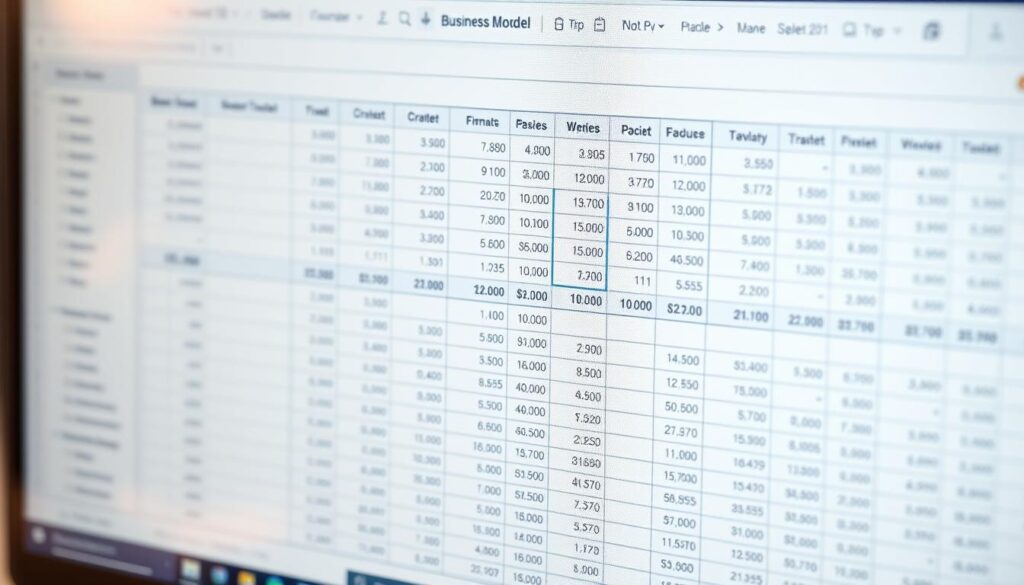
A financial business model is a quantitative representation of your business operations that helps forecast financial performance and evaluate strategic decisions. Building a comprehensive model enables you to test assumptions, analyze scenarios, and make data-driven growth decisions.
Key Components of a Financial Business Model
- Revenue Projections: Detailed forecasts of sales volume, pricing, and revenue streams
- Cost Structure: Fixed and variable costs associated with operations
- Capital Requirements: Investments needed for growth initiatives
- Cash Flow Projections: Timing of cash inflows and outflows
- Profitability Analysis: Gross and net profit margins by product/service
- Break-even Analysis: Sales volume needed to cover costs
- Sensitivity Analysis: Impact of changing key variables on financial outcomes
Step-by-Step Model Building Process
- Define Model Objectives: Clarify the specific questions your model should answer (e.g., profitability of a new product line, impact of hiring additional staff)
- Gather Historical Data: Collect relevant financial information from past periods to establish baselines
- Identify Key Drivers: Determine the factors that most significantly impact your financial performance
- Structure Your Model: Create separate sections for inputs, calculations, and outputs
- Build Revenue Projections: Forecast sales based on market analysis, pricing strategy, and growth assumptions
- Model Cost Structure: Detail fixed and variable costs, including how they scale with growth
- Create Financial Statements: Generate projected income statements, balance sheets, and cash flow statements
- Perform Scenario Analysis: Test different assumptions to understand potential outcomes
- Validate the Model: Check for errors and verify that projections align with business realities
- Update Regularly: Refine the model as new data becomes available
How to Automate Financial Business Processes
Automating routine financial processes can significantly improve efficiency, reduce errors, and free up time for strategic activities. Modern technology solutions make it easier than ever for small businesses to implement automation across various financial functions.
Key Financial Processes to Automate
Accounts Payable
Implement systems that automatically capture invoices, route them for approval, and schedule payments. This reduces manual data entry, prevents duplicate payments, and helps capture early payment discounts. Solutions like Bill.com or Melio can streamline the entire process.
Accounts Receivable
Set up automated invoicing, payment reminders, and receipt processing. This improves cash flow by reducing the time between service delivery and payment collection. Tools like QuickBooks, Xero, or FreshBooks offer robust AR automation features.
Payroll Processing
Automate tax calculations, direct deposits, and compliance reporting. This ensures accurate and timely payments while reducing administrative burden. Gusto, ADP, and Paychex are popular solutions for small business payroll automation.
Expense Management
Implement digital systems for expense submission, approval, and reimbursement. This improves tracking, reduces fraud, and simplifies expense categorization. Expensify, Zoho Expense, and Ramp offer comprehensive expense management automation.

Implementation Strategy for Financial Automation
- Assess Current Processes: Document existing workflows and identify pain points and inefficiencies
- Prioritize Opportunities: Focus on high-volume, repetitive tasks with the greatest potential for time savings
- Select Appropriate Tools: Choose solutions that integrate with your existing systems and scale with your business
- Start Small: Implement automation one process at a time to manage change effectively
- Train Your Team: Ensure all users understand how to work with the new systems
- Monitor and Optimize: Regularly review automated processes and refine as needed
Financial Business Reporting Best Practices
Effective financial reporting provides the insights needed for informed decision-making and strategic planning. By implementing reporting best practices, you can ensure that financial information is accurate, timely, and actionable.
Essential Financial Reports for Small Businesses
- Income Statement (P&L): Shows revenue, expenses, and profitability over a specific period
- Balance Sheet: Provides a snapshot of assets, liabilities, and equity at a point in time
- Cash Flow Statement: Tracks the flow of cash in and out of the business
- Accounts Receivable Aging: Details outstanding customer payments by age
- Accounts Payable Aging: Summarizes outstanding vendor invoices by age
- Budget vs. Actual Report: Compares planned and actual financial performance
- Sales Analysis: Breaks down revenue by product, service, customer, or channel
- Profitability Analysis: Examines margins by product line or business segment
Reporting Best Practices
Establish a Regular Reporting Schedule
Create a calendar for daily, weekly, monthly, quarterly, and annual reports. Consistency in timing allows for meaningful comparisons across periods and ensures that decision-makers have current information when needed.
Tailor Reports to the Audience
Customize report content and format based on the needs of different stakeholders. Executives may need high-level summaries, while department managers require detailed operational metrics. Focus on the most relevant information for each audience.
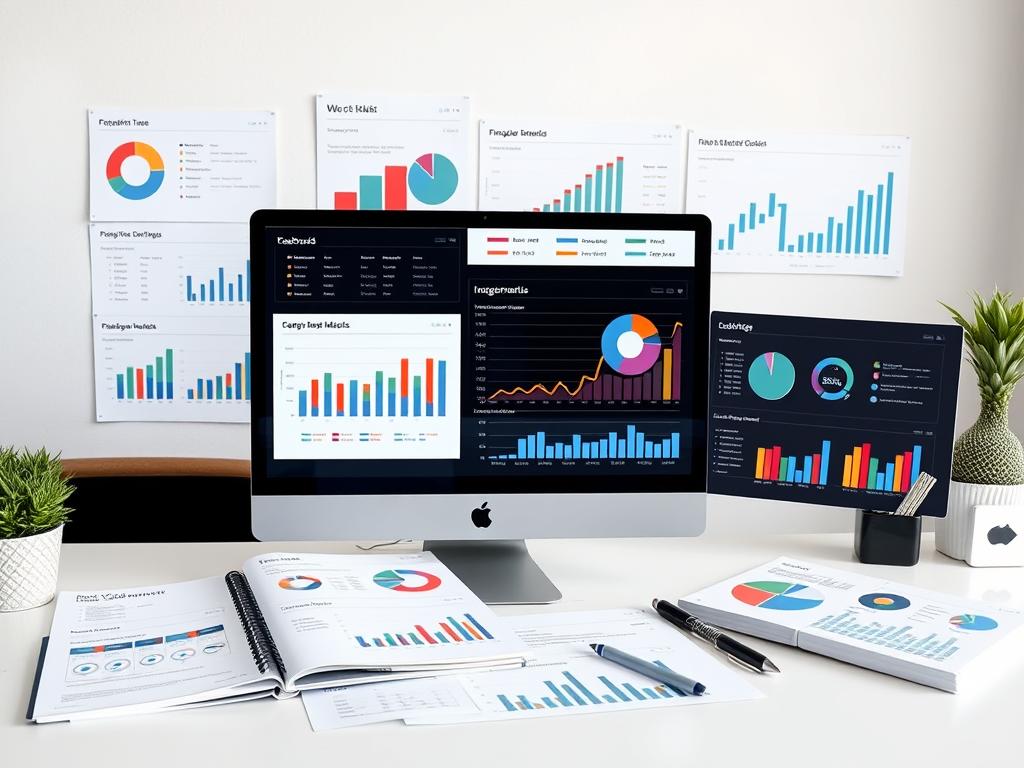
Incorporate Visual Elements
Use charts, graphs, and dashboards to present data visually. Visual representations make it easier to identify trends, patterns, and outliers compared to tables of numbers. Include clear labels and contextual information.
Provide Context and Analysis
Include narrative explanations that interpret the data and highlight key insights. Explain significant variances, emerging trends, and potential implications. Connect financial results to strategic objectives and market conditions.
Financial Business Tax Planning Tips
Strategic tax planning can significantly impact your business’s bottom line and cash flow. By implementing proactive tax strategies, you can legally minimize tax liabilities while ensuring compliance with all regulations.
Key Tax Planning Strategies
- Choose the Right Business Structure: Select an entity type (sole proprietorship, LLC, S-Corp, C-Corp) that optimizes tax benefits for your specific situation
- Maximize Deductions: Track and document all legitimate business expenses, including home office, vehicle use, travel, and professional development
- Time Income and Expenses: Strategically accelerate or defer income and expenses between tax years to manage tax liability
- Implement Retirement Plans: Establish tax-advantaged retirement accounts like SEP IRAs, SIMPLE IRAs, or Solo 401(k)s
- Leverage Tax Credits: Identify and apply for available tax credits, such as the Research and Development Credit or Work Opportunity Tax Credit
- Plan for Estimated Taxes: Set aside funds and make timely quarterly tax payments to avoid penalties

Year-Round Tax Planning Approach
Effective tax planning is a continuous process, not a once-a-year activity. Implement these practices throughout the year:
First Quarter
Review previous year’s tax return to identify improvement opportunities. Implement new tax strategies for the current year. Set up systems to track deductible expenses consistently.
Second Quarter
Conduct a mid-year tax projection to estimate annual liability. Adjust estimated tax payments if necessary. Review business structure to ensure it remains optimal for your situation.
Third Quarter
Evaluate year-to-date performance against projections. Consider additional retirement plan contributions. Identify potential capital expenditures that could provide tax benefits.
Fourth Quarter
Implement year-end tax planning strategies. Schedule deductible expenses strategically. Make final retirement plan contributions. Gather documentation for tax preparation.
Business Financial Decision-Making Process
Making sound financial decisions is critical for business growth and sustainability. A structured decision-making process helps ensure that financial choices align with strategic objectives and are based on accurate information.
Steps in the Financial Decision-Making Process
- Define the Decision Objective: Clearly articulate what you’re trying to achieve and how it supports business goals
- Gather Relevant Information: Collect financial data, market research, and other pertinent information
- Identify Alternatives: Generate multiple options for achieving the objective
- Analyze Each Alternative: Evaluate the financial implications, risks, and benefits of each option
- Select the Best Option: Choose the alternative that best balances financial outcomes with strategic goals
- Implement the Decision: Execute the chosen option with clear responsibilities and timelines
- Monitor and Evaluate Results: Track outcomes against expectations and adjust as needed

Financial Analysis Tools for Decision-Making
Return on Investment (ROI)
ROI = (Net Profit / Investment) × 100
Measures the profitability of an investment relative to its cost. Higher ROI indicates a more efficient use of capital. Consider both the magnitude and timing of returns when comparing options.
Payback Period
Payback Period = Initial Investment / Annual Cash Flow
Calculates how long it takes to recover the initial investment. Shorter payback periods generally indicate less risky investments, though this method doesn’t account for cash flows beyond the payback period.
Net Present Value (NPV)
NPV = Sum of (Cash Flow / (1 + Discount Rate)^Year) – Initial Investment
Accounts for the time value of money by discounting future cash flows. Positive NPV indicates a potentially profitable investment that exceeds the required rate of return.
Break-even Analysis
Break-even Point = Fixed Costs / (Price – Variable Cost per Unit)
Determines the sales volume needed to cover all costs. This helps evaluate pricing strategies and understand the minimum activity level required for profitability.
Financial Business Cash Flow Improvement Tips
Cash flow is the lifeblood of any small business. Even profitable companies can fail if they run out of cash to cover day-to-day operations. Implementing strategies to optimize cash flow ensures your business has the liquidity needed for growth and stability.
Strategies to Accelerate Cash Inflows
- Streamline Invoicing: Send invoices immediately after delivering products or services
- Offer Multiple Payment Options: Make it easy for customers to pay using their preferred methods
- Implement Deposits or Milestone Payments: Collect partial payments before or during project completion
- Incentivize Early Payments: Offer discounts for customers who pay ahead of schedule
- Follow Up on Overdue Accounts: Establish a systematic process for collecting late payments
- Optimize Pricing Strategy: Regularly review and adjust prices to maintain healthy margins

Techniques to Manage Cash Outflows
- Negotiate Favorable Payment Terms: Seek extended payment periods with suppliers and vendors
- Prioritize Expenditures: Distinguish between essential and discretionary spending
- Lease vs. Buy Analysis: Consider leasing equipment instead of purchasing outright
- Manage Inventory Efficiently: Minimize excess inventory that ties up working capital
- Review Subscriptions and Services: Regularly audit recurring expenses for necessity and value
- Time Major Purchases Strategically: Schedule large expenditures during periods of strong cash flow
Cash Flow Forecasting Best Practices
Implement these practices to improve the accuracy and usefulness of your cash flow forecasts:
Use Rolling Forecasts
Maintain a 13-week rolling cash flow forecast that’s updated weekly. This provides visibility into short-term liquidity while capturing seasonal patterns. Include both confirmed transactions and projected activities based on historical patterns.
Account for Timing Differences
Recognize that revenue recognition doesn’t always coincide with cash receipt. Similarly, expenses may be incurred in one period but paid in another. Build these timing differences into your forecast to accurately predict cash positions.
Templates You Can Use for Financial Business Planning
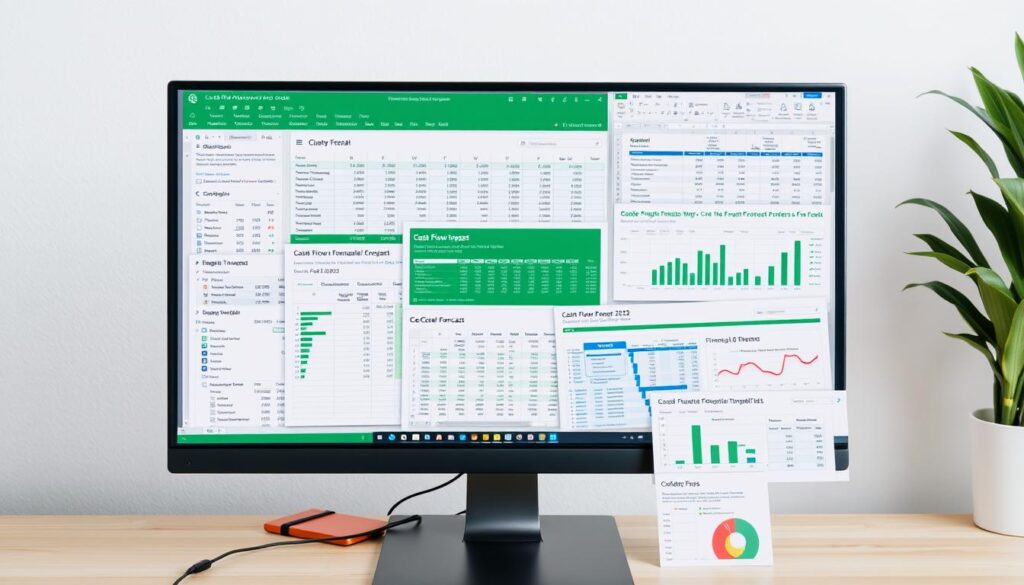
Well-designed templates can streamline your financial planning process and ensure consistency in your analysis. Here are essential Excel-based templates that every small business owner should have in their financial toolkit:
Cash Flow Forecast Template
Track projected cash inflows and outflows on a weekly or monthly basis. This template includes sections for operating, investing, and financing activities, with automatic calculations for net cash flow and running balance.
- 13-week rolling forecast structure
- Customizable revenue and expense categories
- Visual dashboard with key metrics
- Scenario comparison functionality
Financial Ratio Analysis Template
Calculate and track key financial ratios to assess your business’s performance over time. This template automatically generates ratios from your financial statement data and provides benchmark comparisons.
- Liquidity, profitability, and efficiency ratios
- Industry benchmark comparisons
- Trend analysis charts
- Customizable target ranges
Budget vs. Actual Template
Compare planned and actual financial performance to identify variances and adjust strategies accordingly. This template includes monthly, quarterly, and annual views with variance calculations and visualizations.
- Flexible budget categories
- Variance analysis with highlighting
- Rolling forecast integration
- Customizable reporting periods
Get Your Complete Financial Template Package
Download our comprehensive suite of Excel templates designed specifically for small business financial planning and growth.
Step-by-Step Strategy for Implementing Financial Growth Plans
Successfully implementing financial strategies requires a systematic approach. Follow this step-by-step process to develop and execute a financial growth plan for your small business:
- Assess Your Current Financial PositionConduct a thorough analysis of your current financial statements, including income statement, balance sheet, and cash flow statement. Identify strengths, weaknesses, and key performance indicators. Calculate important financial ratios to benchmark against industry standards.
- Define Clear Financial GoalsEstablish specific, measurable, achievable, relevant, and time-bound (SMART) financial objectives. These might include revenue targets, profit margins, cost reduction goals, or specific return on investment metrics. Align these financial goals with your overall business strategy.
- Identify Growth OpportunitiesAnalyze your market and business model to identify the most promising growth avenues. These could include expanding your product line, entering new markets, increasing sales to existing customers, or improving operational efficiency to boost margins.
- Develop Detailed Financial ProjectionsCreate comprehensive financial forecasts that model the expected impact of your growth initiatives. Include projected income statements, balance sheets, and cash flow statements for at least the next 12-24 months. Build multiple scenarios (conservative, expected, optimistic) to prepare for different outcomes.
- Determine Resource RequirementsCalculate the financial resources needed to implement your growth plan. This includes working capital, equipment investments, additional staff, marketing budgets, and other expenditures. Identify potential funding sources, whether internal cash flow, loans, investors, or a combination.
- Create an Implementation TimelineDevelop a detailed schedule for executing your financial strategies. Break down larger initiatives into manageable tasks with specific deadlines and assigned responsibilities. Establish key milestones to track progress.
- Implement Financial Controls and MetricsEstablish systems to monitor financial performance against your plan. Define key metrics and create dashboards for regular review. Set up alerts for significant variances that require attention. Ensure your accounting systems can provide the necessary data.
- Execute and MonitorBegin implementing your financial strategies according to the timeline. Hold regular review meetings to assess progress, identify issues, and make necessary adjustments. Compare actual results to projections and investigate significant variances.
- Adjust and OptimizeBased on performance data, refine your strategies to improve results. Reallocate resources from underperforming initiatives to those showing greater promise. Update your financial projections to reflect new information and changing market conditions.
- Review and Plan for Next Growth PhaseOnce you’ve achieved your initial financial goals, conduct a comprehensive review of the entire process. Document lessons learned and best practices. Begin planning for the next phase of financial growth with more ambitious objectives.

Frequently Asked Questions About Business Finance Strategies
What are the most important financial metrics for small businesses to track?
The most critical financial metrics for small businesses include:
- Cash Flow: The movement of money in and out of your business
- Gross Profit Margin: Revenue minus cost of goods sold, divided by revenue
- Net Profit Margin: Net income divided by total revenue
- Accounts Receivable Turnover: How quickly customers pay their invoices
- Current Ratio: Current assets divided by current liabilities
- Customer Acquisition Cost: The expense of gaining a new customer
- Customer Lifetime Value: The total revenue expected from a typical customer
The specific metrics most relevant to your business may vary depending on your industry and business model.
How much working capital should a small business maintain?
The optimal working capital level varies by industry and business model, but a general guideline is to maintain enough working capital to cover 3-6 months of operating expenses. This provides a buffer against unexpected challenges while ensuring funds are available for growth opportunities.
Calculate your working capital needs by analyzing your cash conversion cycle—the time it takes to convert inventory into cash through sales. Businesses with longer cash conversion cycles typically need more working capital. Seasonal businesses should maintain higher reserves to cover low-revenue periods.
When should a small business consider outside funding for growth?
Consider seeking outside funding when:
- You have a clear growth opportunity that requires more capital than your business can generate internally
- The expected return on investment significantly exceeds the cost of capital
- You need to make substantial investments in equipment, technology, or facilities to remain competitive
- You have a proven business model with consistent revenue and profitability
- You need to bridge temporary cash flow gaps due to rapid expansion
Before seeking external funding, ensure you have a detailed business plan, financial projections, and a clear understanding of how the funds will generate returns.
What’s the difference between cash flow and profit?
Profit and cash flow are distinct financial concepts:
Profit is the revenue remaining after all expenses have been deducted for a specific period. It appears on your income statement and represents your business’s ability to generate more revenue than expenses.
Cash flow refers to the actual movement of money in and out of your business. It tracks when cash is received and when it’s paid out, regardless of when the corresponding revenue or expense is recognized.
A business can be profitable on paper but still face cash flow challenges if, for example, customers take a long time to pay or if significant capital investments are required. Conversely, a business might have positive cash flow temporarily even while operating at a loss.
How can I improve my business’s financial efficiency?
To improve financial efficiency:
- Automate financial processes to reduce manual work and errors
- Regularly review and negotiate vendor contracts to ensure competitive pricing
- Implement just-in-time inventory management to reduce carrying costs
- Optimize your pricing strategy based on value delivered and market positioning
- Analyze customer profitability and focus resources on high-value segments
- Review staffing models to ensure optimal resource allocation
- Consolidate banking relationships to reduce fees and improve service
- Implement energy-efficient practices to reduce utility costs
Regularly benchmark your financial ratios against industry standards to identify specific areas for improvement.
What financial strategies help manage seasonal business fluctuations?
To manage seasonal fluctuations:
- Build cash reserves during peak periods to cover expenses during slower times
- Develop complementary products or services that generate revenue in off-seasons
- Implement flexible staffing models with part-time or seasonal workers
- Negotiate extended payment terms with suppliers during slow periods
- Consider invoice factoring to improve cash flow when needed
- Establish a line of credit before you need it to cover temporary shortfalls
- Create detailed cash flow forecasts that account for seasonal patterns
Understanding your business’s seasonal patterns allows you to plan proactively rather than reacting to cash flow challenges.
How often should I review my business’s financial statements?
The optimal frequency for reviewing financial statements depends on your business size, complexity, and growth stage:
- Daily: Cash position and sales figures
- Weekly: Accounts receivable, accounts payable, and cash flow projections
- Monthly: Complete financial statements (income statement, balance sheet, cash flow statement)
- Quarterly: Detailed financial analysis, budget vs. actual comparisons, and KPI review
- Annually: Comprehensive financial review, tax planning, and strategic financial planning
Fast-growing businesses or those facing financial challenges should review their financials more frequently. Establish a regular schedule and stick to it, as consistent monitoring allows you to identify trends and address issues promptly.
What’s the best way to determine pricing for products or services?
Effective pricing strategies balance multiple factors:
- Cost-based pricing: Calculate all direct and indirect costs, then add your desired profit margin
- Value-based pricing: Set prices based on the perceived value to customers rather than just costs
- Competitive pricing: Analyze competitor pricing and position accordingly
- Market-segment pricing: Offer different price points for different customer segments
- Psychological pricing: Use price points that appeal to customer psychology (e.g., .99 instead of )
The best approach often combines these methods. Regularly review your pricing strategy to ensure it supports your profit goals while remaining competitive. Test different price points to find the optimal balance between volume and margin.
How can I reduce my business tax burden legally?
Legal tax reduction strategies include:
- Choose the optimal business structure (sole proprietorship, LLC, S-Corp, C-Corp)
- Maximize deductible business expenses while maintaining proper documentation
- Implement tax-advantaged retirement plans like SEP IRAs or 401(k)s
- Time income and expenses strategically between tax years
- Take advantage of depreciation options for business assets
- Explore available tax credits specific to your industry or activities
- Consider health insurance structures that provide tax benefits
Always work with a qualified tax professional who specializes in small businesses to ensure compliance while maximizing legitimate tax-saving opportunities.
What financial metrics indicate my business is ready to expand?
Key indicators that your business is financially ready for expansion include:
- Consistent profitability over multiple quarters or years
- Strong cash flow that exceeds operational needs
- Growing customer demand that exceeds current capacity
- Healthy debt-to-equity ratio with manageable existing debt
- Stable or improving gross and net profit margins
- Efficient operations with streamlined processes that can scale
- Sufficient working capital to support growth without cash flow disruption
Before expanding, develop detailed financial projections that account for increased expenses, potential delays in revenue generation, and additional working capital requirements during the growth phase.
Implementing the Best Business Finance Strategies for Your Growth Journey
Effective financial management is the foundation of sustainable small business growth. By implementing the strategies outlined in this guide—from creating comprehensive financial plans to optimizing cash flow and making data-driven decisions—you can build a stronger financial foundation for your business.
Remember that financial management is an ongoing process that requires regular attention and adjustment. Start by assessing your current financial position, then prioritize the strategies that address your most pressing challenges or greatest opportunities. Implement changes systematically, measure results, and refine your approach based on what works best for your specific business.
Whether you’re a startup founder looking to establish sound financial practices or an established business owner aiming to accelerate growth, these proven strategies can help you achieve your financial goals and build a more resilient, profitable business.
Ready to Transform Your Business Finances?
Take the next step in your financial growth journey with our comprehensive resources and expert guidance.