
This comprehensive guide explores the fundamental principles, practical strategies, and proven tools that can transform your approach to financial decision-making. From setting clear financial goals to implementing sophisticated analysis techniques, we’ll walk through each step of the process and provide actionable insights you can apply immediately to your business or practice.
Table of Contents
- Understanding the Business Financial Decision-Making Process
- Key Principles of Effective Financial Decision-Making
- The 7-Step Financial Decision-Making Framework
- Essential Tools and Techniques for Financial Analysis
- How to Create a Financial Business Plan That Supports Decision-Making
- Financial Analysis Example: Real-World Case Study
- Templates You Can Use: Excel-Based Decision-Making Tools
- Common Mistakes in Financial Decision-Making and How to Avoid Them
- How to Automate Financial Business Processes for Better Decisions
- Frequently Asked Questions
Understanding the Business Financial Decision-Making Process
The business financial decision-making process is a systematic approach to evaluating financial choices and selecting the options that best align with organizational goals. This process involves gathering relevant data, analyzing alternatives, and making informed choices about resource allocation, investments, financing, and risk management.
At its core, financial decision-making is about answering critical questions such as:
- How should we allocate our limited financial resources?
- Which investment opportunities offer the best risk-adjusted returns?
- How should we finance our operations and growth initiatives?
- What financial risks do we face, and how should we manage them?
- How can we optimize our financial performance and create sustainable value?
Types of Financial Decisions in Business
Financial decisions in business typically fall into three main categories:
Investment Decisions
These decisions involve the allocation of capital to various assets and projects. Examples include purchasing equipment, expanding facilities, acquiring other businesses, or investing in research and development. The goal is to select investments that generate returns exceeding the cost of capital.
Financing Decisions
These decisions focus on how to fund the business and its activities. Options include debt (loans, bonds), equity (stock issuance), retained earnings, or some combination. The objective is to optimize the capital structure to minimize the cost of capital while maintaining financial flexibility.
Dividend Decisions
These decisions determine how much of the company’s profits should be distributed to shareholders versus retained for reinvestment. The aim is to balance shareholder expectations for current returns with the need for funds to support future growth.
The Importance of Structured Decision-Making
A structured approach to financial decision-making offers several significant benefits:
Benefits of Structured Financial Decision-Making
- Reduces cognitive biases and emotional influences
- Ensures consideration of all relevant factors
- Improves consistency and comparability across decisions
- Creates a clear audit trail for accountability
- Facilitates better communication among stakeholders
- Increases the likelihood of achieving desired outcomes
Risks of Unstructured Decision-Making
- Susceptibility to recency bias and overconfidence
- Inconsistent evaluation criteria across decisions
- Difficulty justifying decisions to stakeholders
- Overlooking important factors or alternatives
- Inefficient use of time and resources
- Higher probability of suboptimal outcomes
Key Principles of Effective Financial Decision-Making
Successful financial decision-making is guided by several fundamental principles that help ensure decisions are sound, strategic, and aligned with business objectives.
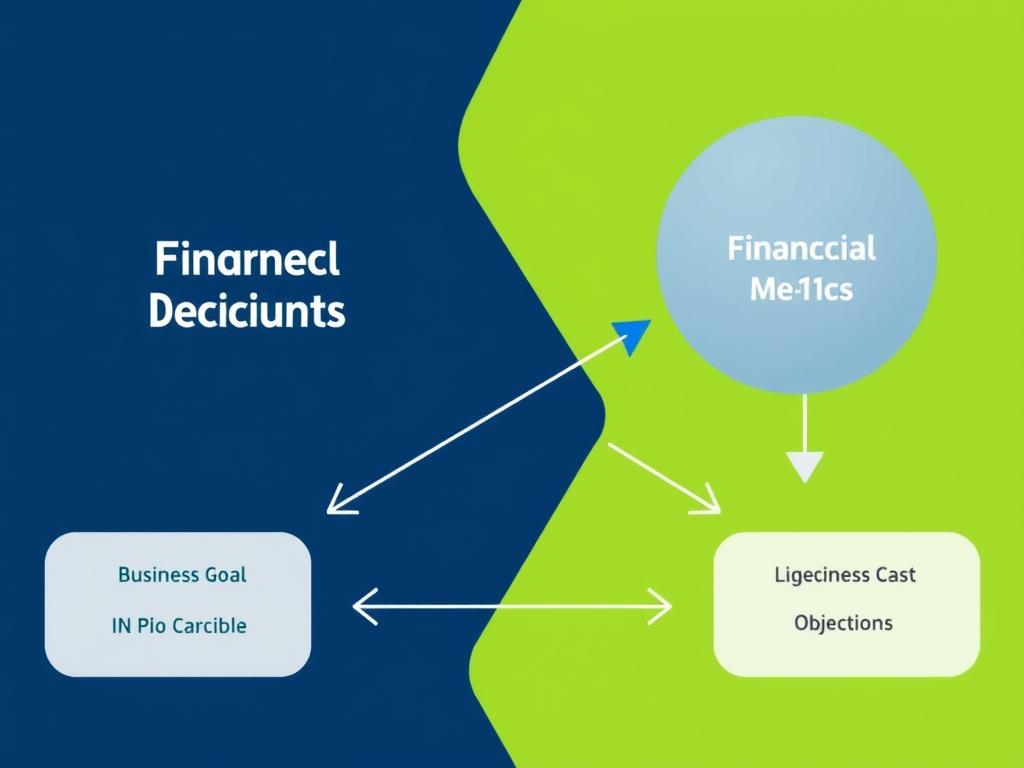
1. Goal Alignment
Every financial decision should directly support your organization’s strategic objectives and financial goals. Before making any significant financial choice, clearly articulate how it contributes to your short-term and long-term goals. This alignment ensures that financial resources are directed toward activities that create the most value for the business.
2. Data-Driven Analysis
Effective financial decisions are based on accurate, relevant, and timely data. This includes both quantitative financial information (e.g., financial statements, market data, economic indicators) and qualitative factors (e.g., competitive landscape, regulatory environment, technological trends). The quality of your decisions is directly related to the quality of the data informing them.
3. Risk-Return Balance
All financial decisions involve tradeoffs between risk and potential return. Higher returns typically come with higher risks, and the optimal choice depends on your organization’s risk tolerance and objectives. A systematic approach to evaluating the risk-return profile of different options is essential for making balanced decisions.
“The essence of investment management is the management of risks, not the management of returns.”
4. Time Value of Money
The principle that money available today is worth more than the same amount in the future due to its potential earning capacity is fundamental to financial decision-making. This concept underlies many financial analysis techniques, including net present value (NPV), internal rate of return (IRR), and discounted cash flow analysis.
5. Opportunity Cost Consideration
Every financial decision involves not just what you choose to do, but what you choose not to do. The opportunity cost—the value of the next best alternative that is foregone—should always be factored into your decision-making process. This ensures you’re making the most efficient use of limited resources.
| Principle | Key Question | Application Example |
| Goal Alignment | How does this decision support our strategic objectives? | Evaluating whether an equipment purchase will improve operational efficiency in line with cost-reduction goals |
| Data-Driven Analysis | What data supports this decision, and is it reliable? | Using market research and financial projections to assess the viability of a new product line |
| Risk-Return Balance | Is the potential return worth the associated risks? | Comparing the risk-adjusted returns of different investment options for excess cash |
| Time Value of Money | How do the timing of cash flows affect the decision’s value? | Using NPV analysis to compare projects with different cash flow patterns |
| Opportunity Cost | What are we giving up by choosing this option? | Considering whether funds used for an acquisition could generate better returns if invested in organic growth |
6. Stakeholder Consideration
Financial decisions affect various stakeholders, including shareholders, employees, customers, suppliers, and communities. While maximizing shareholder value is often a primary objective, sustainable decision-making requires considering the interests and impacts on all key stakeholders.
The 7-Step Financial Decision-Making Framework
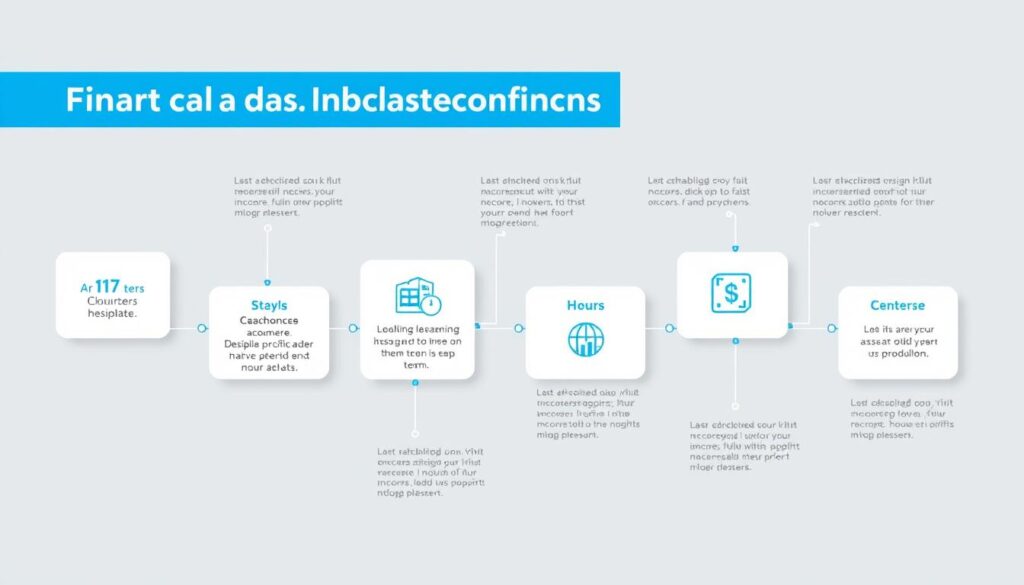
Implementing a structured framework for financial decision-making helps ensure consistency, thoroughness, and alignment with business objectives. Here’s a comprehensive 7-step process that can be applied to virtually any financial decision:
-
Define the Financial Objective
Clearly articulate what you’re trying to achieve with this financial decision. The objective should be specific, measurable, achievable, relevant, and time-bound (SMART). Examples include increasing profitability by X% within Y months, reducing operational costs by $Z, or funding an expansion with optimal capital structure.
-
Gather Relevant Financial Data
Collect all information necessary to make an informed decision. This typically includes:
- Historical financial performance data
- Current financial statements and ratios
- Market and industry benchmarks
- Economic indicators and forecasts
- Competitive analysis
- Regulatory and tax considerations
The quality and comprehensiveness of your data directly impact the quality of your decision.
-
Identify and Develop Alternatives
Generate multiple viable options to achieve your objective. For significant decisions, aim to develop at least 3-5 alternatives, including a “do nothing” or status quo option as a baseline. Each alternative should be feasible and substantively different from the others.
-
Analyze Each Alternative
Evaluate each option using appropriate financial analysis techniques. Common methods include:
Analysis Technique Best Used For Key Metrics Net Present Value (NPV) Capital investments, project evaluation NPV > 0 indicates value creation Internal Rate of Return (IRR) Comparing investment alternatives IRR > cost of capital Payback Period Liquidity assessment, risk evaluation Shorter payback is generally better Return on Investment (ROI) General profitability assessment ROI = (Net Profit / Cost of Investment) × 100% Break-even Analysis Pricing decisions, volume planning Break-even point = Fixed Costs / Contribution Margin Scenario Analysis Risk assessment, contingency planning Performance under best, expected, and worst cases -
Evaluate Risks and Constraints
Identify and assess the risks associated with each alternative, including:
- Financial risks (e.g., cash flow volatility, currency exposure)
- Operational risks (e.g., implementation challenges, resource limitations)
- Market risks (e.g., competitive response, demand changes)
- Regulatory risks (e.g., compliance issues, policy changes)
Also consider constraints such as budget limitations, timing requirements, and organizational capabilities.
-
Make the Decision
Select the alternative that best achieves your objective while managing risks appropriately. Document the rationale for your decision, including the key factors that influenced your choice and any assumptions made. This documentation is valuable for future reference and for communicating the decision to stakeholders.
-
Implement and Monitor
Develop an implementation plan with clear responsibilities, timelines, and milestones. Establish key performance indicators (KPIs) to track the outcomes of your decision and compare actual results against projections. Be prepared to make adjustments if circumstances change or if the decision isn’t yielding the expected results.
Streamline Your Financial Decision-Making Process
Download our free 7-Step Financial Decision Framework Template to apply this structured approach to your business decisions immediately.
Essential Tools and Techniques for Financial Analysis
Effective financial decision-making relies on robust analytical tools and techniques. Here are the essential methods that every financial business owner, investor, and entrepreneur should master:
Financial Ratio Analysis
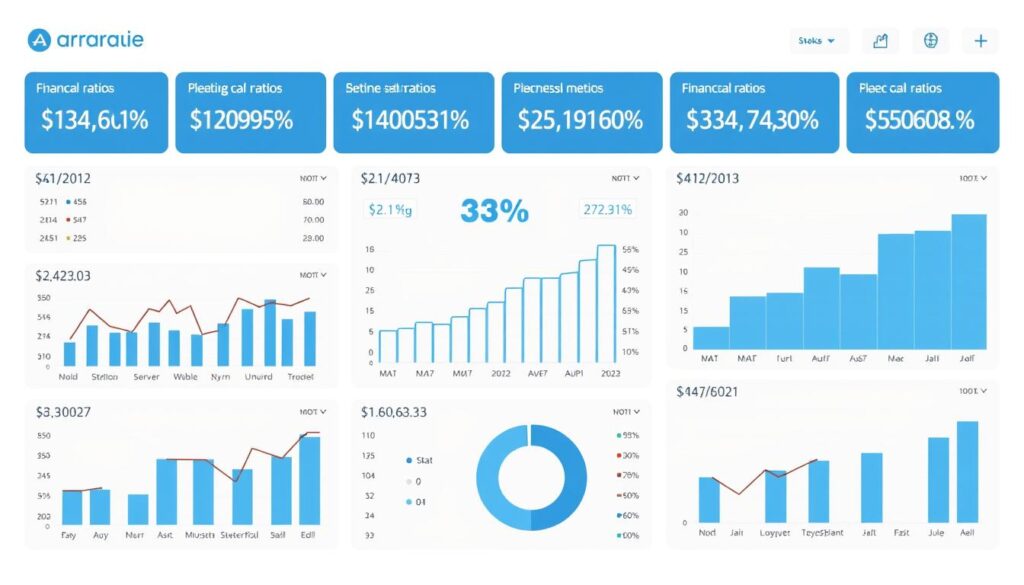
Ratios provide quick insights into a company’s financial health and performance by expressing relationships between different financial statement items. Key ratio categories include:
Profitability Ratios
- Gross Profit Margin = (Revenue – COGS) / Revenue
- Operating Margin = Operating Income / Revenue
- Net Profit Margin = Net Income / Revenue
- Return on Assets (ROA) = Net Income / Total Assets
- Return on Equity (ROE) = Net Income / Shareholders’ Equity
Liquidity Ratios
- Current Ratio = Current Assets / Current Liabilities
- Quick Ratio = (Current Assets – Inventory) / Current Liabilities
- Cash Ratio = Cash and Equivalents / Current Liabilities
- Operating Cash Flow Ratio = Operating Cash Flow / Current Liabilities
Efficiency Ratios
- Inventory Turnover = COGS / Average Inventory
- Accounts Receivable Turnover = Revenue / Average Accounts Receivable
- Asset Turnover = Revenue / Average Total Assets
- Days Sales Outstanding (DSO) = (Accounts Receivable / Revenue) × 365
Discounted Cash Flow (DCF) Analysis
DCF analysis is a valuation method that estimates the value of an investment based on its expected future cash flows, adjusted for the time value of money. The formula for calculating the present value of future cash flows is:
PV = CF₁/(1+r)¹ + CF₂/(1+r)² + … + CFₙ/(1+r)ⁿ
Where: PV = Present Value, CF = Cash Flow, r = Discount Rate, n = Time Period
DCF analysis is particularly valuable for evaluating long-term investments, acquisitions, and business valuation.
Sensitivity and Scenario Analysis
These techniques help assess how changes in key variables affect financial outcomes:
- Sensitivity Analysis: Examines how changes in a single variable (e.g., sales volume, price, costs) impact financial results while holding other variables constant.
- Scenario Analysis: Evaluates the financial impact of different scenarios (e.g., best case, expected case, worst case) by changing multiple variables simultaneously.
These analyses are crucial for understanding the robustness of financial projections and identifying key risk factors.
Break-Even Analysis
Break-even analysis determines the point at which total revenue equals total costs, resulting in neither profit nor loss. The break-even point in units is calculated as:
Break-even Point (units) = Fixed Costs / (Price per Unit – Variable Cost per Unit)
This analysis helps in pricing decisions, production planning, and evaluating the financial viability of new products or services.
Capital Budgeting Techniques
These methods evaluate the potential profitability and value creation of long-term investments:
| Technique | Formula | Decision Rule | Advantages | Limitations |
| Net Present Value (NPV) | Sum of discounted cash flows minus initial investment | Accept if NPV > 0 | Considers time value of money and all cash flows | Sensitive to discount rate assumptions |
| Internal Rate of Return (IRR) | Discount rate that makes NPV = 0 | Accept if IRR > required rate of return | Easy to interpret as a percentage return | Multiple IRRs possible with non-conventional cash flows |
| Payback Period | Time required to recover initial investment | Accept if payback | Simple to calculate and understand | Ignores time value of money and cash flows after payback |
| Profitability Index (PI) | Present value of future cash flows / Initial investment | Accept if PI > 1 | Useful for ranking projects with different scales | May not align with NPV for mutually exclusive projects |
Best Tools for Financial Business Planning
Modern financial analysis and decision-making are supported by a variety of software tools:
Spreadsheet Applications
Microsoft Excel and Google Sheets remain the workhorses of financial analysis, offering flexibility, powerful functions, and the ability to create custom models.
Best for: Custom financial modeling, ratio analysis, and scenario planning
Financial Planning Software
Dedicated applications like Adaptive Planning, Anaplan, and Prophix provide specialized capabilities for budgeting, forecasting, and financial planning.
Best for: Collaborative budgeting, rolling forecasts, and integrated planning
Business Intelligence Tools
Platforms such as Power BI, Tableau, and Looker enable visualization and analysis of financial data from multiple sources.
Best for: Data visualization, performance dashboards, and trend analysis
How to Create a Financial Business Plan That Supports Decision-Making
A well-structured financial business plan serves as the foundation for effective decision-making by establishing clear goals, assumptions, and performance benchmarks. Here’s how to develop a financial plan that enhances your decision-making capabilities:

Components of an Effective Financial Business Plan
-
Executive Summary
A concise overview of your financial plan, highlighting key objectives, strategies, and expected outcomes. This section should provide a quick snapshot of your financial direction and priorities.
-
Business Description and Strategic Objectives
Outline your business model, value proposition, and strategic goals. Connect financial planning to your broader business strategy to ensure alignment.
-
Market Analysis and Assumptions
Document your understanding of market conditions, competitive landscape, and key trends. Clearly state the assumptions underlying your financial projections, such as:
- Market growth rates
- Customer acquisition costs
- Pricing trends
- Competitive pressures
- Regulatory changes
-
Sales and Revenue Forecasts
Develop detailed projections of sales volumes, pricing, and revenue streams. Break down forecasts by product/service line, customer segment, and geographic region where applicable.
-
Expense Budget
Create comprehensive budgets for all expense categories, including:
- Cost of goods sold or service delivery
- Operating expenses (salaries, rent, utilities, etc.)
- Marketing and sales expenses
- Research and development
- Administrative costs
-
Capital Expenditure Plan
Detail planned investments in long-term assets such as equipment, facilities, technology, and acquisitions. Include the timing, amount, and expected returns for each major capital expenditure.
-
Cash Flow Projections
Forecast cash inflows and outflows on a monthly basis for at least the first year, and quarterly or annually for subsequent years. Pay special attention to seasonal variations and potential cash flow gaps.
-
Financing Plan
Outline your strategy for funding the business, including:
- Current and planned debt financing
- Equity investments
- Internal funding from operations
- Terms and conditions of financing arrangements
-
Financial Statements
Prepare pro forma (projected) financial statements, including:
- Income Statement (Profit & Loss)
- Balance Sheet
- Cash Flow Statement
-
Risk Assessment and Contingency Plans
Identify potential risks to your financial plan and develop contingency strategies for addressing them. Consider both internal risks (operational issues, resource constraints) and external risks (economic downturns, competitive threats).
Financial Business Planning for Beginners
If you’re new to financial business planning, follow these steps to create a solid foundation:
- Start with historical data: Use past performance as a baseline for projections, if available.
- Keep it simple: Begin with basic projections and add complexity as you gain confidence and experience.
- Focus on cash flow: For new businesses, cash flow is often more critical than profitability in the short term.
- Use templates: Leverage existing templates to ensure you cover all essential elements.
- Seek feedback: Have experienced colleagues or advisors review your plan and provide input.
- Update regularly: Treat your financial plan as a living document that evolves as conditions change.
Jumpstart Your Financial Business Planning
Download our comprehensive Financial Business Plan Template to create a professional plan that supports better decision-making.
Financial Analysis Example: Real-World Case Study
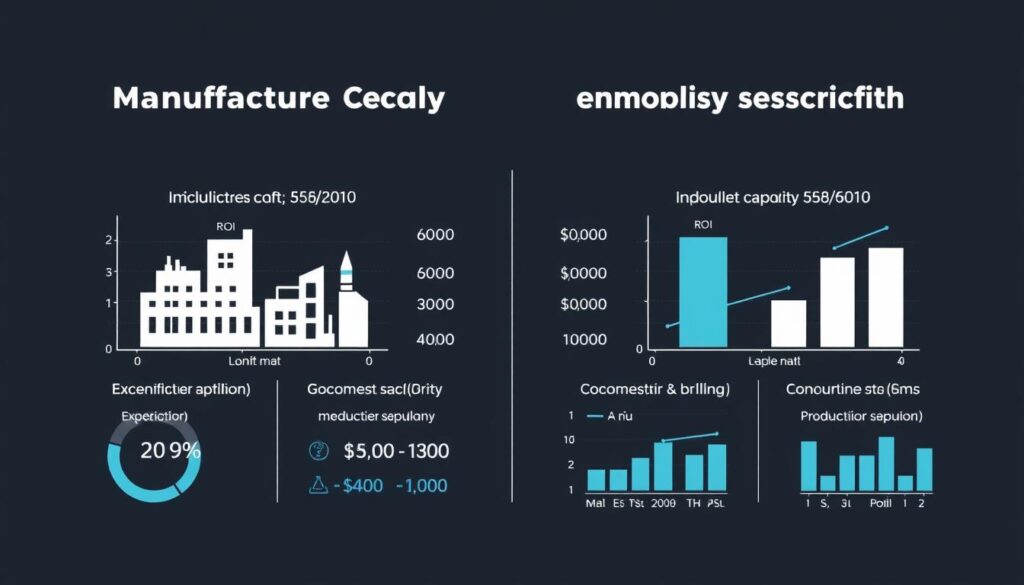
To illustrate the business financial decision-making process in action, let’s examine a case study of a mid-sized manufacturing company facing a critical investment decision.
Case Study: Precision Manufacturing, Inc.
Background: Precision Manufacturing is a $20 million revenue company that produces specialized components for the aerospace industry. The company is considering two alternative investments to increase production capacity and efficiency:
- Option A: Purchase new automated manufacturing equipment ($2.5 million investment)
- Option B: Expand the existing facility and hire additional workers ($1.8 million investment)
Step 1: Define the Financial Objective
The company’s primary objective is to increase production capacity by 30% while improving gross margin by at least 2 percentage points within 24 months.
Step 2: Gather Relevant Financial Data
The financial team collected the following data:
| Data Point | Current Value | Source |
| Annual Revenue | $20 million | Financial statements |
| Gross Margin | 32% | Financial statements |
| Current Production Capacity | 15,000 units/year | Operations reports |
| Labor Cost per Unit | $180 | Cost accounting system |
| Material Cost per Unit | $420 | Cost accounting system |
| Average Selling Price | $1,333 | Sales reports |
| Weighted Average Cost of Capital | 12% | Finance department analysis |
Step 3: Identify and Develop Alternatives
The team developed detailed projections for each option:
Option A: Automated Equipment
- Investment: $2.5 million
- Capacity increase: 35% (to 20,250 units/year)
- Labor cost reduction: 40% (to $108/unit)
- Additional maintenance costs: $120,000/year
- Implementation time: 6 months
- Expected useful life: 8 years
Option B: Facility Expansion
- Investment: $1.8 million
- Capacity increase: 30% (to 19,500 units/year)
- Labor cost increase: 25% (due to additional workers)
- Additional facility costs: $80,000/year
- Implementation time: 9 months
- Expected useful life: 15 years
Step 4: Analyze Each Alternative
The team conducted a comprehensive financial analysis of both options:
| Financial Metric | Option A: Automated Equipment | Option B: Facility Expansion |
| Net Present Value (NPV) | $1,850,000 | $950,000 |
| Internal Rate of Return (IRR) | 22% | 16% |
| Payback Period | 3.2 years | 4.5 years |
| Projected Gross Margin | 37% | 33% |
| Annual Cash Flow (Average) | $780,000 | $520,000 |
Step 5: Evaluate Risks and Constraints
The team identified several risks and constraints for each option:
Option A Risks:
- Technology implementation challenges
- Potential production disruptions during installation
- Staff training requirements
- Dependence on equipment vendor for maintenance
Option B Risks:
- Labor market constraints (finding skilled workers)
- Higher ongoing labor costs
- Less flexibility to adapt to changing market conditions
- Construction delays and cost overruns
Step 6: Make the Decision
After analyzing both options, the management team decided to proceed with Option A (automated equipment) based on the following rationale:
- Higher NPV and IRR, indicating superior financial returns
- Shorter payback period, reducing financial risk
- Greater capacity increase (35% vs. 30%), exceeding the target
- Significant improvement in gross margin (5 percentage points vs. 1)
- Better long-term strategic positioning through technology advancement
- Reduced exposure to labor market challenges
Step 7: Implement and Monitor
The company developed an implementation plan with the following elements:
- Equipment selection and vendor negotiations (1 month)
- Facility preparation and infrastructure upgrades (2 months)
- Equipment installation and testing (2 months)
- Staff training and process development (1 month)
- Gradual production ramp-up (2 months)
Key performance indicators (KPIs) were established to monitor the success of the investment:
- Monthly production volume
- Unit manufacturing cost
- Equipment uptime and efficiency
- Product quality metrics
- Actual vs. projected cash flows
Quarterly review meetings were scheduled to assess progress against targets and make any necessary adjustments to the implementation plan.
“This case study demonstrates how a structured decision-making process, supported by thorough financial analysis, can lead to optimal investment choices that align with strategic objectives.”
Templates You Can Use: Excel-Based Decision-Making Tools
To streamline your financial decision-making process, we’ve developed a set of Excel-based templates that you can customize for your specific business needs. These templates incorporate best practices in financial analysis and provide a structured framework for evaluating different options.
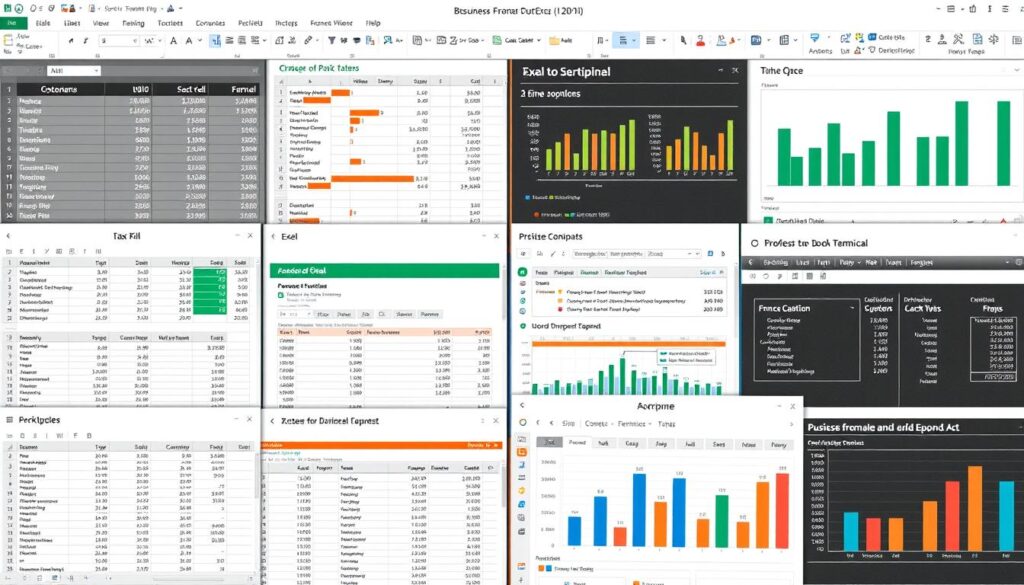
Capital Investment Analysis Template
This comprehensive template helps you evaluate capital investment opportunities using multiple financial metrics:
- Net Present Value (NPV) calculation
- Internal Rate of Return (IRR) analysis
- Payback period determination
- Profitability Index computation
- Sensitivity analysis for key variables
- Scenario comparison (best, expected, worst cases)
Perfect for evaluating equipment purchases, facility expansions, acquisitions, and other major investments.
Financial Forecasting Model
This dynamic forecasting template allows you to create detailed financial projections:
- Revenue forecasting by product/service line
- Expense budgeting by category
- Pro forma financial statements (P&L, Balance Sheet, Cash Flow)
- Key financial ratio calculations
- Variance analysis (actual vs. budget)
- Rolling forecast functionality
Ideal for budgeting, business planning, and monitoring financial performance against targets.
Business Decision Matrix Template
This versatile template helps you evaluate multiple alternatives across various criteria:
- Weighted scoring system for decision factors
- Customizable evaluation criteria
- Quantitative and qualitative assessment
- Visual comparison of alternatives
- Sensitivity analysis for criteria weights
- Documentation of decision rationale
Useful for vendor selection, strategic initiatives, product launches, and other complex business decisions.
How to Use These Templates Effectively
To get the most value from these financial decision-making templates:
-
Customize for Your Business
Adapt the templates to reflect your specific industry, business model, and financial structure. Modify assumptions, categories, and metrics as needed to ensure relevance.
-
Input Accurate Data
The quality of your analysis depends on the quality of your inputs. Gather reliable data from your accounting system, market research, industry benchmarks, and other credible sources.
-
Document Assumptions
Clearly document all assumptions underlying your analysis, including growth rates, cost structures, timing of cash flows, and discount rates. This documentation is essential for future reference and for communicating with stakeholders.
-
Perform Sensitivity Analysis
Test how changes in key variables affect your results to understand the robustness of your analysis and identify critical success factors.
-
Review and Validate
Have colleagues or advisors review your analysis to identify potential errors, oversights, or alternative perspectives.
Transform Your Financial Decision-Making Today
Get access to our complete library of financial decision-making templates, including detailed user guides and video tutorials.
Common Mistakes in Financial Decision-Making and How to Avoid Them
Even experienced financial professionals and business owners can fall prey to common pitfalls in the decision-making process. Being aware of these mistakes can help you avoid them and make more effective financial choices.

Cognitive and Emotional Biases
- Confirmation Bias: Seeking information that confirms existing beliefs while ignoring contradictory evidence.
- Overconfidence: Overestimating one’s ability to make accurate forecasts or assessments.
- Loss Aversion: Giving more weight to avoiding losses than to achieving equivalent gains.
- Recency Bias: Placing too much emphasis on recent events or trends.
- Sunk Cost Fallacy: Continuing to invest in a failing project because of resources already committed.
Analytical and Methodological Errors
- Inadequate Data Collection: Making decisions based on incomplete or unreliable information.
- Overlooking Opportunity Costs: Failing to consider what is given up by choosing one option over others.
- Ignoring Time Value of Money: Not accounting for the fact that a dollar today is worth more than a dollar in the future.
- Neglecting Risk Assessment: Focusing solely on expected returns without adequate consideration of risks.
- Misalignment with Strategic Goals: Making financial decisions that don’t support broader business objectives.
Strategies to Improve Financial Decision-Making
Implement these strategies to enhance the quality of your financial decisions:
Establish a Structured Process
Follow a consistent, step-by-step approach to financial decision-making, as outlined earlier in this guide. A structured process helps ensure that all relevant factors are considered and reduces the influence of biases.
Seek Diverse Perspectives
Involve individuals with different backgrounds, expertise, and viewpoints in the decision-making process. Diversity of thought helps identify blind spots, challenge assumptions, and generate more creative solutions.
Use Decision Support Tools
Leverage analytical tools, models, and templates to bring rigor and objectivity to your analysis. These tools can help you systematically evaluate alternatives and understand the implications of different choices.
Document Assumptions and Rationale
Clearly articulate the assumptions underlying your analysis and the reasoning behind your decisions. This documentation facilitates communication, enables future review, and supports accountability.
Conduct Post-Decision Reviews
Regularly evaluate the outcomes of past decisions to identify what worked, what didn’t, and why. These reviews provide valuable learning opportunities and help refine your decision-making approach over time.
Develop Financial Acumen
Continuously build your financial knowledge and analytical skills through education, training, and practice. The more comfortable you are with financial concepts and tools, the more effective your decision-making will be.
“The best financial decisions are made with a clear head, solid data, and a structured process that minimizes the impact of biases and maximizes the use of available information.”
How to Automate Financial Business Processes for Better Decisions
Automating routine financial processes can significantly enhance your decision-making capabilities by improving data accuracy, accelerating analysis, and freeing up time for strategic thinking. Here’s how to leverage automation effectively:
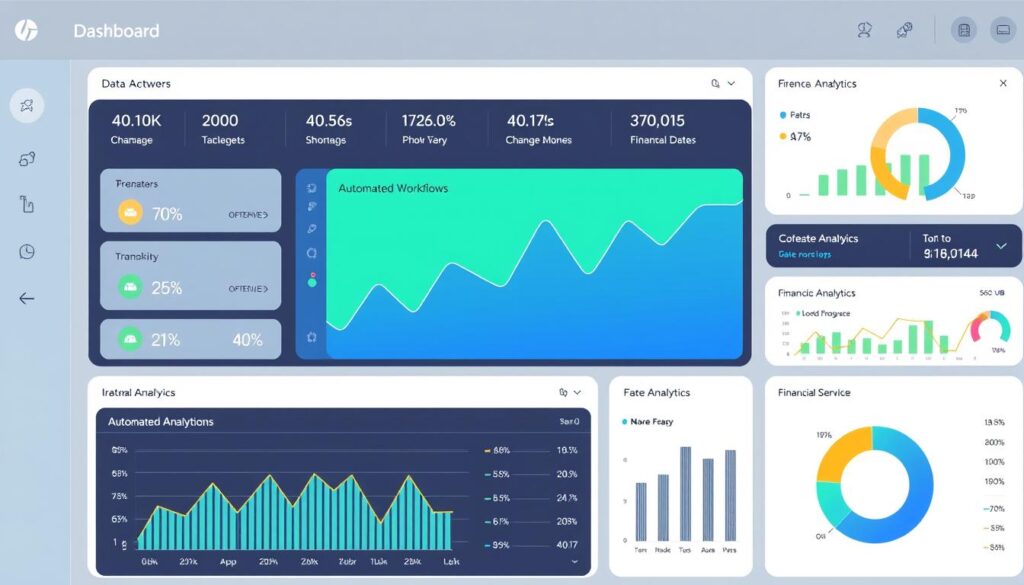
Key Financial Processes to Automate
Data Collection and Integration
- Automated data feeds from banking and accounting systems
- Integration of sales, inventory, and operational data
- Automated import of market and competitive intelligence
- Real-time synchronization across financial systems
Benefits: Reduces manual data entry errors, ensures data consistency, and provides up-to-date information for decision-making.
Financial Reporting and Analysis
- Automated generation of standard financial reports
- Real-time financial dashboards and KPI tracking
- Automated variance analysis and exception reporting
- Scheduled distribution of financial updates to stakeholders
Benefits: Delivers timely insights, highlights areas requiring attention, and enables data-driven decision-making.
Forecasting and Scenario Planning
- Automated statistical forecasting models
- Dynamic scenario generation and comparison
- Sensitivity analysis with automated recalculations
- Rolling forecast updates based on actual results
Benefits: Improves forecast accuracy, enables rapid evaluation of alternatives, and enhances strategic planning.
Financial Business Tools for Entrepreneurs
A variety of tools are available to help entrepreneurs automate financial processes and improve decision-making:
| Tool Category | Examples | Key Features | Best For |
| Accounting Software | QuickBooks, Xero, FreshBooks | Automated bookkeeping, financial reporting, tax preparation | Small to medium businesses needing core financial management |
| Financial Planning & Analysis | Adaptive Planning, Prophix, Planful | Budgeting, forecasting, scenario modeling, financial analytics | Growing businesses with complex planning needs |
| Business Intelligence | Power BI, Tableau, Looker | Data visualization, interactive dashboards, advanced analytics | Data-driven organizations seeking deeper insights |
| Cash Flow Management | Float, Pulse, Fluidly | Cash flow forecasting, scenario planning, alert systems | Businesses focused on liquidity management |
| Financial Modeling | Modano, Quantrix, Anaplan | Advanced modeling capabilities, sensitivity analysis, collaborative features | Organizations making complex financial decisions |
Implementation Best Practices
To successfully automate financial processes and enhance decision-making:
-
Start with a Clear Strategy
Define your automation objectives, prioritize processes based on potential impact, and develop a phased implementation plan. Focus on automating processes that are repetitive, time-consuming, or prone to errors.
-
Ensure Data Quality
Clean and standardize your financial data before implementing automation. Establish data governance procedures to maintain data integrity and reliability over time.
-
Select the Right Tools
Choose automation solutions that align with your business needs, integrate with your existing systems, and offer scalability as your organization grows. Consider factors such as ease of use, support, and total cost of ownership.
-
Invest in Training
Provide comprehensive training to ensure that users understand how to leverage automated systems effectively. Focus not just on technical skills but also on how to interpret and act on the insights generated.
-
Monitor and Optimize
Regularly review the performance of your automated processes and make adjustments as needed. Continuously look for opportunities to expand automation to new areas and enhance existing capabilities.
“Automation is not about replacing human judgment but about enhancing it by providing better information, faster analysis, and more time for strategic thinking.”
Streamline Your Financial Processes
Schedule a consultation with our financial automation experts to identify opportunities for improving your decision-making processes.
Frequently Asked Questions
What are the key steps in the business financial decision-making process?
The business financial decision-making process typically involves seven key steps: (1) Define the financial objective, (2) Gather relevant financial data, (3) Identify and develop alternatives, (4) Analyze each alternative using appropriate financial techniques, (5) Evaluate risks and constraints, (6) Make the decision based on the analysis, and (7) Implement and monitor the results. This structured approach ensures that decisions are well-informed, aligned with business goals, and properly executed.
How do I create a financial business plan for a startup?
Creating a financial business plan for a startup involves several critical components: (1) Develop realistic revenue projections based on market research and pricing strategy, (2) Estimate startup costs including equipment, facilities, and initial inventory, (3) Project operating expenses such as salaries, rent, and marketing, (4) Create cash flow forecasts for at least the first 12-24 months, (5) Determine your funding requirements and potential sources, (6) Prepare pro forma financial statements, and (7) Establish key financial milestones and metrics. For startups, it’s especially important to be conservative in your projections and to include multiple scenarios (best case, expected case, worst case).
What financial business management tips can help improve decision-making?
To improve financial decision-making, consider these management tips: (1) Establish clear financial goals and metrics aligned with your business strategy, (2) Implement a robust financial reporting system that provides timely and accurate information, (3) Develop a disciplined approach to evaluating investment opportunities using consistent criteria, (4) Build financial models that allow for scenario analysis and sensitivity testing, (5) Foster a data-driven culture that values objective analysis over gut feelings, (6) Regularly review past decisions to learn from successes and failures, and (7) Invest in financial education and skills development for key decision-makers. Additionally, consider forming a financial advisory board or engaging external experts for complex decisions.
What are the best tools for financial business planning and analysis?
The best tools for financial business planning depend on your specific needs and business size. For small businesses, QuickBooks, Xero, or FreshBooks provide solid accounting foundations with basic reporting capabilities. For more advanced planning, consider dedicated FP&A tools like Adaptive Planning, Prophix, or Planful, which offer robust budgeting, forecasting, and scenario modeling features. Microsoft Excel remains a versatile option for custom financial models and analysis. For data visualization and business intelligence, tools like Power BI, Tableau, or Looker can transform financial data into actionable insights. Cloud-based solutions increasingly offer the advantage of real-time collaboration, mobile access, and integration with other business systems.
How can I track financial business performance effectively?
Effective tracking of financial business performance requires a multi-faceted approach: (1) Establish key performance indicators (KPIs) that align with your strategic objectives, including both lagging indicators (e.g., revenue, profit margins) and leading indicators (e.g., sales pipeline, customer acquisition costs), (2) Implement a balanced scorecard that includes financial, customer, operational, and growth metrics, (3) Create dashboards that provide real-time visibility into performance against targets, (4) Conduct regular variance analysis to understand deviations from plans or budgets, (5) Use trend analysis to identify patterns and anticipate future performance, and (6) Establish a regular cadence of financial reviews with key stakeholders. Modern business intelligence tools can automate much of this tracking and provide alerts when metrics fall outside acceptable ranges.
What financial business forecasting techniques are most accurate?
The most accurate financial forecasting techniques often combine multiple approaches: (1) Time series analysis uses historical data to identify patterns and trends, (2) Driver-based forecasting links financial projections to key business drivers (e.g., headcount, production volume), (3) Monte Carlo simulation generates probability distributions for different outcomes by running thousands of scenarios with varying inputs, (4) Rolling forecasts continuously update projections based on the most recent actual results, and (5) Collaborative forecasting incorporates input from various departments and stakeholders. The most effective approach typically combines quantitative methods with qualitative insights from business leaders who understand market dynamics and competitive factors. Regularly comparing forecast accuracy and refining your methodology improves results over time.
How do I conduct a small business financial analysis?
To conduct a comprehensive small business financial analysis: (1) Review historical financial statements (income statement, balance sheet, cash flow statement) to understand trends and patterns, (2) Calculate and analyze key financial ratios including profitability (gross margin, net profit margin), liquidity (current ratio, quick ratio), efficiency (inventory turnover, accounts receivable days), and solvency (debt-to-equity, interest coverage), (3) Benchmark your performance against industry standards and competitors, (4) Perform a break-even analysis to understand your cost structure and margin of safety, (5) Analyze cash flow patterns and identify potential liquidity challenges, and (6) Assess working capital management, including inventory, accounts receivable, and accounts payable. For small businesses, particular attention should be paid to cash flow management and the relationship between fixed and variable costs.
How can I manage financial business risks effectively?
Effective financial risk management involves a systematic approach: (1) Identify potential risks across categories including market risk, credit risk, liquidity risk, operational risk, and strategic risk, (2) Assess the likelihood and potential impact of each risk using quantitative and qualitative methods, (3) Develop risk mitigation strategies such as diversification, insurance, hedging, contingency planning, and operational controls, (4) Implement a risk monitoring system with early warning indicators and regular reviews, (5) Establish clear risk governance with defined roles and responsibilities, and (6) Create a risk-aware culture through training and communication. For small businesses, focus particularly on cash flow risks, customer concentration risks, and supply chain vulnerabilities. Regularly update your risk assessment as your business and external environment evolve.
What financial business budgeting strategies work best for growing companies?
Growing companies benefit from these budgeting strategies: (1) Zero-based budgeting, which requires justifying all expenses from scratch each period rather than incrementally adjusting previous budgets, (2) Driver-based budgeting that links resource allocation to key business drivers and growth metrics, (3) Rolling forecasts that continuously update projections for the next 12-18 months, providing greater flexibility than traditional annual budgets, (4) Scenario-based budgeting that develops plans for different growth trajectories, (5) Flexible budgeting that adjusts expense allowances based on actual revenue levels, and (6) Priority-based budgeting that allocates resources according to strategic priorities. Growing companies should also build in contingency reserves to handle unexpected opportunities or challenges and establish clear processes for evaluating and funding initiatives that emerge during the year.
How do I build a financial business model for my company?
Building an effective financial business model involves these steps: (1) Define the purpose and scope of your model (e.g., valuation, operational planning, investment analysis), (2) Gather historical data and establish key assumptions about drivers like revenue growth, margins, and capital requirements, (3) Create the model structure, typically including interconnected modules for revenue, expenses, capital expenditures, working capital, financing, and financial statements, (4) Build flexibility through parameters that can be easily adjusted for scenario analysis, (5) Incorporate sensitivity analysis to understand how changes in key variables affect outcomes, (6) Validate the model by testing it against historical data and having others review it, and (7) Document assumptions, calculation methodologies, and data sources. Best practices include separating inputs, calculations, and outputs; using consistent formatting; building in error checks; and creating dashboard summaries of key results.
What are the most important financial business reporting best practices?
Effective financial reporting follows these best practices: (1) Tailor reports to the audience, providing executive summaries for leadership and detailed analyses for operational managers, (2) Focus on key performance indicators that align with strategic objectives, (3) Provide context through comparisons to budgets, forecasts, prior periods, and industry benchmarks, (4) Include both financial and operational metrics to tell a complete story, (5) Use visual elements like charts and graphs to highlight trends and relationships, (6) Ensure timeliness, with regular reporting cycles and real-time dashboards for critical metrics, (7) Maintain consistency in definitions, calculations, and presentation formats, (8) Include forward-looking information alongside historical results, and (9) Accompany reports with narrative analysis that explains variances and implications. Modern reporting increasingly incorporates interactive elements that allow users to drill down into details and customize views based on their specific needs.
Conclusion: Mastering the Business Financial Decision-Making Process
Effective financial decision-making is a cornerstone of business success. By implementing a structured approach that combines rigorous analysis with strategic thinking, you can make better choices about resource allocation, investments, financing, and risk management. The frameworks, tools, and techniques outlined in this guide provide a foundation for enhancing your financial decision-making capabilities and driving better business outcomes.
Remember that financial decision-making is both an art and a science. While quantitative analysis is essential, it must be complemented by qualitative judgment, industry expertise, and strategic vision. The most successful financial decision-makers balance analytical rigor with business intuition, continuously refine their approach based on experience, and adapt to changing market conditions.
As you apply these principles and practices to your own business or professional role, focus on building a disciplined process, leveraging appropriate tools, and developing the financial acumen needed to make sound decisions. With time and experience, you’ll become more confident and effective in navigating complex financial choices and creating sustainable value for your organization.
Take Your Financial Decision-Making to the Next Level
Download our complete Financial Decision-Making Toolkit, including templates, guides, and video tutorials to transform your approach to business financial decisions.