
In this comprehensive guide, we’ll walk through the essentials of financial business planning, from creating your first financial statements to implementing sophisticated forecasting techniques. You’ll discover practical tools, step-by-step strategies, and real-world examples that make financial planning accessible and actionable. Whether you’re a startup founder, small business owner, or aspiring entrepreneur, this guide will equip you with the knowledge to build a financial plan that positions your business for success.
The Fundamentals of Financial Business Planning
Financial business planning is the process of creating a detailed roadmap that outlines how your business will manage its finances to achieve both short and long-term goals. For beginners, understanding the core principles is essential before diving into the technical aspects.
Why Financial Planning Matters for Your Business
A well-crafted financial plan serves as the backbone of your business operations. It helps you:
- Make informed decisions based on data rather than intuition
- Secure funding from investors or lenders who want to see a clear financial strategy
- Identify potential cash flow issues before they become critical
- Set realistic goals and measure progress toward achieving them
- Allocate resources efficiently to maximize growth opportunities
- Prepare for unexpected challenges and market fluctuations
According to a study by Palo Alto Software, businesses with financial plans are twice as likely to secure funding and 30% more likely to grow than those without plans. This underscores the importance of financial planning, especially for new businesses with limited resources.
Financial Business Management Tips for Beginners
Before diving into the technical aspects of financial planning, consider these foundational tips:
Start Simple
Begin with basic financial statements and gradually incorporate more sophisticated elements as your understanding grows. Don’t overwhelm yourself with complex financial models right away.
Separate Personal and Business Finances
Open separate business bank accounts and credit cards to maintain clear boundaries between personal and business finances. This simplifies accounting and tax preparation.
Understand Cash Flow
Cash flow—not profit—determines your ability to pay bills and keep operations running. A business can be profitable on paper but still fail due to poor cash flow management.
Build Financial Literacy
Invest time in learning basic financial concepts and terminology. Understanding the language of finance will help you communicate effectively with accountants, investors, and financial advisors.
Use Technology Wisely
Leverage accounting software and financial tools designed for small businesses. These tools automate many aspects of financial management, reducing errors and saving time.
Seek Professional Guidance
Consider working with an accountant or financial advisor (the U.S. Small Business Administration offers free guidance), especially when setting up your initial financial systems or making major financial decisions.
Get Your Free Financial Planning Starter Kit
Jumpstart your business financial planning with our comprehensive starter kit, including basic templates, a financial terminology guide, and a checklist of essential financial planning steps.
Essential Components of a Financial Business Plan
A comprehensive financial business plan consists of several key components that work together to provide a complete picture of your business’s financial health and prospects. Understanding these components is crucial for beginners embarking on financial planning.
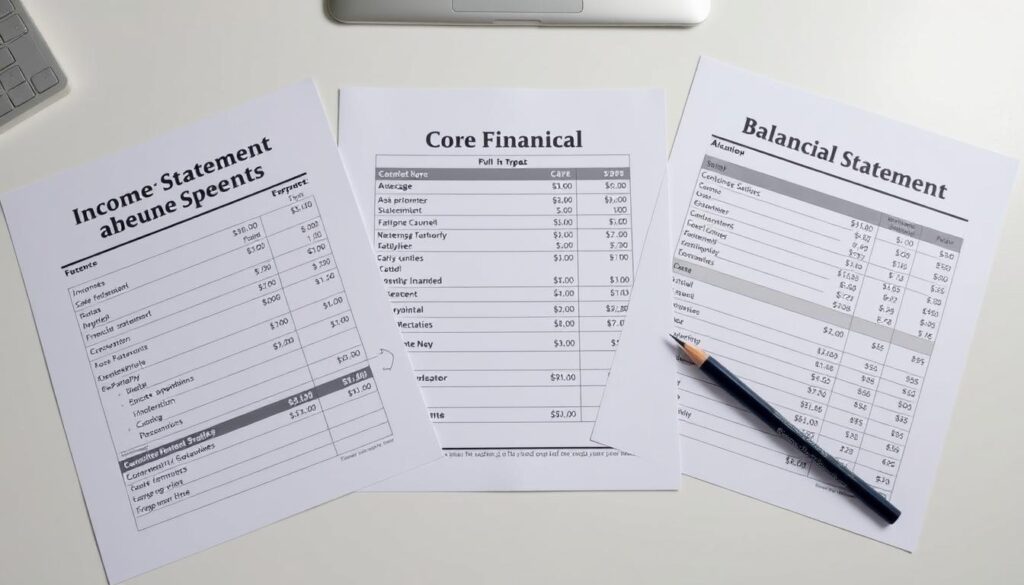
Core Financial Statements
Income Statement
Also known as a profit and loss (P&L) statement, this document shows your revenue, expenses, and profit over a specific period. It answers the question: “Is the business profitable?”
Key elements: Revenue, cost of goods sold (COGS), gross profit, operating expenses, and net profit.
Cash Flow Statement
This tracks the actual cash moving in and out of your business, showing your ability to pay bills and fund operations. It answers the question: “Does the business have enough cash to operate?”
Key elements: Operating activities, investing activities, financing activities, and net cash flow.
Balance Sheet
This provides a snapshot of your business’s financial position at a specific point in time, showing what you own and what you owe. It answers the question: “What is the business worth?”
Key elements: Assets, liabilities, and equity (following the equation: Assets = Liabilities + Equity).
Financial Forecasting and Budgeting
Beyond the core statements, your financial plan should include forward-looking elements:
Sales Forecast
A projection of expected sales over a specific period (typically 1-3 years), broken down by month for the first year and by quarter or year thereafter. This forms the foundation for all other financial projections.
Expense Budget
A detailed plan of anticipated expenses, including fixed costs (rent, salaries), variable costs (materials, commissions), and one-time expenses (equipment purchases, renovations).
Cash Flow Projection
A forecast of expected cash inflows and outflows, helping you anticipate potential cash shortages and plan accordingly. This is especially crucial for businesses with seasonal fluctuations.
Break-Even Analysis
A calculation that determines the sales volume required to cover all costs, where total revenue equals total expenses (resulting in zero profit or loss).
Financial Business Budgeting Strategies
Effective budgeting is central to financial planning. Consider these strategies:
| Budgeting Strategy | Description | Best For |
| Zero-Based Budgeting | Start from zero and justify every expense for each period | New businesses or those needing strict cost control |
| Incremental Budgeting | Use previous period’s budget as a baseline, adjusting for changes | Stable businesses with predictable expenses |
| Activity-Based Budgeting | Allocate resources based on activities that drive costs | Businesses with complex operations or multiple product lines |
| Rolling Budget | Continuously update the budget for a set period ahead | Businesses in rapidly changing environments |
| Value-Based Budgeting | Allocate resources based on strategic priorities and value creation | Growth-focused businesses with clear strategic objectives |
For beginners, incremental or zero-based budgeting often provides the clearest starting point. As your business and financial expertise grow, you can explore more sophisticated approaches.
Step-by-Step Guide to Building Your Financial Business Plan
Creating a financial business plan might seem daunting, but breaking it down into manageable steps makes the process more approachable. Follow this step-by-step strategy to build a comprehensive financial plan for your business.
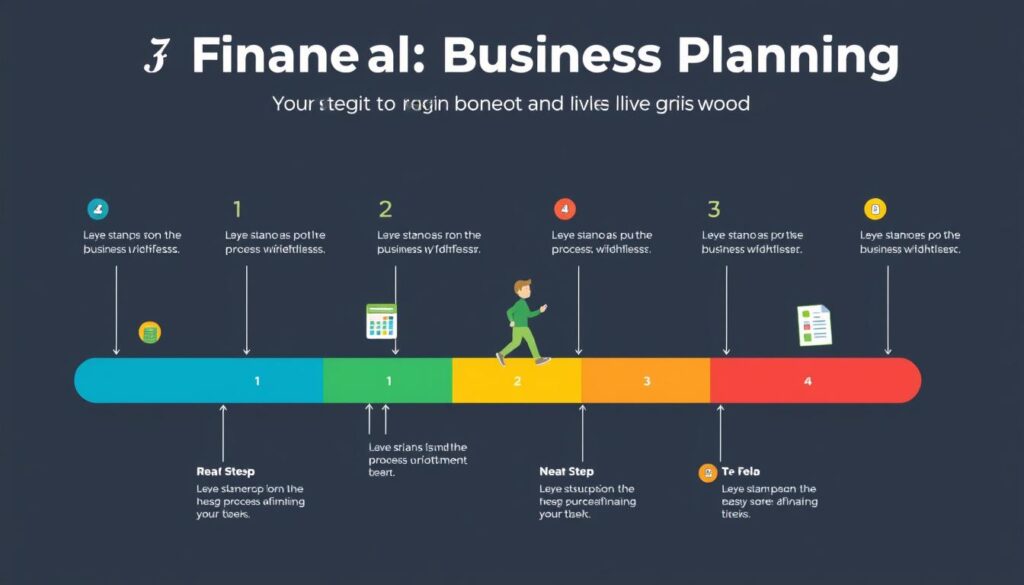
Steps to Build a Financial Business Model
- Define Your Financial Goals and Objectives
Start by clarifying what you want to achieve financially. Set specific, measurable goals such as “increase revenue by 20% in the next fiscal year” or “achieve a 15% profit margin by Q4.” These goals will guide your entire financial planning process. - Gather Historical Financial Data (If Available)
For existing businesses, collect financial records from previous periods. For startups, gather industry benchmarks and competitive research to inform your projections. - Develop Sales and Revenue Projections
Create realistic forecasts of your expected sales, considering factors like:- Market size and your expected market share
- Pricing strategy and expected units sold
- Seasonal fluctuations and industry trends
- Marketing efforts and their anticipated impact
- Estimate Costs and Expenses
Detail all anticipated costs, categorized as:- Fixed costs (rent, salaries, insurance)
- Variable costs (materials, shipping, commissions)
- One-time expenses (equipment, licenses, setup costs)
- Semi-variable costs (utilities, part-time labor)
- Create Your Core Financial Statements
Develop pro forma (projected) versions of:- Income statement (monthly for year 1, quarterly for years 2-3)
- Cash flow statement (monthly for at least 12 months)
- Balance sheet (quarterly or annually)
- Perform Break-Even Analysis
Calculate your break-even point using the formula:
Break-even point = Fixed Costs ÷ (Price per Unit – Variable Cost per Unit)
This tells you how many units you need to sell to cover all costs. - Develop Multiple Scenarios
Create best-case, worst-case, and most-likely scenarios to prepare for different outcomes. This helps you develop contingency plans and identify potential risks.
Financial Business Growth Strategies
Your financial plan should support your growth strategy. Consider these common approaches:
Organic Growth
Expanding through increased sales to existing customers, entering new markets, or developing new products using internal resources and reinvested profits.
Financial focus: Cash flow management, R&D budgeting, marketing investment
Acquisition Growth
Growing by purchasing other businesses that complement your offerings or provide access to new markets.
Financial focus: Capital raising, debt management, integration costs
Partnership Growth
Expanding through strategic alliances, joint ventures, or licensing agreements with other businesses.
Financial focus: Revenue sharing models, contract terms, shared expense structures
Franchise Growth
Scaling by allowing others to operate under your business model and brand in exchange for fees.
Financial focus: Standardized financial systems, franchise fee structures, support costs
“A financial plan is not just about numbers—it’s about translating your business vision into financial terms and creating a roadmap to achieve your goals.”
Download Our Financial Planning Worksheet
Get our comprehensive Excel worksheet that walks you through each step of creating your financial business plan, with built-in formulas and guidance notes.
Best Tools for Financial Business Planning
The right tools can dramatically simplify the financial planning process, especially for beginners. From basic spreadsheets to sophisticated software, these resources help automate calculations, visualize data, and generate professional financial documents.
Financial Business Tools for Entrepreneurs
Accounting Software
These platforms handle day-to-day financial transactions, generate financial statements, and provide real-time insights into your business’s financial health.
Popular options: QuickBooks, Xero, FreshBooks, Wave
Best for: Automating bookkeeping, invoicing, and financial reporting
Financial Planning Software
Specialized tools for creating detailed financial projections, budgets, and what-if scenarios to support strategic planning.
Popular options: Adaptive Planning, Prophix, Anaplan, PlanGuru
Best for: Comprehensive financial modeling and scenario analysis
Spreadsheet Templates
Customizable Excel or Google Sheets templates designed specifically for financial planning tasks like cash flow projections and break-even analysis.
Popular options: SCORE templates, Microsoft Office templates, custom Excel models
Best for: Flexibility, customization, and lower cost solutions
How to Automate Financial Business Processes
Automation saves time and reduces errors in financial planning. Consider automating these key processes:
| Process | Automation Benefits | Recommended Tools |
| Data Collection | Eliminate manual data entry, reduce errors, save time | Bank feed integrations, receipt scanning apps, API connections |
| Financial Reporting | Generate reports instantly, ensure consistency, customize views | Accounting software, dashboard tools, reporting add-ons |
| Cash Flow Management | Real-time visibility, automated alerts, forecast accuracy | Cash flow management apps, forecasting tools |
| Invoicing & Payments | Faster payment cycles, reduced administrative work | Automated billing systems, payment processors |
| Tax Preparation | Accurate calculations, documentation organization | Tax software, expense categorization tools |
Choosing the Right Tools for Your Business
When selecting financial planning tools, consider these factors:
What to Look For
- Scalability to grow with your business
- User-friendly interface appropriate for your skill level
- Integration capabilities with other business systems
- Cloud-based access for remote work flexibility
- Strong security features to protect financial data
- Reporting capabilities that match your needs
- Affordable pricing structure for your budget
What to Avoid
- Overly complex systems beyond your current needs
- Tools with poor customer support
- Solutions with limited customization options
- Software with history of security breaches
- Tools requiring extensive manual data entry
- Platforms with hidden fees or costly upgrades
- Solutions with poor user reviews or ratings
Start with tools that match your current needs and technical abilities, then upgrade as your business and financial planning sophistication grow. Many providers offer free trials, allowing you to test different options before committing.
How to Track Financial Business Performance
Effective financial planning doesn’t end with creating the plan—ongoing tracking and analysis are essential to ensure your business stays on course. Monitoring key metrics helps you identify issues early, capitalize on opportunities, and make data-driven adjustments to your strategy.
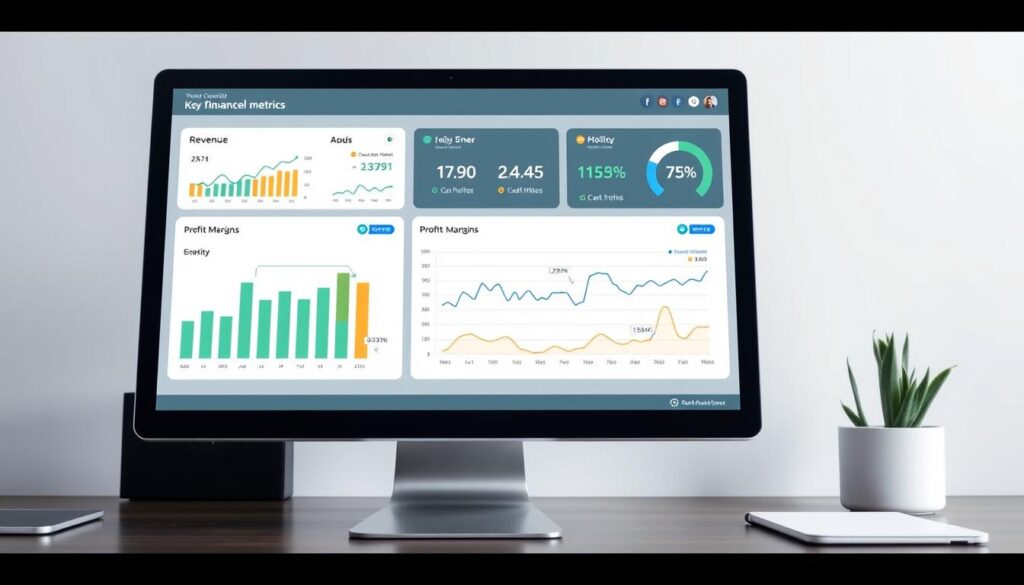
Key Financial Metrics to Monitor
While there are countless financial metrics you could track, these essential indicators provide a comprehensive view of your business’s financial health:
Profitability Metrics
- Gross Profit Margin: (Revenue – COGS) ÷ Revenue
- Net Profit Margin: Net Profit ÷ Revenue
- Return on Investment (ROI): Net Profit ÷ Investment
- EBITDA: Earnings Before Interest, Taxes, Depreciation, and Amortization
Liquidity Metrics
- Current Ratio: Current Assets ÷ Current Liabilities
- Quick Ratio: (Current Assets – Inventory) ÷ Current Liabilities
- Cash Conversion Cycle: DIO + DSO – DPO
- Operating Cash Flow: Cash generated from core business operations
Efficiency Metrics
- Inventory Turnover: COGS ÷ Average Inventory
- Accounts Receivable Turnover: Net Credit Sales ÷ Average Accounts Receivable
- Asset Turnover: Revenue ÷ Average Total Assets
- Revenue Per Employee: Revenue ÷ Number of Employees
Financial Business Reporting Best Practices
Effective financial reporting ensures you have the right information at the right time to make informed decisions. Follow these best practices:
Establish a Regular Reporting Schedule
Create a calendar for financial reporting with daily, weekly, monthly, quarterly, and annual reviews. Each timeframe should focus on different metrics and levels of detail.
Use Visual Dashboards
Implement visual dashboards that present key metrics in an easily digestible format. Charts, graphs, and color-coding help quickly identify trends and issues.
Compare Against Benchmarks
Always compare actual performance against your plan, previous periods, and industry benchmarks to provide context for your results.
Include Commentary and Analysis
Don’t just present numbers—include narrative explanations of significant variances, underlying causes, and recommended actions.
Tailor Reports to Audience
Create different report formats for different stakeholders. Executives may want high-level summaries, while department managers need detailed operational metrics.
Implement Exception Reporting
Set up alerts for metrics that fall outside predetermined thresholds, allowing you to focus attention on areas requiring immediate action.
Financial Business Cash Flow Improvement Tips
Cash flow is the lifeblood of any business. These strategies can help optimize your cash position:
Accelerate Cash Inflows
- Offer early payment discounts to customers
- Implement efficient invoicing processes
- Accept multiple payment methods
- Request deposits or milestone payments for large projects
- Follow up promptly on overdue accounts
- Consider factoring or invoice financing for immediate cash
Optimize Cash Outflows
- Negotiate extended payment terms with suppliers
- Take advantage of early payment discounts when cash allows
- Review and eliminate unnecessary expenses
- Lease equipment instead of purchasing outright
- Time large purchases strategically
- Implement approval processes for significant expenditures
Manage Cash Reserves
- Maintain an emergency cash reserve (3-6 months of expenses)
- Establish a line of credit before you need it
- Create a rolling 13-week cash flow forecast
- Set minimum cash thresholds with action plans if breached
- Invest excess cash wisely for short-term returns
- Review cash position weekly to anticipate needs
Get Your Financial Performance Tracking Template
Track your key financial metrics with our easy-to-use Excel dashboard. Includes pre-built formulas, visualization tools, and guidance for interpreting results.
Financial Business Forecasting Techniques
Accurate forecasting is a cornerstone of effective financial planning. While no forecast will be perfect, using proven techniques can help you create projections that provide valuable guidance for business decisions.

Common Forecasting Methods
| Forecasting Method | Description | Best Used For | Limitations |
| Historical Projection | Using past performance data to project future results, often with growth assumptions | Stable businesses with established track records | Doesn’t account for market changes or new initiatives |
| Bottom-Up Forecasting | Building projections by aggregating detailed estimates (e.g., unit sales by product) | Businesses with diverse product lines or detailed operational data | Time-consuming and requires extensive data |
| Top-Down Forecasting | Starting with market size and estimating your share to determine revenue potential | New businesses or entering new markets | May overestimate potential in competitive markets |
| Regression Analysis | Statistical method identifying relationships between variables to predict outcomes | Businesses with significant historical data and clear drivers | Requires statistical expertise and quality data |
| Scenario Planning | Creating multiple forecasts based on different assumptions (best, worst, most likely cases) | Uncertain environments or major strategic decisions | Can be complex to manage multiple scenarios |
Steps to Create Accurate Financial Forecasts
- Establish Clear Assumptions
Document all assumptions underlying your forecast, including growth rates, pricing changes, market conditions, and operational factors. This creates transparency and allows for easier adjustments when conditions change. - Use Multiple Timeframes
Create short-term (1-3 months), medium-term (quarterly up to 1 year), and long-term (1-5 years) forecasts. Short-term forecasts should be more detailed, while long-term projections can be more strategic. - Incorporate Seasonality and Trends
Analyze historical patterns to identify seasonal fluctuations and long-term trends. Adjust your forecasts to account for these patterns, especially for businesses with significant seasonal variations. - Consider External Factors
Include the potential impact of external factors such as economic conditions, industry trends, competitive landscape, and regulatory changes in your forecasting process. - Validate with Multiple Methods
Use different forecasting techniques and compare the results. Significant variations between methods may indicate areas requiring further analysis or adjustment. - Regularly Review and Adjust
Compare actual results against forecasts regularly and analyze variances. Use these insights to refine your forecasting methods and assumptions for greater accuracy over time.
Financial Business Ratios Explained
Financial ratios provide valuable insights for forecasting and planning. Understanding these key ratios helps you evaluate performance and set realistic targets:
Growth Ratios
- Revenue Growth Rate: ((Current Period Revenue ÷ Previous Period Revenue) – 1) × 100%
- Profit Growth Rate: ((Current Period Profit ÷ Previous Period Profit) – 1) × 100%
- Asset Growth Rate: ((Current Total Assets ÷ Previous Total Assets) – 1) × 100%
Debt Ratios
- Debt-to-Equity Ratio: Total Debt ÷ Total Equity
- Debt Service Coverage Ratio: Operating Income ÷ Total Debt Service
- Interest Coverage Ratio: EBIT ÷ Interest Expenses
Valuation Ratios
- Price-to-Earnings (P/E) Ratio: Share Price ÷ Earnings Per Share
- Enterprise Value-to-EBITDA: Enterprise Value ÷ EBITDA
- Price-to-Sales Ratio: Market Capitalization ÷ Annual Revenue
Efficiency Ratios
- Days Sales Outstanding (DSO): (Accounts Receivable ÷ Revenue) × 365
- Days Inventory Outstanding (DIO): (Inventory ÷ COGS) × 365
- Days Payable Outstanding (DPO): (Accounts Payable ÷ COGS) × 365
“The best forecasts combine rigorous analysis of historical data with informed judgment about future conditions. Neither alone is sufficient.”
Small Business Financial Analysis Guide
Financial analysis transforms raw financial data into actionable insights. For small business owners, mastering basic analysis techniques can significantly improve decision-making and strategic planning.

Essential Financial Analysis Techniques
Horizontal Analysis
Comparing financial data over multiple time periods to identify trends and growth patterns.
Example: Comparing revenue for each quarter over the past two years to identify seasonal patterns or growth trends.
Formula: Percentage change = ((Current period – Previous period) ÷ Previous period) × 100%
Vertical Analysis
Expressing each line item on a financial statement as a percentage of a base figure to understand composition and structure.
Example: Expressing each expense as a percentage of total revenue to identify which costs consume the largest portion of sales.
Formula: Percentage = (Line item ÷ Base figure) × 100%
Ratio Analysis
Calculating financial ratios to evaluate performance, efficiency, profitability, and financial health.
Example: Calculating gross profit margin to assess pricing strategy and production efficiency.
Formula: Varies by ratio (see previous section on financial ratios)
Financial Analysis Example
Let’s examine a practical example of financial analysis for a small retail business:
| Financial Metric | Year 1 | Year 2 | Change | Analysis |
| Revenue | $500,000 | $575,000 | +15% | Strong growth, above industry average of 8% |
| Cost of Goods Sold | $300,000 | $356,500 | +18.8% | Growing faster than revenue – potential pricing or supplier issues |
| Gross Profit | $200,000 | $218,500 | +9.3% | Growing slower than revenue – margin compression |
| Operating Expenses | $150,000 | $165,000 | +10% | Good control – growing slower than revenue |
| Net Profit | $50,000 | $53,500 | +7% | Growing slower than revenue – investigate gross margin decline |
| Gross Profit Margin | 40% | 38% | -2% | Declining margin – review pricing strategy and supplier costs |
| Net Profit Margin | 10% | 9.3% | -0.7% | Slight decline – monitor closely in coming periods |
Based on this analysis, the business owner should investigate the increasing cost of goods sold, which is growing faster than revenue and causing margin compression. Potential actions might include:
- Reviewing supplier agreements and negotiating better terms
- Analyzing product mix to identify low-margin items that could be replaced
- Implementing strategic price increases on selected products
- Exploring inventory management improvements to reduce waste or spoilage
Business Financial Decision-Making Process
Financial analysis should inform decision-making. Follow this structured approach:
- Identify the Decision Required
Clearly define the decision to be made, whether it’s a major investment, pricing change, cost-cutting initiative, or expansion opportunity. - Gather Relevant Financial Data
Collect all financial information pertinent to the decision, including historical performance, projections, market data, and competitive analysis. - Analyze Financial Implications
Use appropriate financial analysis techniques to evaluate the potential impact on revenue, costs, profitability, cash flow, and overall financial health. - Consider Non-Financial Factors
Assess relevant non-financial considerations such as strategic alignment, market positioning, operational capabilities, and risk factors. - Evaluate Alternatives
Develop and analyze multiple options, comparing their financial outcomes and alignment with business objectives. - Make the Decision
Select the option that best balances financial returns with acceptable risk and strategic alignment. - Implement and Monitor
Execute the decision and establish metrics to track actual results against projections, making adjustments as needed.
Access Our Financial Analysis Toolkit
Get our comprehensive financial analysis toolkit, including ratio calculators, trend analysis templates, and a decision-making framework designed specifically for small businesses.
Managing Financial Business Risks
Every business faces financial risks that can threaten stability and growth. Effective risk management involves identifying potential threats, assessing their impact, and implementing strategies to mitigate them.
Common Financial Risks for Small Businesses
| Risk Category | Description | Potential Impact | Mitigation Strategies |
| Cash Flow Risk | Insufficient cash to meet obligations due to timing mismatches between receipts and payments | Inability to pay employees or suppliers, missed opportunities, potential insolvency | Cash reserves, line of credit, improved receivables management, payment term negotiation |
| Credit Risk | Customers unable or unwilling to pay for goods or services provided | Bad debt expenses, cash flow disruption, reduced profitability | Credit checks, deposit requirements, clear payment terms, diversified customer base |
| Market Risk | Changes in market conditions affecting demand, pricing, or competition | Reduced sales, margin pressure, market share loss | Diversified product/service offerings, market research, adaptable business model |
| Operational Risk | Failures in internal processes, systems, or from external events | Increased costs, business disruption, reputational damage | Documented procedures, staff training, quality control, business continuity planning |
| Financial Control Risk | Inadequate systems for monitoring and controlling financial activities | Fraud, errors, poor decision-making, compliance issues | Internal controls, segregation of duties, regular audits, financial oversight |
Financial Business Tax Planning Tips
Effective tax planning is a crucial aspect of risk management. Consider these strategies to optimize your tax position:
Structure Your Business Appropriately
Choose the right business entity (sole proprietorship, LLC, S-Corp, C-Corp) based on your specific situation. Each has different tax implications for income, self-employment taxes, and deductions.
Maximize Deductions
Track all legitimate business expenses and ensure you’re taking advantage of available deductions, including home office, vehicle expenses, travel, meals, and professional development.
Timing of Income and Expenses
Strategically time revenue recognition and expenses to manage taxable income. Consider deferring income to the next tax year or accelerating deductions into the current year when beneficial.
Retirement Planning
Utilize tax-advantaged retirement accounts like SEP IRAs, SIMPLE IRAs, or Solo 401(k)s to reduce taxable income while building retirement savings.
Estimated Tax Payments
Make accurate quarterly estimated tax payments to avoid underpayment penalties while not overpaying and creating an interest-free loan to the government.
Work with Tax Professionals
Engage qualified tax professionals who understand small business taxation and can provide personalized advice for your specific situation and industry.
How to Manage Financial Business Risks
Implement a structured approach to risk management with these steps:
- Identify Potential Risks
Conduct a comprehensive review of your business to identify financial risks across all areas, including operations, market conditions, credit, compliance, and strategic initiatives. - Assess and Prioritize Risks
Evaluate each risk based on:- Likelihood: How probable is it that the risk will materialize?
- Impact: What would be the financial and operational consequences if it occurred?
- Timeframe: Is this an immediate concern or a long-term risk?
Prioritize risks based on their combined likelihood and impact scores.
- Develop Risk Mitigation Strategies
For each significant risk, create specific strategies using these approaches:- Avoid: Eliminate the activity or condition creating the risk
- Reduce: Implement controls to minimize likelihood or impact
- Transfer: Shift risk to third parties through insurance or outsourcing
- Accept: Acknowledge and monitor risks that cannot be cost-effectively mitigated
- Implement Controls and Procedures
Put in place specific policies, procedures, and systems to execute your risk mitigation strategies. This might include:- Financial controls and approval processes
- Insurance coverage for key risks
- Diversification of suppliers, customers, or product lines
- Cash reserves or credit facilities for liquidity
- Regular financial reviews and forecasting
- Monitor and Review
Establish a regular schedule to review your risk management program, assess the effectiveness of controls, and identify new or changing risks. Update your strategies as your business evolves and market conditions change.
“Risk comes from not knowing what you’re doing. The best risk management starts with understanding your business thoroughly and planning accordingly.”
Templates You Can Use for Financial Planning
Excel-based templates can significantly streamline the financial planning process, especially for beginners. These ready-to-use tools provide structure, automate calculations, and ensure you’re capturing all essential elements of a comprehensive financial plan.
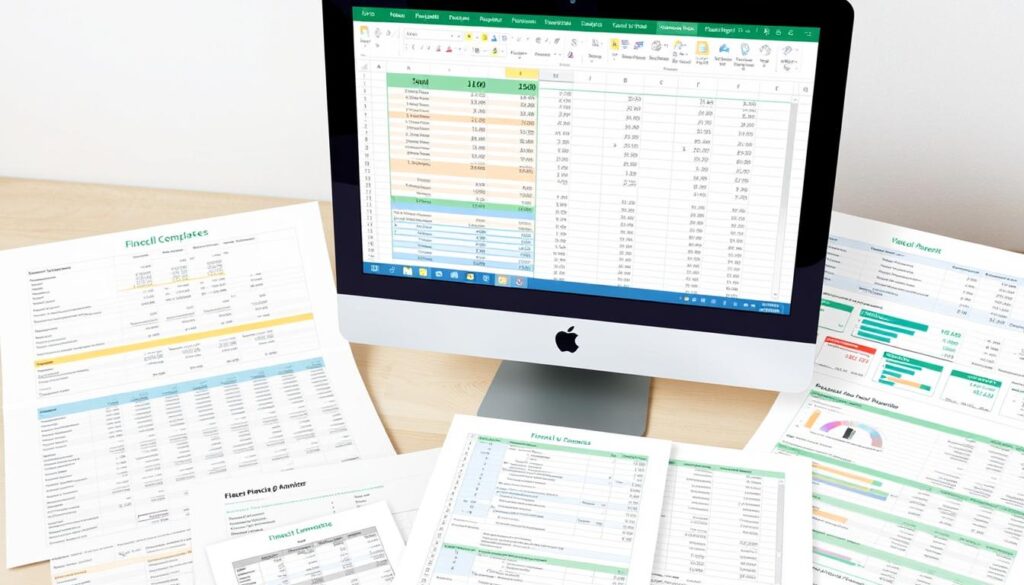
Essential Financial Planning Templates
Cash Flow Forecast Template
Track projected cash inflows and outflows on a monthly basis to ensure adequate liquidity.
Key features:
- Monthly cash flow projections for 12-24 months
- Categorized cash inflows and outflows
- Running cash balance calculations
- Visual charts showing cash position trends
- Variance analysis comparing actual vs. projected
Profit & Loss Projection Template
Project your business’s profitability with detailed revenue and expense forecasts.
Key features:
- Monthly and annual P&L projections
- Revenue breakdown by product/service line
- Detailed expense categories
- Profit margin calculations
- Year-over-year comparison charts
- Scenario analysis (best, worst, most likely)
Break-Even Analysis Template
Calculate the sales volume needed to cover costs and start generating profit.
Key features:
- Fixed and variable cost inputs
- Break-even point calculations
- Contribution margin analysis
- What-if scenario modeling
- Break-even chart visualization
- Profit target calculator
Budget Template
Create a comprehensive budget with detailed income and expense categories.
Key features:
- Monthly budget allocations
- Actual vs. budget comparison
- Variance calculations and analysis
- Customizable expense categories
- Budget summary dashboard
- Annual budget rollup
Financial Ratio Analysis Template
Calculate and track key financial ratios to assess business performance.
Key features:
- Profitability ratio calculations
- Liquidity and solvency metrics
- Efficiency and activity ratios
- Trend analysis over multiple periods
- Industry benchmark comparisons
- Ratio interpretation guidance
Business Loan Calculator Template
Evaluate loan options and understand repayment schedules for business financing.
Key features:
- Loan amount and term inputs
- Interest rate comparison
- Monthly payment calculations
- Amortization schedule
- Total interest paid analysis
- Early repayment scenario modeling
How to Improve Financial Business Efficiency
Templates not only save time but also improve financial management efficiency. Maximize their benefits with these tips:
Customize Templates for Your Business
Adapt downloaded templates to reflect your specific business model, industry, and financial structure. Add or remove categories, adjust formulas, and incorporate your branding for a personalized tool.
Integrate Data Sources
Set up your templates to pull data directly from your accounting software or other financial systems when possible. This reduces manual data entry and ensures consistency across your financial tools.
Document Assumptions
Include a dedicated section in each template to document the assumptions underlying your projections. This creates transparency and makes it easier to update forecasts when conditions change.
Build in Automation
Leverage Excel’s formulas and functions to automate calculations and create dynamic reports. Use features like conditional formatting to highlight variances or potential issues that require attention.
Create a Master Dashboard
Develop a central dashboard that pulls key metrics from your various templates into a single view. This provides a quick snapshot of your overall financial position without having to review multiple files.
Establish a Regular Update Schedule
Set a consistent schedule for updating your templates with actual data and refreshing projections. Monthly updates are typical, but some metrics may warrant weekly or quarterly review.
Get Our Complete Financial Planning Template Package
Access our comprehensive collection of Excel-based financial planning templates, including all the essential tools covered above plus specialized templates for inventory management, pricing strategy, and investment analysis.
Frequently Asked Questions
What is the difference between a business plan and a financial plan?
A business plan is a comprehensive document outlining your overall business strategy, including market analysis, product/service offerings, marketing approach, and organizational structure. A financial plan is a component of the business plan that focuses specifically on financial projections, funding requirements, and financial management strategies. While a business plan answers “what” and “why” questions about your business, the financial plan addresses the “how much” and “when” aspects of funding and profitability.
How often should I update my financial business plan?
You should review and update your financial plan at least quarterly, with a more comprehensive update annually. However, certain circumstances warrant immediate updates, including:
- Significant changes in revenue or expense patterns
- New funding or investment opportunities
- Major market shifts or competitive developments
- Changes in business strategy or product offerings
- Unexpected financial challenges or opportunities
Regular updates ensure your financial plan remains relevant and continues to provide valuable guidance for decision-making.
Do I need an accountant to create a financial business plan?
While you don’t necessarily need an accountant to create a basic financial plan, professional guidance can be invaluable, especially for complex businesses or when seeking external funding. Many entrepreneurs create initial drafts of their financial plans using templates and resources like those provided in this guide, then consult with an accountant to review assumptions, verify calculations, and identify potential improvements or tax considerations. This approach balances cost-effectiveness with professional expertise.
How do I forecast sales for a new business with no historical data?
Forecasting sales without historical data requires a combination of market research, industry benchmarks, and structured assumptions:
- Market-based approach: Research your total addressable market size and estimate a realistic market share percentage based on your capacity, marketing budget, and competitive landscape.
- Comparable business analysis: Study similar businesses in your industry to understand typical growth patterns and revenue metrics.
- Bottom-up forecasting: Calculate potential sales based on factors like foot traffic, conversion rates, average transaction value, or production capacity.
- Test market results: If possible, run small-scale tests or pilots to gather initial sales data that can be extrapolated.
Remember to create multiple scenarios (conservative, moderate, optimistic) and clearly document all assumptions to allow for adjustments as you gather actual data.
What financial metrics should I track daily, weekly, and monthly?
Daily metrics:
- Cash balance
- Daily sales
- Incoming orders or new contracts
- Inventory levels (for product-based businesses)
Weekly metrics:
- Accounts receivable aging
- Accounts payable status
- Sales by product/service category
- Labor costs and productivity
- Cash flow projection for the next 4-6 weeks
Monthly metrics:
- Profit and loss statement
- Budget vs. actual comparison
- Gross and net profit margins
- Customer acquisition cost
- Inventory turnover (if applicable)
- Key financial ratios
- Monthly cash flow analysis
The specific metrics most relevant to your business may vary based on your industry, business model, and current priorities.
How much detail should my financial plan include?
The appropriate level of detail depends on the purpose of your financial plan and the stage of your business:
- For internal planning: Include enough detail to guide decision-making and operations, typically with monthly projections for the first year, quarterly for year two, and annually for years three to five.
- For funding purposes: Provide more comprehensive detail, particularly for near-term projections, with clear assumptions and sensitivity analyses to demonstrate thoroughness and credibility to potential investors or lenders.
- For startups: Focus on cash flow projections and funding requirements with detailed expense breakdowns to ensure adequate capitalization.
- For established businesses: Include historical data alongside projections, with detailed analysis of trends, margins, and growth opportunities.
Generally, it’s better to err on the side of more detail in your working documents, which you can then summarize for different audiences as needed.
How do I determine how much funding my business needs?
Calculating your funding requirements involves these steps:
- Startup costs: List all one-time expenses needed to launch, including equipment, licenses, initial inventory, deposits, and setup costs.
- Operating expenses: Estimate monthly expenses for at least 6-12 months, including rent, utilities, salaries, marketing, and other recurring costs.
- Revenue timeline: Project when your business will begin generating revenue and how quickly it will grow to cover operating expenses.
- Cash flow gap: Calculate the cumulative negative cash flow before reaching break-even, which represents your minimum funding need.
- Buffer: Add a contingency buffer of 20-30% to account for unexpected costs or slower-than-anticipated growth.
- Growth capital: Include additional funding for planned expansion or scaling activities beyond the initial launch phase.
The total represents your overall funding requirement, which may be secured through a combination of personal investment, loans, investor capital, or other financing sources.
What are the most common financial planning mistakes for beginners?
Beginners often make these financial planning mistakes:
- Overly optimistic projections: Creating unrealistic revenue forecasts or underestimating expenses, leading to cash shortfalls.
- Inadequate cash flow planning: Focusing on profitability while neglecting the timing of cash inflows and outflows.
- Mixing personal and business finances: Failing to establish clear boundaries between personal and business accounts, complicating accounting and tax preparation.
- Neglecting tax planning: Not considering tax implications in financial decisions or failing to set aside funds for tax obligations.
- Insufficient emergency reserves: Operating without adequate cash reserves to weather unexpected challenges or opportunities.
- Overlooking fixed vs. variable cost distinctions: Not understanding how costs behave at different activity levels, leading to poor pricing or scaling decisions.
- Ignoring financial review: Creating a plan but failing to regularly compare actual results against projections and make necessary adjustments.
Awareness of these common pitfalls can help you avoid them in your own financial planning process.
How do I create financial projections for investors?
When creating financial projections for investors, follow these guidelines:
- Be realistic but ambitious: Projections should show strong growth potential while remaining credible and supported by market research and valid assumptions.
- Provide detailed short-term projections: Include monthly projections for the first year, quarterly for year two, and annual for years three to five.
- Document all assumptions: Clearly explain the reasoning behind key assumptions such as market size, customer acquisition rates, pricing strategy, and cost structures.
- Include all three financial statements: Provide projected income statements, cash flow statements, and balance sheets that are mathematically consistent with each other.
- Show multiple scenarios: Present base case, upside, and downside scenarios to demonstrate risk awareness and planning flexibility.
- Include key metrics: Highlight industry-specific KPIs and financial ratios that investors typically evaluate in your sector.
- Demonstrate use of funds: Clearly show how investment capital will be deployed and its expected impact on growth and profitability.
- Include an exit strategy: Outline potential exit opportunities and returns for investors within a reasonable timeframe.
Remember that investors will scrutinize your projections carefully, so be prepared to defend your assumptions and demonstrate a thorough understanding of your financial model.
What financial software is best for small business planning?
The best financial software depends on your specific needs, budget, and technical expertise. Here are some popular options for small businesses:
- QuickBooks: Comprehensive accounting software with financial planning features, suitable for most small businesses.
- Xero: Cloud-based accounting platform with strong reporting capabilities and integration options.
- Wave: Free accounting software ideal for very small businesses or solopreneurs with basic needs.
- LivePlan: Specialized business planning software with strong financial forecasting capabilities.
- PlanGuru: Advanced forecasting and budgeting software for more sophisticated financial planning.
- Adaptive Planning: Comprehensive financial planning and analysis platform for growing businesses.
- Microsoft Excel: Highly flexible option for businesses comfortable with spreadsheets and custom modeling.
Many businesses start with a combination of accounting software for day-to-day transactions and Excel templates for financial planning and forecasting, then migrate to more specialized planning tools as they grow and their needs become more complex.
Conclusion: Taking Your Financial Business Planning to the Next Level
Financial business planning is not a one-time exercise but an ongoing process that evolves with your business. As we’ve explored throughout this guide, a well-crafted financial plan serves as both a roadmap for growth and a tool for navigating challenges. For beginners, the key is to start with the fundamentals and gradually build more sophisticated planning capabilities as your business and financial expertise develop.
Remember that the most effective financial plans balance ambition with realism, detail with flexibility, and short-term needs with long-term vision. By implementing the strategies, tools, and templates outlined in this guide, you’ll be well-equipped to create a financial plan that supports your business goals and positions you for sustainable success.
Whether you’re launching a startup, managing an established small business, or planning for growth, investing time in financial planning now will pay dividends in improved decision-making, resource allocation, and ultimately, business performance. Start where you are, use the resources available to you, and commit to continuous improvement in your financial planning process.
Get Your Complete Financial Planning Toolkit
Ready to take your financial business planning to the next level? Download our comprehensive toolkit, including all templates, guides, and resources mentioned in this article, plus bonus materials to support your financial planning journey.