
From cash flow optimization to strategic investments, we’ll cover actionable techniques that have helped thousands of businesses achieve their growth objectives. Each strategy is backed by real-world examples and practical implementation steps you can start using today.
| Section | What You’ll Learn |
| Foundation Strategies | Core financial planning and analysis techniques |
| Growth Acceleration | Revenue expansion and market penetration strategies |
| Risk Management | Protecting your business while pursuing growth |
| Efficiency Optimization | Streamlining operations and improving margins |
| Implementation Framework | Step-by-step approach to execute strategies |
Foundation Financial Business Growth Strategies
Before implementing advanced growth tactics, it’s essential to establish a solid financial foundation. These fundamental strategies create the infrastructure needed for sustainable expansion.
How to Create a Financial Business Plan That Drives Growth
A comprehensive financial business plan serves as your roadmap for growth. Unlike basic plans that merely project revenue, an effective growth-oriented plan identifies specific financial levers you can pull to accelerate expansion.
- Start with clear, measurable financial objectives (e.g., “Increase gross margin by 15% within 18 months”)
- Include detailed cash flow projections with best-case, likely-case, and worst-case scenarios
- Identify capital requirements for each growth initiative with expected ROI
- Establish key performance indicators (KPIs) that align with growth goals
- Create contingency plans for potential financial challenges
Your financial plan should be a living document, reviewed quarterly and adjusted based on actual performance. This approach ensures your growth strategies remain aligned with market realities.
Need help creating your financial business plan?
Download our free Financial Business Plan Template to jumpstart your growth planning process.
Financial Business Planning for Beginners: Getting Started
For those new to financial business planning, the process can seem overwhelming. Breaking it down into manageable steps makes it accessible even without extensive financial background.
- Gather your historical financial data (at least 2 years if available)
- Analyze revenue patterns, identifying seasonal fluctuations and growth trends
- Document all expenses, categorizing them as fixed or variable
- Calculate your current gross and net profit margins
- Identify your break-even point for each product or service line
- Set realistic growth targets based on industry benchmarks and past performance
- Create monthly cash flow projections for the next 12-24 months
Remember that accuracy is more important than complexity. A straightforward plan that reflects your business reality is more valuable than an elaborate model built on unrealistic assumptions.
Essential Financial Business Management Tips
Effective financial management creates the foundation for sustainable growth. These practical tips help optimize your financial operations while supporting expansion goals.
Cash Flow Management
Cash flow remains the lifeblood of business growth. Companies with strong cash positions can seize opportunities and weather challenges that would derail cash-strapped competitors.
- Implement weekly cash flow forecasting to anticipate shortfalls
- Negotiate extended payment terms with suppliers (Net-60 instead of Net-30)
- Offer early payment discounts to accelerate customer payments
- Establish a line of credit before you need it
- Consider invoice factoring for immediate cash from outstanding receivables

Financial Business Cash Flow Improvement Tips
Beyond basic cash management, these advanced techniques can significantly improve your cash position to fund growth initiatives:
| Strategy | Implementation Approach | Potential Impact |
| Inventory Optimization | Implement just-in-time inventory systems to reduce capital tied up in stock | 10-15% reduction in working capital requirements |
| Accounts Receivable Acceleration | Automate invoicing and follow-up processes | Reduce average collection time by 5-7 days |
| Subscription Revenue Models | Convert one-time purchases to recurring revenue streams | Increase customer lifetime value by 200-300% |
| Strategic Price Optimization | Implement value-based pricing for premium offerings | Margin improvement of 3-5% without volume loss |
The most successful businesses combine multiple cash flow strategies, creating a comprehensive approach that supports their specific growth objectives.
Best Tools for Financial Business Planning
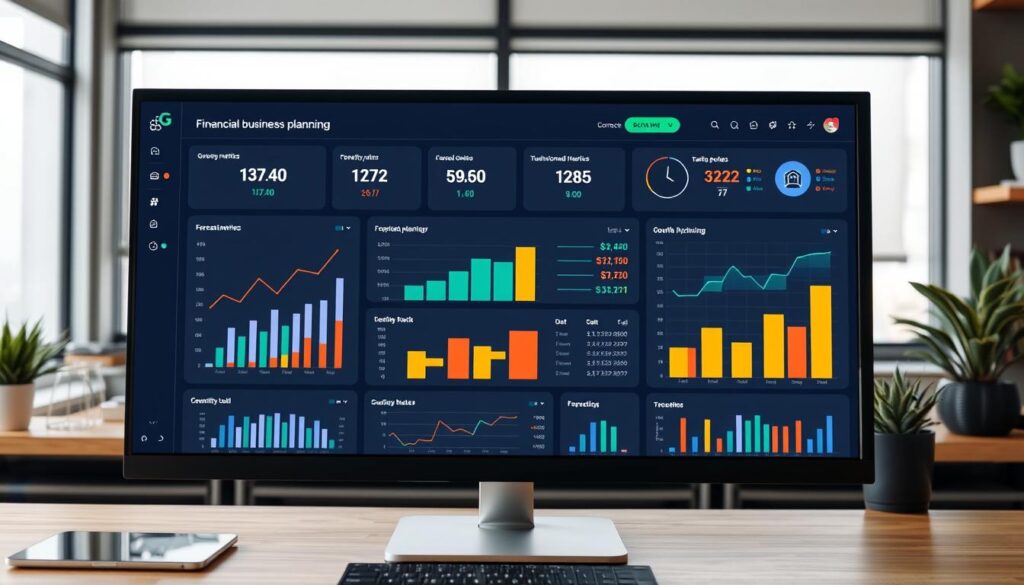
The right financial tools can dramatically improve your planning accuracy and efficiency. These solutions help transform raw data into actionable growth strategies.
Financial Modeling Tools
Advanced modeling tools help project different growth scenarios and their financial implications.
- Excel with Financial Modeling Add-ins
- Adaptive Planning
- Anaplan
- Causal
Cash Flow Management
These tools provide real-time visibility into your cash position and projections.
- Float
- Pulse
- Fluidly
- Agicap
Financial Business Tools for Entrepreneurs
Accessible solutions designed specifically for growing businesses.
- QuickBooks Online
- Xero
- Wave
- FreshBooks
How to Automate Financial Business Processes
Automation frees your team to focus on growth initiatives rather than manual financial tasks. These automation strategies deliver immediate efficiency gains:
- Accounts Payable Automation: Implement systems that automatically match purchase orders, receiving documents, and invoices
- Recurring Invoice Scheduling: Set up automatic billing for subscription and retainer clients
- Expense Management Systems: Deploy mobile apps that capture receipts and automatically categorize expenses
- Financial Data Integration: Connect your point-of-sale, banking, and accounting systems to eliminate manual data entry
- Automated Financial Reporting: Schedule regular financial reports to be generated and distributed to stakeholders
“Businesses that automate core financial processes typically reduce processing costs by 50-70% while improving accuracy and compliance.”
How to Track Financial Business Performance
Effective performance tracking is essential for guiding your growth strategies. By monitoring the right metrics, you can identify opportunities and address challenges before they impact your expansion plans.
Key Financial Metrics for Growth-Focused Businesses
While many businesses track basic metrics like revenue and profit, growth-oriented companies monitor more sophisticated indicators:
- Customer Acquisition Cost (CAC): The total cost to acquire a new customer
- Customer Lifetime Value (CLV): The projected revenue a customer generates over their relationship with your business
- CLV:CAC Ratio: Ideally 3:1 or higher for sustainable growth
- Burn Rate: How quickly you’re using available capital
- Runway: How long your business can operate before requiring additional funding
- Gross Margin: Revenue minus cost of goods sold, divided by revenue
- Net Promoter Score (NPS): A measure of customer satisfaction and loyalty
Financial Business Reporting Best Practices
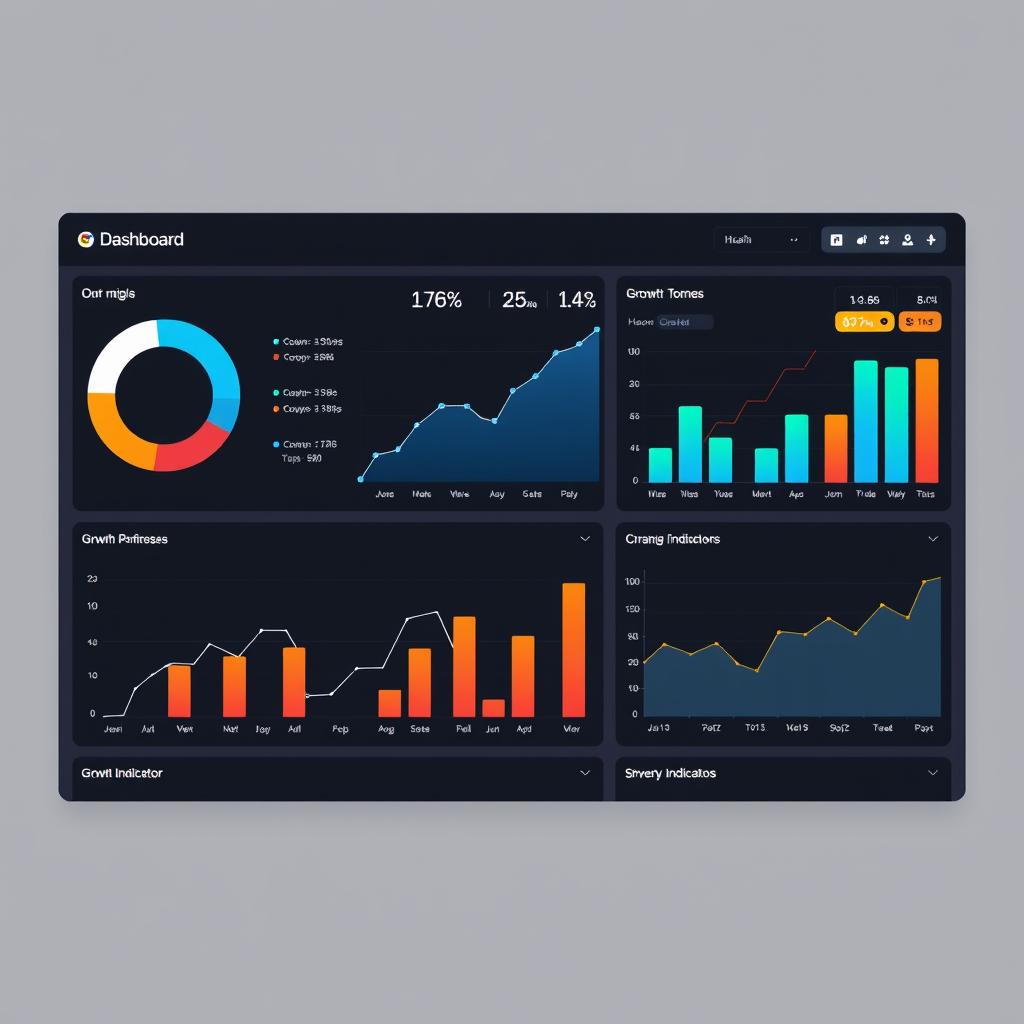
Effective reporting transforms raw data into actionable insights that drive growth decisions:
- Create a financial dashboard that displays key metrics at a glance
- Establish weekly, monthly, and quarterly reporting cadences for different metrics
- Compare actual performance against projections and industry benchmarks
- Include trend analysis to identify patterns over time
- Segment reports by product line, customer segment, or geographic region
- Incorporate leading indicators that predict future performance
- Ensure reports include actionable recommendations, not just data
Streamline Your Financial Reporting
Download our Financial KPI Dashboard Template to track the metrics that matter most for business growth.
Financial Business Forecasting Techniques
Accurate forecasting is crucial for planning growth initiatives and securing the resources needed to execute them. These advanced techniques improve prediction accuracy even in uncertain markets.

Beyond Basic Projections: Advanced Forecasting Methods
| Forecasting Method | Best Used For | Implementation Complexity |
| Monte Carlo Simulation | Testing multiple variables and their impact on financial outcomes | High (requires specialized software) |
| Cohort Analysis | Understanding customer behavior patterns over time | Medium |
| Predictive Analytics | Identifying future trends based on historical data | Medium-High |
| Rolling Forecasts | Maintaining an updated view of financial performance | Low-Medium |
| Driver-Based Forecasting | Connecting operational metrics to financial outcomes | Medium |
The most effective approach often combines multiple forecasting methods, creating a comprehensive view of potential future scenarios.
Steps to Build a Financial Business Model for Growth
A robust financial model serves as the foundation for your growth strategies, helping you test assumptions and allocate resources effectively:
- Define the model’s purpose and key outputs (e.g., 5-year revenue projection, funding requirements)
- Identify key drivers and assumptions (e.g., customer acquisition rate, conversion rates)
- Build revenue projections based on market size, penetration rates, and pricing strategy
- Model cost structures, distinguishing between fixed and variable expenses
- Create integrated financial statements (income statement, balance sheet, cash flow)
- Incorporate sensitivity analysis to test different scenarios
- Validate the model against historical data and industry benchmarks
- Establish a regular review process to refine assumptions based on actual results
How to Manage Financial Business Risks
Effective risk management doesn’t just protect your business—it creates a foundation for more aggressive growth strategies by establishing safety nets and contingency plans.

Identifying and Mitigating Financial Risks
Common Growth-Related Risks
- Cash flow shortages during expansion
- Customer concentration risk
- Supply chain disruptions
- Regulatory compliance challenges
- Technology obsolescence
- Talent acquisition and retention
- Competitive market pressures
Mitigation Strategies
- Maintain 3-6 months of operating expenses in reserve
- Diversify customer base and revenue streams
- Develop redundant supply chain options
- Implement compliance monitoring systems
- Invest in scalable, future-proof technology
- Create compelling employee value propositions
- Conduct regular competitive analysis
Financial Business Tax Planning Tips
Strategic tax planning is often overlooked as a growth enabler, but it can free up significant capital for reinvestment:
- R&D Tax Credits: Claim credits for developing new products, processes, or software
- Cost Segregation Studies: Accelerate depreciation on property improvements
- Entity Structure Optimization: Ensure your business structure minimizes tax liability
- Strategic Timing of Income/Expenses: Defer income or accelerate deductions when advantageous
- Employee Benefit Programs: Implement tax-advantaged compensation strategies
- International Tax Planning: For businesses with global operations, optimize cross-border transactions
“Effective tax planning isn’t about aggressive avoidance—it’s about understanding available incentives and structuring your business operations to legally minimize tax burden while supporting growth objectives.”
Financial Business Budgeting Strategies
Strategic budgeting goes beyond expense control—it’s about allocating resources to maximize growth potential while maintaining financial stability.
Growth-Oriented Budgeting Approaches
Traditional budgeting often focuses on cost control, but growth-oriented businesses need different approaches:
- Zero-Based Budgeting: Justify all expenses from scratch each period, not just incremental changes
- Priority-Based Budgeting: Allocate resources based on strategic priorities rather than historical patterns
- Rolling Forecasts: Replace annual budgets with continuously updated projections
- Scenario-Based Budgeting: Develop multiple budget versions for different growth scenarios
- Activity-Based Budgeting: Link resource allocation directly to business activities that drive growth

Balancing Growth Investments with Financial Stability
The most successful growth companies maintain financial discipline while investing in expansion. Consider this allocation framework for balancing priorities:
| Budget Category | Allocation Range | Strategic Consideration |
| Core Operations | 50-60% | Maintain operational excellence while seeking efficiencies |
| Growth Initiatives | 20-30% | Fund market expansion, product development, and capability building |
| Innovation/R&D | 5-15% | Invest in future growth opportunities and competitive advantages |
| Financial Reserves | 10-15% | Build buffers to weather challenges and seize unexpected opportunities |
These percentages should be adjusted based on your industry, growth stage, and competitive environment. Early-stage companies often allocate more to growth, while mature businesses may prioritize stability.
Small Business Financial Analysis Guide
Financial analysis provides the insights needed to make informed growth decisions. These techniques help identify opportunities and challenges that might otherwise remain hidden.

Financial Business Ratios Explained
Key ratios provide quick insights into your business’s financial health and growth potential:
| Ratio Category | Key Ratios | What They Tell You | Healthy Range |
| Profitability | Gross Margin, Net Profit Margin, EBITDA Margin | How effectively you generate profit from revenue | Varies by industry; higher is better |
| Liquidity | Current Ratio, Quick Ratio, Cash Ratio | Your ability to meet short-term obligations | Current Ratio: 1.5-3.0 |
| Efficiency | Inventory Turnover, Accounts Receivable Turnover | How well you manage assets and operations | Higher is generally better |
| Leverage | Debt-to-Equity, Interest Coverage Ratio | Your reliance on debt financing | Debt-to-Equity: 1.5-2.0 or lower |
| Growth | Revenue Growth Rate, Profit Growth Rate | Your business’s expansion trajectory | Above industry average |
Financial Analysis Example: Growth Strategy Assessment
This example demonstrates how financial analysis can inform growth strategy decisions:
Case Study: Software-as-a-Service Company
Situation: A SaaS company with $5M annual revenue is considering two growth strategies: (A) Expanding into new markets or (B) Developing premium features for existing customers.
Financial Analysis:
- Customer Acquisition Cost (CAC): $1,200 for new customers
- Customer Lifetime Value (CLV): $3,600 for standard customers, $7,200 for premium customers
- Conversion Rate: 8% of existing customers likely to upgrade to premium
- Development Costs: $800,000 for premium features vs. $1.2M for new market entry
Analysis Outcome: The premium feature strategy showed a projected ROI of 172% over three years, compared to 128% for market expansion. The company prioritized premium feature development while planning for market expansion as a second phase.
Need help with your financial analysis?
Download our Financial Analysis Toolkit with pre-built templates and formulas.
Business Financial Decision-Making Process
Strategic financial decisions drive sustainable growth. This framework helps ensure your decisions are data-driven, aligned with goals, and properly executed.

A Structured Approach to Financial Decisions
- Define the Decision Scope: Clearly articulate the financial decision to be made and its strategic importance
- Gather Relevant Data: Collect financial information, market insights, and operational data
- Identify Options: Develop multiple potential approaches, not just obvious choices
- Analyze Financial Implications: Project the financial impact of each option using models and scenarios
- Assess Risks and Constraints: Evaluate potential downsides and implementation challenges
- Align with Strategic Goals: Ensure the decision supports your overall growth strategy
- Make the Decision: Select the option that best balances financial returns, risk, and strategic fit
- Implement and Monitor: Execute the decision and track results against projections
Financial Business Growth Strategies: Decision Framework
When evaluating specific growth strategies, consider these key decision factors:
| Decision Factor | Key Questions |
| Capital Requirements | How much funding is needed? What are the sources? What’s the cost of capital? |
| Time to Value | How quickly will the strategy generate returns? Is this timeline acceptable? |
| Risk Profile | What are the major risks? How can they be mitigated? What’s the worst-case scenario? |
| Resource Allocation | What resources (beyond capital) are required? Are they available? |
| Competitive Advantage | How does this strategy leverage or create competitive advantages? |
| Scalability | Can the strategy scale efficiently as the business grows? |
Financial Business Management for Startups
Startups face unique financial challenges and opportunities. These strategies help early-stage companies build a foundation for sustainable growth.

Balancing Growth and Runway
For startups, managing the tension between aggressive growth and financial sustainability is critical:
- Establish Clear Unit Economics: Understand the fundamental economics of your business model before scaling
- Focus on Contribution Margin: Ensure each additional unit of business contributes positively to fixed costs
- Monitor Burn Rate Religiously: Track weekly cash burn and maintain at least 12-18 months of runway
- Prioritize Revenue-Generating Activities: Focus resources on initiatives with clear paths to revenue
- Implement Stage-Appropriate Metrics: Adjust your key metrics based on your current funding stage
“The leading cause of startup failure isn’t competition or product issues—it’s running out of cash. Smart financial management doesn’t just prevent failure; it creates the foundation for breakthrough growth.”
How to Improve Financial Business Efficiency
Efficiency improvements create resources that can be redirected toward growth initiatives:
- Implement Zero-Based Budgeting: Question every expense rather than incrementally adjusting previous budgets
- Adopt Cloud-Based Financial Tools: Reduce overhead with scalable, subscription-based solutions
- Outsource Non-Core Functions: Use fractional CFOs and accounting services until full-time roles are justified
- Negotiate Early Payment Discounts: Offer vendors 1-2% discounts for immediate payment to build relationships
- Implement Procurement Best Practices: Establish approval thresholds and preferred vendor programs
- Automate Routine Financial Tasks: Use technology for invoicing, expense management, and reporting
Startup Financial Growth Package
Download our comprehensive toolkit designed specifically for startup financial management.
Templates You Can Use: Financial Growth Tools
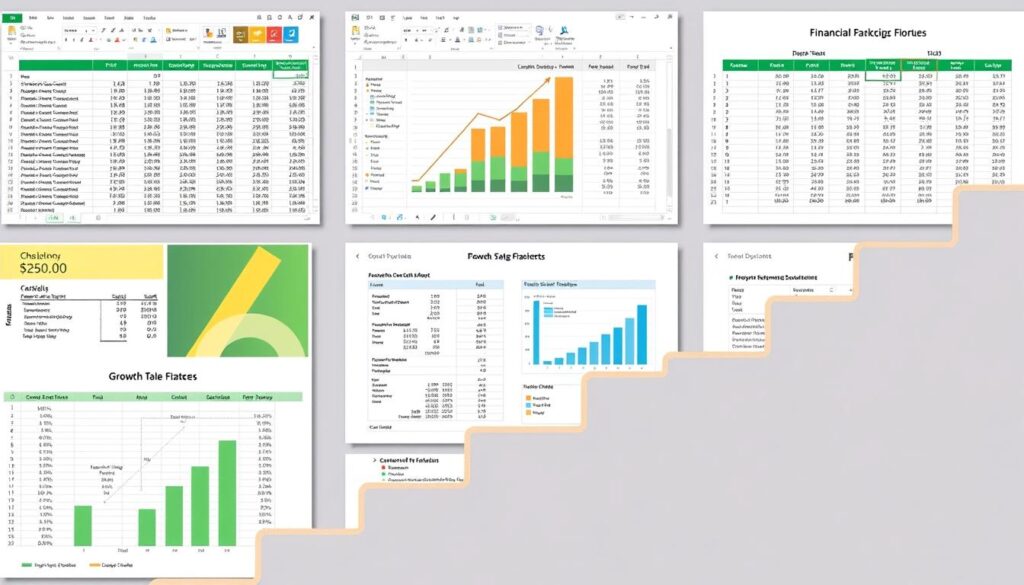
These ready-to-use templates help implement the financial business growth strategies discussed throughout this guide.
Financial Planning Templates
- 5-Year Financial Projection Model
- Cash Flow Forecast Template
- Break-Even Analysis Calculator
- Capital Expenditure Planning Tool
Growth Analysis Templates
- Customer Acquisition Cost Calculator
- Lifetime Value Projection Model
- Market Sizing Template
- Competitive Analysis Framework
Performance Tracking Templates
- Financial KPI Dashboard
- Business Scorecard Template
- Financial Ratio Calculator
- Growth Metrics Tracker
Template Customization Tips
These templates are designed as starting points. For maximum value:
- Adjust assumptions to reflect your specific business model
- Customize metrics to align with your industry standards
- Start with the simplest version and add complexity as needed
- Document your modifications for future reference
Step-by-Step Strategy: Implementing Financial Growth Plans
This implementation framework helps translate financial strategies into actionable plans with measurable results.

-
Assess Your Current Financial Position
Conduct a comprehensive review of your financial statements, key metrics, and growth trajectory. Identify strengths, weaknesses, and constraints that will influence your strategy.
Tools: Financial Statement Analysis Template, SWOT Analysis Framework
-
Define Clear Financial Growth Objectives
Establish specific, measurable financial goals with timeframes. Examples include “Increase gross margin from 32% to 38% within 18 months” or “Achieve $10M annual recurring revenue by Q4 2024.”
Tools: SMART Goal Template, Financial Target Setting Worksheet
-
Identify High-Impact Growth Levers
Analyze your business model to identify the factors that have the greatest influence on financial performance. Common levers include pricing strategy, customer acquisition channels, and operational efficiency.
Tools: Growth Lever Identification Matrix, Sensitivity Analysis Template
-
Develop Tactical Implementation Plans
Create detailed action plans for each strategic initiative, including resource requirements, timelines, responsibilities, and success metrics.
Tools: Initiative Planning Template, Resource Allocation Worksheet
-
Secure Necessary Resources
Ensure you have the financial, human, and technological resources required to execute your plans. This may involve raising capital, hiring key personnel, or implementing new systems.
Tools: Funding Requirements Calculator, Capability Gap Analysis
-
Implement Measurement Systems
Establish processes to track progress against your financial goals. Create dashboards that provide real-time visibility into key performance indicators.
Tools: KPI Dashboard Template, Financial Milestone Tracker
-
Execute With Discipline
Maintain focus on your strategic priorities while remaining flexible enough to adapt to changing conditions. Hold regular review meetings to assess progress and address challenges.
Tools: Strategy Review Meeting Template, Decision Log
-
Refine Based On Results
Continuously analyze performance data and refine your approach based on what’s working and what isn’t. Be willing to pivot when necessary while maintaining focus on your core objectives.
Tools: Strategy Adjustment Framework, Performance Analysis Template
Complete Implementation Toolkit
Download our comprehensive Financial Growth Strategy Implementation Toolkit with all templates mentioned above.
Frequently Asked Questions About Financial Business Growth Strategies

What’s the difference between a growth strategy and a financial strategy?
A growth strategy focuses on expanding your business through increased market share, new products, or new markets. A financial strategy addresses how you’ll fund, manage, and optimize your financial resources. The most effective approach integrates both: your financial strategy should support your growth objectives, while your growth strategy must be financially sustainable.
How much should my business invest in growth initiatives?
The appropriate investment level depends on your industry, growth stage, and financial position. Early-stage companies often allocate 20-30% of their budget to growth initiatives, while mature businesses might target 10-20%. The key is ensuring your growth investments generate a positive return while maintaining sufficient financial stability to weather unexpected challenges.
Should I focus on cutting costs or increasing revenue for better financial performance?
While cost-cutting can improve short-term profitability, sustainable growth typically requires revenue expansion. The most successful businesses focus on strategic cost optimization (eliminating inefficiencies while preserving capabilities) while simultaneously investing in revenue growth. This balanced approach yields better long-term results than focusing exclusively on either cost reduction or revenue growth.
How do I know if my financial growth strategy is working?
Effective evaluation requires both leading and lagging indicators. Lagging indicators (like revenue and profit) confirm results but only after the fact. Leading indicators (like sales pipeline growth, customer acquisition metrics, or product development milestones) provide early signals of future performance. Establish clear metrics for both types of indicators and review them regularly to assess your strategy’s effectiveness.
How often should I review and update my financial growth strategy?
Conduct comprehensive strategy reviews quarterly, with a more extensive reassessment annually. However, maintain a continuous monitoring process that allows for adjustments based on significant market changes or performance deviations. The most successful businesses balance strategic consistency with tactical flexibility, maintaining their core direction while adapting specific approaches based on results and changing conditions.
What financial metrics are most important for tracking business growth?
While revenue growth is the most obvious metric, comprehensive evaluation requires multiple indicators. Key metrics include: customer acquisition cost (CAC), customer lifetime value (CLV), gross and net profit margins, cash conversion cycle, and return on invested capital (ROIC). The specific metrics most relevant to your business will depend on your industry, business model, and growth stage.
How can I fund my business growth without taking on excessive debt?
Consider these alternatives to traditional debt financing: bootstrap growth through reinvested profits, explore revenue-based financing options, pursue strategic partnerships that provide resources or market access, implement customer prepayment incentives, negotiate favorable supplier terms, or consider equity financing from angel investors or venture capital. Many businesses use a combination of these approaches to fund growth while maintaining financial flexibility.
What are the biggest financial mistakes businesses make when pursuing growth?
Common mistakes include: expanding without proven unit economics, underestimating capital requirements, neglecting cash flow management during expansion, failing to build adequate financial systems before scaling, pursuing growth in too many directions simultaneously, and not establishing clear metrics to evaluate growth initiatives. Avoiding these pitfalls requires disciplined planning, robust financial systems, and a willingness to adjust course based on results.
How do I balance short-term financial performance with long-term growth investments?
This balance requires clear categorization of initiatives as either performance-improving (short-term results) or capability-building (long-term growth). Allocate resources to both categories based on your strategic priorities and financial position. Communicate this balanced approach to stakeholders, explaining how short-term investments support immediate performance while long-term investments build future competitive advantages and growth opportunities.
What role should financial forecasting play in my growth strategy?
Financial forecasting serves multiple critical functions in growth planning: it helps identify resource requirements, establishes performance expectations, enables scenario planning for different growth trajectories, supports investment decisions by projecting returns, and provides benchmarks for measuring actual results. The most effective forecasts balance optimism with realism, incorporate multiple scenarios, and are regularly updated based on new information and changing conditions.
Conclusion: Building Your Financial Growth Strategy
Implementing effective financial business growth strategies requires a balanced approach that combines disciplined financial management with strategic vision. By applying the frameworks, tools, and techniques outlined in this guide, you can create a growth plan that’s both ambitious and sustainable.
Remember that successful growth isn’t just about expansion—it’s about creating lasting value through improved efficiency, strategic investments, and careful resource allocation. The most successful businesses maintain financial discipline while pursuing bold growth opportunities, creating a virtuous cycle of expansion and optimization.
As you develop your own financial growth strategy, focus on the approaches that best align with your business model, industry dynamics, and competitive advantages. Regularly review and refine your strategy based on results, and don’t hesitate to adjust course when necessary.
Take Your Financial Growth Strategy to the Next Level
Download our complete Financial Business Growth Strategy Toolkit with all templates, frameworks, and implementation guides mentioned in this article.