
What You’ll Learn About Business Finance Management
- Essential financial planning strategies for small businesses
- Practical budgeting and cash flow management techniques
- Tools and software to streamline financial processes
- Methods to track and analyze business performance
- Risk management approaches to protect your business
- Tax planning strategies to minimize liabilities
- Growth-focused financial management practices
- Step-by-step implementation guide for financial strategies
How to Create a Financial Business Plan That Works
A solid financial business plan serves as the roadmap for your company’s financial journey. It helps you set clear objectives, allocate resources efficiently, and measure progress toward your goals. Without this foundation, making informed financial decisions becomes significantly more challenging.
Key Components of an Effective Financial Business Plan
A comprehensive financial business plan should include several critical elements:
1. Financial Objectives
Define specific, measurable financial goals for your business, such as revenue targets, profit margins, or debt reduction milestones. These objectives should align with your overall business vision and be realistic yet ambitious.
2. Revenue Projections
Develop detailed forecasts of your expected income based on market research, historical data, and growth assumptions. Consider multiple scenarios (conservative, moderate, optimistic) to prepare for various outcomes.
3. Expense Budget
Create a comprehensive breakdown of all anticipated costs, including fixed expenses (rent, salaries), variable costs (materials, commissions), and one-time expenditures (equipment purchases). Categorize expenses to identify areas for potential cost reduction.
4. Cash Flow Forecast
Project your cash inflows and outflows on a monthly basis to ensure you’ll have sufficient liquidity to cover operational needs. This forecast helps identify potential cash shortages before they become critical problems.
Need Help Creating Your Financial Business Plan?
Download our free financial business plan template to get started. This comprehensive template includes all essential components and step-by-step instructions.
Financial Business Planning for Beginners: Getting Started
For those new to business finance management, the process can seem overwhelming. However, breaking it down into manageable steps makes it more approachable. Start by understanding your current financial position before planning for the future.
Step-by-Step Approach for Beginners
- Assess Your Current Financial Status – Gather all financial information, including bank statements, outstanding loans, and current expenses.
- Set Clear Financial Goals – Define what you want to achieve financially in the short and long term.
- Create a Basic Budget – List all income sources and expenses to understand your cash flow patterns.
- Establish an Emergency Fund – Set aside 3-6 months of operating expenses for unexpected situations.
- Separate Personal and Business Finances – Open dedicated business accounts to maintain clear boundaries.
Common Financial Mistakes Beginners Should Avoid
Financial Pitfalls to Avoid
- Mixing personal and business finances
- Neglecting to track expenses consistently
- Underestimating startup and operational costs
- Failing to prepare for tax obligations
- Making financial decisions without data
- Overlooking the importance of cash flow management
Smart Financial Practices
- Maintaining separate business accounts
- Implementing systematic expense tracking
- Creating realistic cost projections with buffers
- Setting aside funds for taxes regularly
- Basing decisions on financial data analysis
- Monitoring and forecasting cash flow diligently
Financial Business Management Tips That Drive Success
Implementing effective financial management practices can significantly impact your business’s performance and sustainability. These practical tips can help small business owners optimize their financial operations.

Daily Financial Management Practices
- Track All Transactions – Record every financial transaction, no matter how small, to maintain accurate records.
- Review Cash Position Daily – Know exactly how much cash is available to make informed short-term decisions.
- Monitor Accounts Receivable – Stay on top of outstanding invoices to ensure timely payments from customers.
- Control Discretionary Spending – Evaluate non-essential expenses regularly to prevent unnecessary costs.
Monthly Financial Management Routines
- Reconcile Bank Statements – Ensure your records match bank transactions to catch errors or fraudulent activity.
- Review Financial Statements – Analyze your income statement, balance sheet, and cash flow statement to assess performance.
- Evaluate Budget Variances – Identify areas where actual spending differs from budgeted amounts and make adjustments.
- Assess Inventory Levels – Optimize inventory to prevent overstocking or stockouts that affect cash flow.
“The difference between successful and struggling small businesses often comes down to how well they manage their finances on a day-to-day basis. Consistent financial management practices create a foundation for informed decision-making and sustainable growth.”
Best Tools for Financial Business Planning and Management
Leveraging the right tools can streamline your financial management processes, saving time and reducing errors. Modern financial software solutions offer features specifically designed for small business needs.
Essential Financial Software for Small Businesses
Accounting Software
Platforms like QuickBooks, Xero, and FreshBooks automate bookkeeping tasks, generate financial reports, and simplify tax preparation. These tools integrate with bank accounts and other business systems for seamless financial management.
Expense Management Tools
Solutions like Expensify, Zoho Expense, and Receipt Bank simplify expense tracking, receipt management, and reimbursement processes. These tools help maintain accurate records of business expenses and streamline approval workflows.
Financial Forecasting Software
Tools like PlanGuru, Float, and Jirav help create accurate financial projections, budgets, and scenario analyses. These platforms enable data-driven planning and provide insights for strategic decision-making.
Financial Templates for Small Business Management
For businesses with limited budgets, Excel-based templates offer cost-effective solutions for financial management:
| Template Type | Key Features | Best For |
| Cash Flow Forecast Template | Monthly cash projection, variance analysis, visual charts | Businesses with irregular income or seasonal fluctuations |
| Budget Management Template | Expense categorization, budget vs. actual comparison, automatic calculations | Startups and businesses needing strict expense control |
| Financial Dashboard Template | KPI tracking, performance visualization, trend analysis | Business owners who need quick financial insights |
| Profit & Loss Template | Revenue and expense tracking, margin calculation, monthly comparison | Businesses focusing on profitability improvement |
| Invoice Management Template | Customer tracking, payment status, aging reports | Service businesses with multiple clients |
Access Our Financial Template Bundle
Get instant access to our complete set of financial management templates designed specifically for small businesses. These ready-to-use Excel templates will help you implement the strategies discussed in this article.
How to Track Financial Business Performance Effectively
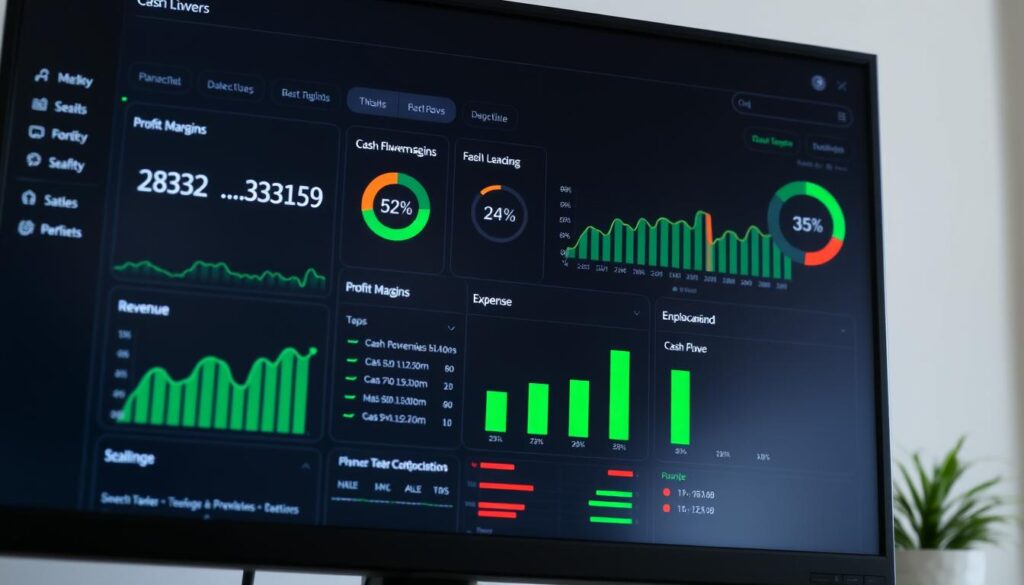
Monitoring your business’s financial performance is essential for identifying trends, spotting issues early, and making data-driven decisions. Establishing key performance indicators (KPIs) provides a framework for consistent evaluation.
Essential Financial KPIs for Small Businesses
Profitability Metrics
- Gross Profit Margin = (Revenue – COGS) / Revenue × 100%
- Net Profit Margin = Net Income / Revenue × 100%
- Return on Investment (ROI) = Net Profit / Investment × 100%
Liquidity Metrics
- Current Ratio = Current Assets / Current Liabilities
- Quick Ratio = (Current Assets – Inventory) / Current Liabilities
- Cash Conversion Cycle = DIO + DSO – DPO
Efficiency Metrics
- Inventory Turnover = COGS / Average Inventory
- Accounts Receivable Turnover = Net Credit Sales / Average Accounts Receivable
- Asset Turnover Ratio = Revenue / Average Total Assets
Growth Metrics
- Revenue Growth Rate = (Current Period Revenue – Prior Period Revenue) / Prior Period Revenue × 100%
- Customer Acquisition Cost = Marketing and Sales Expenses / Number of New Customers
- Customer Lifetime Value = Average Purchase Value × Purchase Frequency × Average Customer Lifespan
Implementing a Performance Tracking System
To effectively monitor your financial performance, follow these steps:
- Select Relevant KPIs – Choose metrics that align with your business goals and industry benchmarks.
- Establish Measurement Frequency – Determine how often each metric should be evaluated (daily, weekly, monthly).
- Set Up Data Collection Systems – Implement tools and processes to gather accurate financial data consistently.
- Create Visual Dashboards – Develop easy-to-understand visual representations of your KPIs for quick analysis.
- Schedule Regular Reviews – Set aside dedicated time to analyze performance data and identify trends.
- Take Action Based on Insights – Implement changes based on performance data to improve financial outcomes.
Pro Tip: When tracking financial performance, focus on trends rather than isolated data points. Month-over-month and year-over-year comparisons provide more valuable insights than single-period measurements.
Financial Business Forecasting Techniques for Accurate Planning
Financial forecasting helps small businesses anticipate future performance, plan for various scenarios, and make proactive decisions. Accurate forecasts serve as the foundation for budgeting, resource allocation, and strategic planning.

Effective Forecasting Methods for Small Businesses
| Forecasting Method | Description | Best Used For | Accuracy Level |
| Historical Trend Analysis | Uses past financial data to identify patterns and project future performance | Stable businesses with consistent historical data | Medium to High |
| Bottom-Up Forecasting | Builds projections by aggregating detailed estimates from individual business units | Businesses with distinct product lines or departments | High |
| Top-Down Forecasting | Starts with market-level projections and estimates the business’s share | Startups or businesses entering new markets | Low to Medium |
| Scenario Analysis | Creates multiple projections based on different assumptions (best-case, worst-case, most likely) | Businesses facing uncertainty or considering major changes | Variable |
| Rolling Forecast | Continuously updates projections as new data becomes available | Dynamic businesses in rapidly changing markets | High |
Key Steps in the Forecasting Process
- Gather Historical Data – Collect relevant financial information from previous periods.
- Identify Trends and Patterns – Analyze historical data to understand seasonal fluctuations, growth rates, and other patterns.
- Consider External Factors – Evaluate market conditions, economic indicators, and industry trends that may impact future performance.
- Develop Assumptions – Create realistic assumptions about key variables like sales growth, cost increases, and market changes.
- Build the Forecast Model – Construct financial projections based on historical data and assumptions.
- Test Multiple Scenarios – Create alternative forecasts based on different assumptions to prepare for various outcomes.
- Review and Refine Regularly – Compare actual results to forecasts and adjust your models to improve accuracy over time.
“The goal of forecasting is not to predict the future but to tell you what you need to know to take meaningful action in the present.”
Small Business Financial Analysis Guide: Understanding Your Numbers
Financial analysis transforms raw financial data into actionable insights. By understanding how to interpret financial statements and ratios, small business owners can identify strengths, weaknesses, and opportunities for improvement.

Essential Financial Statements Analysis
Income Statement Analysis
The income statement (profit and loss statement) shows your business’s revenues, expenses, and profits over a specific period. When analyzing this statement:
- Compare revenue and expense trends over multiple periods
- Calculate gross and net profit margins to assess profitability
- Identify expense categories that are growing disproportionately
- Evaluate the impact of pricing strategies and cost controls
Balance Sheet Analysis
The balance sheet provides a snapshot of your business’s assets, liabilities, and equity at a specific point in time. Key analysis points include:
- Assess the liquidity position through current and quick ratios
- Evaluate debt levels and leverage through debt-to-equity ratio
- Monitor changes in working capital over time
- Identify potential asset utilization issues
Cash Flow Statement Analysis
The cash flow statement tracks the movement of cash in and out of your business. When analyzing cash flows:
- Evaluate operating cash flow to assess core business performance
- Review investing cash flows to understand capital expenditure patterns
- Analyze financing cash flows to assess debt management and equity changes
- Identify seasonal patterns and potential cash shortages
Financial Ratios Analysis
Financial ratios provide standardized metrics to evaluate business performance and compare against industry benchmarks:
- Profitability ratios (ROI, ROA, ROE) measure return on resources
- Liquidity ratios assess short-term financial health
- Efficiency ratios evaluate resource utilization
- Solvency ratios measure long-term financial stability
Financial Analysis Example: Retail Business Case Study
| Financial Metric | Year 1 | Year 2 | Year 3 | Industry Benchmark | Analysis |
| Revenue | $450,000 | $520,000 | $610,000 | N/A | Healthy growth rate of 15-17% annually |
| Gross Profit Margin | 42% | 44% | 45% | 40% | Above industry average with positive trend |
| Net Profit Margin | 8% | 9.5% | 11% | 10% | Improving efficiency, now exceeding benchmark |
| Current Ratio | 1.2 | 1.5 | 1.8 | 1.5 | Liquidity improving, now above benchmark |
| Inventory Turnover | 4.2 | 4.5 | 4.3 | 5.0 | Below benchmark, inventory management needs attention |
Based on this analysis, the retail business shows strong growth and improving profitability. The increasing gross and net profit margins indicate effective pricing strategies and cost control. Liquidity has improved significantly, reducing financial risk. However, inventory turnover remains below the industry benchmark, suggesting potential inefficiencies in inventory management that should be addressed.
Need Help Analyzing Your Business Finances?
Our team of financial experts can provide a comprehensive analysis of your business’s financial health and identify opportunities for improvement.
How to Manage Financial Business Risks Effectively
Every business faces financial risks that can impact profitability and sustainability. Implementing a structured approach to risk management helps identify, assess, and mitigate these risks before they cause significant damage.

Common Financial Risks for Small Businesses
Liquidity Risk
The risk of not having sufficient cash to meet short-term obligations. This can occur due to poor cash flow management, overextension, or unexpected expenses.
Mitigation Strategy: Maintain adequate cash reserves, establish lines of credit, and implement robust cash flow forecasting.
Credit Risk
The risk of customers failing to pay their obligations on time or at all, leading to cash flow issues and potential bad debt.
Mitigation Strategy: Implement credit checks for new customers, establish clear payment terms, and develop effective collections processes.
Market Risk
The risk of financial losses due to changes in market conditions, including shifts in customer preferences, new competitors, or economic downturns.
Mitigation Strategy: Diversify revenue streams, stay informed about market trends, and develop contingency plans for various scenarios.
Operational Risk
The risk of losses resulting from inadequate or failed internal processes, people, and systems, including fraud, equipment failures, or supply chain disruptions.
Mitigation Strategy: Implement internal controls, document procedures, cross-train employees, and develop business continuity plans.
Compliance Risk
The risk of financial penalties or reputational damage due to failure to comply with laws, regulations, or industry standards.
Mitigation Strategy: Stay informed about regulatory requirements, implement compliance procedures, and consider professional guidance when needed.
Strategic Risk
The risk of making poor business decisions that negatively impact financial performance, such as expanding into unprofitable markets or launching unsuccessful products.
Mitigation Strategy: Conduct thorough market research, test new initiatives on a small scale, and develop data-driven decision-making processes.
Building a Financial Risk Management Framework
- Risk Identification – Systematically identify all potential financial risks your business faces.
- Risk Assessment – Evaluate each risk based on likelihood and potential impact.
- Risk Prioritization – Focus resources on addressing the most significant risks first.
- Risk Mitigation Planning – Develop specific strategies to reduce or manage each priority risk.
- Implementation – Put mitigation strategies into action through policies, procedures, and controls.
- Monitoring and Review – Continuously assess the effectiveness of risk management efforts and adjust as needed.
Emergency Fund Strategy: A well-funded emergency reserve is a cornerstone of financial risk management. For small businesses, aim to maintain 3-6 months of operating expenses in a liquid, easily accessible account. This provides a crucial buffer against unexpected financial challenges and gives you time to implement longer-term solutions when problems arise.
Financial Business Budgeting Strategies That Maximize Resources
Effective budgeting is essential for allocating resources efficiently, controlling costs, and achieving financial goals. A well-designed budget serves as a financial roadmap, guiding spending decisions and helping measure performance against expectations.

Budgeting Approaches for Small Businesses
| Budgeting Method | Description | Advantages | Disadvantages | Best For |
| Traditional (Incremental) Budgeting | Uses previous period’s budget as a baseline and adjusts for expected changes | Simple, familiar, requires minimal time investment | May perpetuate inefficiencies, doesn’t encourage critical evaluation | Stable businesses with consistent operations |
| Zero-Based Budgeting | Starts from zero and requires justification for all expenses | Identifies inefficiencies, reduces unnecessary spending | Time-consuming, requires detailed analysis | Businesses needing cost reduction or major restructuring |
| Rolling Budget | Continuously updates the budget for a set forward period (e.g., 12 months ahead) | Remains relevant, adapts to changing conditions | Requires regular maintenance, can create planning uncertainty | Businesses in dynamic or rapidly changing markets |
| Activity-Based Budgeting | Allocates resources based on the activities required to produce products or services | Links spending to value creation, improves resource allocation | Complex implementation, requires detailed activity analysis | Businesses with diverse product lines or service offerings |
| Value-Based Budgeting | Allocates resources based on strategic priorities and expected value creation | Aligns spending with strategy, focuses on high-value initiatives | Requires clear strategic priorities, subjective value assessments | Growth-oriented businesses with clear strategic direction |
Practical Budgeting Tips for Small Businesses
- Be Realistic – Base your budget on accurate historical data and reasonable projections, not wishful thinking.
- Include Contingencies – Build in buffers for unexpected expenses (typically 5-10% of total budget).
- Prioritize Spending – Distinguish between essential expenses and discretionary spending that can be adjusted if necessary.
- Involve Team Members – Get input from department heads or key employees who have insights into specific cost areas.
- Monitor Regularly – Compare actual results to budgeted figures at least monthly and investigate significant variances.
- Remain Flexible – Be willing to adjust your budget as conditions change or new information becomes available.
- Focus on Cash Timing – Consider not just the amount but also the timing of income and expenses to manage cash flow effectively.
Common Budgeting Mistake: Many small businesses underestimate expenses and overestimate revenue in their budgets, creating unrealistic expectations. To avoid this pitfall, use conservative revenue projections and include all potential costs, even those that seem minor. It’s better to outperform a conservative budget than to fall short of an optimistic one.
Steps to Build a Financial Business Model That Drives Growth
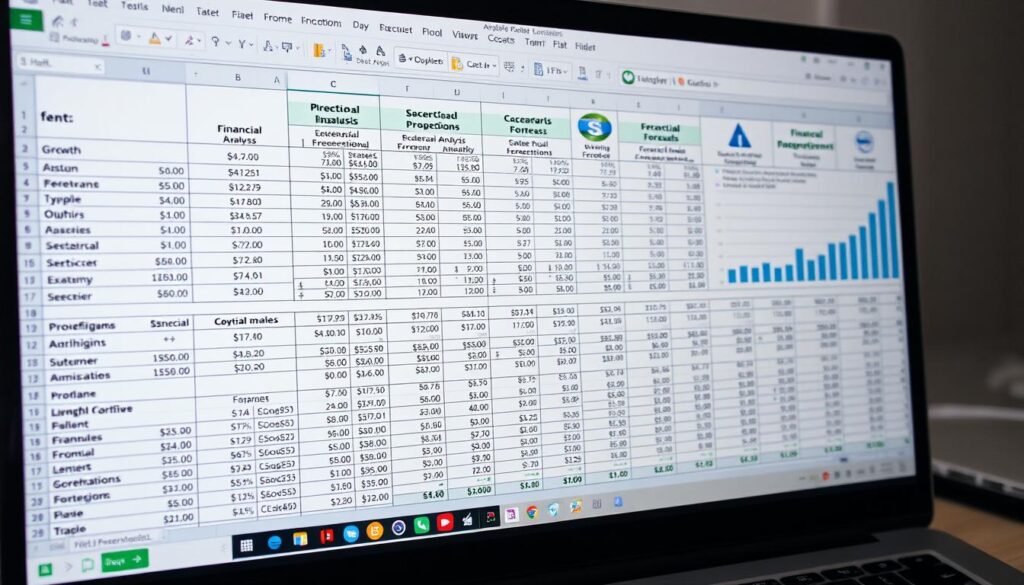
A financial business model is a quantitative representation of your business operations that helps forecast performance, evaluate scenarios, and make strategic decisions. A well-constructed model serves as a powerful tool for planning, fundraising, and performance management.
Core Components of an Effective Financial Model
Revenue Projection Module
This section forecasts your business’s income based on key drivers such as:
- Unit sales or customer numbers
- Pricing strategy and average transaction value
- Growth rates and seasonal patterns
- Market penetration assumptions
- Product/service mix and upsell opportunities
Cost Structure Module
This component models all expenses required to generate revenue, including:
- Cost of goods sold (direct costs)
- Fixed and variable operating expenses
- Staffing costs and growth projections
- Marketing and sales expenses
- Administrative and overhead costs
Capital Expenditure Module
This section projects investments in long-term assets:
- Equipment purchases and upgrades
- Technology investments
- Facility expansions or improvements
- Depreciation schedules
- Return on investment calculations
Financial Statements Module
This component generates projected financial statements:
- Income statement (P&L)
- Balance sheet
- Cash flow statement
- Key financial ratios
- Break-even analysis
Step-by-Step Guide to Building Your Financial Model
- Define Model Objectives – Clarify the specific questions or decisions your model needs to address.
- Gather Historical Data – Collect relevant financial information to serve as a foundation for projections.
- Identify Key Drivers – Determine the critical variables that influence your business performance.
- Design Model Structure – Create a logical framework with clearly defined inputs, calculations, and outputs.
- Build Revenue Projections – Develop detailed forecasts based on realistic growth assumptions and market factors.
- Model Cost Structure – Project expenses with appropriate relationships to revenue (fixed vs. variable).
- Create Financial Statements – Build interconnected projections for income statement, balance sheet, and cash flow.
- Incorporate Scenario Analysis – Develop multiple scenarios (best case, worst case, most likely) to understand potential outcomes.
- Add Sensitivity Analysis – Test how changes in key assumptions affect overall results.
- Validate the Model – Check calculations, test with historical data, and review for logical consistency.
- Document Assumptions – Clearly record all assumptions to facilitate future updates and reviews.
- Create Dashboard – Develop a user-friendly interface to visualize key outputs and insights.
“A financial model is only as good as its assumptions. The most valuable models aren’t necessarily the most complex, but rather those built on well-researched, realistic assumptions that can be easily updated as conditions change.”
How to Automate Financial Business Processes for Efficiency
Automating financial processes can significantly reduce manual effort, minimize errors, and free up valuable time for strategic activities. Modern technology solutions make automation accessible even for small businesses with limited resources.

Key Financial Processes to Automate
Accounts Payable
Automating accounts payable streamlines the process of managing and paying vendor invoices:
- Digital invoice capture and data extraction
- Automated approval workflows
- Scheduled payment processing
- Vendor management and communication
- Payment reconciliation
Benefits: Reduces processing costs by 60-80%, eliminates late payment penalties, and captures early payment discounts.
Accounts Receivable
Automating accounts receivable improves cash flow and customer relationships:
- Automated invoicing and delivery
- Online payment processing
- Automated payment reminders
- Customer statement generation
- Payment application and reconciliation
Benefits: Reduces days sales outstanding (DSO) by 30-50%, improves cash flow predictability, and enhances customer experience.
Expense Management
Automating expense management simplifies tracking and controlling business spending:
- Mobile receipt capture and categorization
- Automated expense report creation
- Policy compliance checking
- Approval workflow management
- Reimbursement processing
Benefits: Reduces processing time by 70%, improves policy compliance, and provides real-time spending visibility.
Implementing Financial Automation: A Phased Approach
- Assess Current Processes – Document existing workflows, identifying pain points and inefficiencies.
- Prioritize Automation Opportunities – Rank processes based on potential impact, implementation effort, and cost.
- Select Appropriate Tools – Research and select automation solutions that align with your business needs and budget.
- Start Small – Begin with a single process to gain experience and demonstrate value before expanding.
- Develop Implementation Plan – Create a detailed roadmap for implementing automation, including timelines and responsibilities.
- Configure and Test – Set up the automation solution, customize it to your needs, and thoroughly test before full deployment.
- Train Users – Provide comprehensive training to ensure team members can effectively use the new systems.
- Monitor and Optimize – Continuously evaluate performance and refine processes to maximize benefits.
- Expand Incrementally – Gradually extend automation to additional financial processes based on lessons learned.
Ready to Automate Your Financial Processes?
Our team can help you identify the best automation opportunities for your business and implement solutions that save time, reduce errors, and improve financial control.
Financial Business Reporting Best Practices for Clear Insights
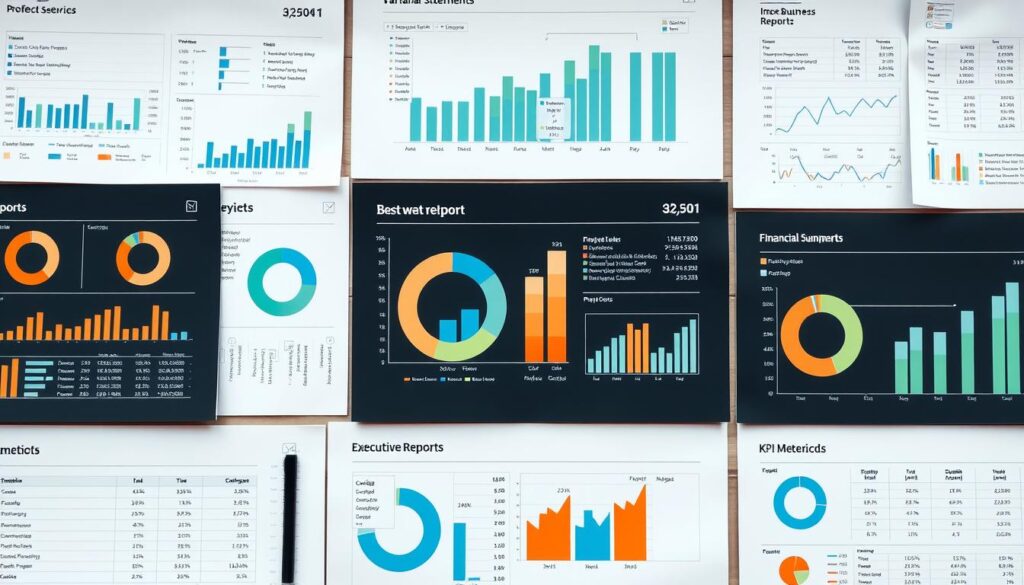
Effective financial reporting transforms complex financial data into clear, actionable insights. Well-designed reports help stakeholders understand business performance, identify trends, and make informed decisions.
Essential Financial Reports for Small Businesses
Core Financial Statements
- Income Statement (Monthly/Quarterly) – Shows revenue, expenses, and profit over a specific period.
- Balance Sheet (Monthly/Quarterly) – Provides a snapshot of assets, liabilities, and equity at a point in time.
- Cash Flow Statement (Monthly) – Tracks the movement of cash in and out of the business.
- Statement of Changes in Equity (Quarterly) – Shows changes in ownership interests over time.
Management Reports
- Budget vs. Actual Report (Monthly) – Compares planned figures to actual results with variance analysis.
- Sales Analysis (Weekly/Monthly) – Breaks down sales by product, customer, channel, or region.
- Accounts Receivable Aging (Weekly) – Shows outstanding customer invoices by age.
- Cash Flow Forecast (Weekly/Monthly) – Projects future cash position based on expected inflows and outflows.
Financial Reporting Best Practices
- Establish a Regular Reporting Schedule – Create a calendar of report generation and review meetings to ensure consistency.
- Tailor Reports to the Audience – Customize content and detail level based on the needs of different stakeholders (executives, managers, external parties).
- Focus on Key Performance Indicators – Highlight the most important metrics that drive business success rather than overwhelming with data.
- Include Comparative Data – Show current performance alongside previous periods, budgets, or industry benchmarks for context.
- Provide Narrative Analysis – Include written explanations of significant trends, variances, and their business implications.
- Use Visual Elements – Incorporate charts, graphs, and dashboards to make data more accessible and highlight patterns.
- Ensure Accuracy and Consistency – Implement review processes to verify data accuracy and maintain consistent calculation methods.
- Automate Where Possible – Use financial software to generate reports automatically, reducing manual effort and potential errors.
- Include Forward-Looking Information – Complement historical data with forecasts and projections to support proactive decision-making.
- Maintain Accessibility – Store reports in a centralized, secure location where authorized stakeholders can access them when needed.
Reporting Tip: The most effective financial reports balance comprehensiveness with clarity. Focus on telling the financial story of your business by highlighting key trends, explaining significant variances, and connecting financial results to operational activities. Remember that the ultimate goal of reporting is to drive informed decision-making, not just to document numbers.
Financial Business Ratios Explained: Measuring Performance
Financial ratios provide standardized metrics for evaluating business performance, identifying trends, and comparing against industry benchmarks. Understanding and regularly monitoring these ratios helps small business owners make data-driven decisions.

Key Financial Ratios by Category
| Ratio Category | Ratio Name | Formula | What It Measures | Ideal Range |
| Profitability Ratios | Gross Profit Margin | (Revenue – COGS) / Revenue × 100% | Efficiency in producing goods or services | Varies by industry; higher is better |
| Net Profit Margin | Net Income / Revenue × 100% | Overall profitability after all expenses | Varies by industry; 10-20% is strong for many small businesses | |
| Return on Assets (ROA) | Net Income / Average Total Assets × 100% | Efficiency in using assets to generate profit | 5% or higher | |
| Liquidity Ratios | Current Ratio | Current Assets / Current Liabilities | Ability to pay short-term obligations | 1.5 to 2.0 |
| Quick Ratio | (Current Assets – Inventory) / Current Liabilities | Ability to pay short-term obligations without selling inventory | 1.0 or higher | |
| Cash Ratio | (Cash + Cash Equivalents) / Current Liabilities | Ability to cover short-term liabilities with cash | 0.5 to 1.0 | |
| Efficiency Ratios | Inventory Turnover | COGS / Average Inventory | How quickly inventory is sold | Varies by industry; higher is generally better |
| Accounts Receivable Turnover | Net Credit Sales / Average Accounts Receivable | How quickly customers pay their invoices | Higher is better; 12+ is excellent | |
| Asset Turnover | Revenue / Average Total Assets | Efficiency in using assets to generate revenue | Varies by industry; higher is better | |
| Solvency Ratios | Debt-to-Equity Ratio | Total Debt / Total Equity | Proportion of financing from debt versus equity | Less than 2.0 for most small businesses |
| Interest Coverage Ratio | EBIT / Interest Expense | Ability to pay interest on debt | 1.5 or higher | |
| Debt Service Coverage Ratio | Net Operating Income / Total Debt Service | Ability to cover all debt payments | 1.25 or higher |
Using Financial Ratios Effectively
- Track Trends Over Time – Monitor how ratios change from period to period to identify improvements or deterioration.
- Compare to Industry Benchmarks – Evaluate your performance against industry standards to identify competitive advantages or areas for improvement.
- Use Ratios in Context – Consider the specific circumstances of your business and industry when interpreting ratio values.
- Focus on Related Ratios – Analyze groups of related ratios together to get a more complete picture of performance.
- Set Ratio Targets – Establish goals for key ratios as part of your financial planning process.
- Investigate Significant Changes – When ratios show substantial shifts, dig deeper to understand the underlying causes.
Industry Benchmarking Tip: To find industry benchmarks for financial ratios, check resources such as RMA Annual Statement Studies, IBISWorld Industry Reports, BizMiner, or industry associations. Many accounting firms also publish benchmark data for various industries. These comparisons can help you understand how your business performs relative to peers and identify opportunities for improvement.
Financial Business Tax Planning Tips to Minimize Liabilities
Strategic tax planning is an essential component of financial management for small businesses. By understanding tax obligations and implementing effective strategies, businesses can minimize liabilities while remaining compliant with tax laws.

Year-Round Tax Planning Strategies
Business Structure Optimization
Your business entity type (sole proprietorship, LLC, S-Corporation, C-Corporation) significantly impacts tax treatment. Regularly review whether your current structure remains optimal as your business grows and tax laws change.
Strategy: Consider an S-Corporation election if you’re currently a sole proprietor or LLC with substantial profits, as it may reduce self-employment taxes through a combination of salary and distributions.
Timing of Income and Expenses
Strategic timing of revenue recognition and expense payments can optimize your tax position, especially at year-end.
Strategy: If expecting higher profits this year than next, consider accelerating deductible expenses into the current year and deferring income to the following year when possible. Reverse this approach if expecting higher income next year.
Retirement Plan Contributions
Qualified retirement plans offer tax advantages while helping you save for the future.
Strategy: Establish a SEP IRA, SIMPLE IRA, or Solo 401(k) based on your business size and structure. These plans allow for tax-deductible contributions that reduce current tax liability while building retirement savings.
Business Expense Documentation
Proper tracking and documentation of legitimate business expenses ensure you capture all available deductions.
Strategy: Implement a systematic approach to expense tracking using accounting software and digital receipt management. Categorize expenses according to tax categories and maintain supporting documentation for all deductions.
Commonly Overlooked Tax Deductions
Home Office Deduction
- Available if you regularly and exclusively use part of your home for business
- Can deduct a percentage of rent/mortgage, utilities, insurance, and maintenance
- Simplified option allows standard deduction based on square footage
- Reduces both income tax and self-employment tax
Vehicle Expenses
- Track business mileage for standard mileage rate deduction
- Alternatively, deduct actual expenses based on business use percentage
- Include parking fees and tolls for business trips
- Keep detailed logs to substantiate business use
Health Insurance Premiums
- Self-employed individuals can deduct premiums for themselves and family
- May qualify for the Small Business Health Care Tax Credit
- Contributions to Health Savings Accounts (HSAs) are tax-deductible
- Employee health benefits are fully deductible business expenses
Tax Planning Calendar
Effective tax planning requires attention throughout the year, not just during tax season:
| Timeframe | Tax Planning Activities |
| January-March | – Gather documentation for previous year’s tax return – Make prior-year retirement plan contributions (if eligible) – Review results from previous year and adjust strategies – Set up tax-advantaged accounts for the current year |
| April-June | – File tax returns or extensions – Implement lessons learned from tax preparation – Conduct mid-year tax projection and planning – Review estimated tax payments for accuracy |
| July-September | – Update tax projections based on year-to-date results – Consider tax implications of major business decisions – Evaluate potential equipment purchases for Section 179 deduction – Review retirement plan contributions |
| October-December | – Implement year-end tax planning strategies – Make strategic purchases or defer income based on projections – Maximize retirement plan contributions – Schedule tax planning meeting with accountant |
Tax Planning Caution: While tax minimization is a legitimate goal, be wary of aggressive tax strategies that could trigger audits or penalties. Focus on legal tax avoidance (structuring your affairs to minimize taxes within the law) rather than tax evasion (illegally hiding income or claiming false deductions). When in doubt, consult with a qualified tax professional before implementing any tax strategy.
Business Financial Decision-Making Process: A Structured Approach
Making sound financial decisions is critical for small business success. A structured decision-making process helps ensure that choices are based on data rather than intuition alone, leading to better outcomes and reduced risk.

Six-Step Financial Decision-Making Framework
- Define the Decision ClearlyArticulate exactly what needs to be decided and why it matters. Specify the objectives, constraints, and timeline for the decision.Example: “Should we invest $50,000 in new equipment to increase production capacity by 30%, with a decision needed within 30 days?”
- Gather Relevant InformationCollect financial and operational data needed to inform the decision. Consider both quantitative data (numbers, statistics) and qualitative information (market trends, competitive factors).Example: Compile current production costs, capacity utilization, market demand projections, equipment specifications, and financing options.
- Identify and Evaluate AlternativesDevelop multiple options and analyze each one’s potential financial impact, risks, and benefits.Example: Compare purchasing new equipment, leasing equipment, outsourcing production, or maintaining current capacity with overtime.
- Apply Financial Analysis ToolsUse appropriate financial techniques to evaluate options objectively.Common Tools:
- Return on Investment (ROI) analysis
- Net Present Value (NPV) calculation
- Payback period determination
- Break-even analysis
- Scenario and sensitivity analysis
- Make the DecisionSelect the option that best aligns with your business objectives, financial constraints, and risk tolerance.Considerations: Balance short-term financial impact with long-term strategic value. Document the rationale for your decision, including key assumptions and expected outcomes.
- Implement and ReviewExecute the decision with clear accountability and timelines. Establish metrics to track actual results against projections.Follow-up: Conduct post-implementation reviews to assess outcomes and capture lessons for future decisions.
Financial Decision-Making Matrix
For complex decisions involving multiple factors, a decision matrix can help organize your analysis:
| Decision Criteria | Weight (1-10) | Option A Score (1-10) | Option A Weighted | Option B Score (1-10) | Option B Weighted | Option C Score (1-10) | Option C Weighted |
| Initial Investment Required | 8 | 6 | 48 | 8 | 64 | 4 | 32 |
| Projected ROI | 9 | 8 | 72 | 6 | 54 | 9 | 81 |
| Implementation Timeline | 7 | 7 | 49 | 9 | 63 | 5 | 35 |
| Risk Level | 8 | 6 | 48 | 8 | 64 | 4 | 32 |
| Strategic Alignment | 9 | 9 | 81 | 7 | 63 | 8 | 72 |
| TOTAL | 298 | 308 | 252 |
“The quality of your financial decisions directly impacts your business’s long-term success. Taking the time to implement a structured decision-making process may seem cumbersome initially, but it pays dividends through better outcomes and fewer costly mistakes.”
Financial Business Growth Strategies for Sustainable Expansion
Strategic financial management is essential for fueling business growth while maintaining stability. By implementing sound financial growth strategies, small businesses can expand sustainably without overextending their resources.

Financial Strategies for Different Growth Stages
Startup Phase
- Bootstrap Efficiently – Minimize fixed costs and prioritize revenue-generating activities.
- Manage Cash Runway – Calculate and extend your cash runway to reach key milestones.
- Strategic Fundraising – Raise capital aligned with growth milestones and valuation targets.
- Focus on Unit Economics – Ensure your fundamental business model is profitable at the unit level.
Key Metric: Monthly Burn Rate and Cash Runway
Growth Phase
- Reinvestment Strategy – Determine optimal profit reinvestment rate for growth.
- Working Capital Optimization – Improve cash conversion cycle to fund expansion.
- Debt Leverage – Strategically use debt financing for growth initiatives with clear ROI.
- Pricing Optimization – Refine pricing strategy to maximize revenue and profitability.
Key Metric: Growth Efficiency Ratio (Revenue Growth ÷ Spending Growth)
Maturity Phase
- Diversification – Expand into complementary products, services, or markets.
- Acquisition Strategy – Consider strategic acquisitions to accelerate growth.
- Cost Structure Optimization – Implement efficiency improvements to increase margins.
- Dividend/Distribution Policy – Establish balanced approach to reinvestment vs. owner distributions.
Key Metric: Return on Invested Capital (ROIC)
Financial Growth Models
| Growth Model | Description | Financial Considerations | Best For |
| Organic Growth | Expanding through internal resources and reinvested profits | – Lower capital requirements – Slower but more controlled growth – Lower financial risk – Higher profit retention |
Businesses with strong cash flow and established market position |
| Strategic Partnerships | Collaborating with other businesses to access new markets or capabilities | – Shared investment and risk – Potential for revenue sharing – Lower capital outlay than acquisitions – Complex financial arrangements |
Businesses seeking to expand capabilities or market reach with limited resources |
| Acquisition Growth | Purchasing other businesses to expand rapidly | – Significant capital requirements – Potential for debt financing – Complex valuation and due diligence – Integration costs and synergies |
Well-capitalized businesses in consolidating industries |
| Franchise/Licensing | Expanding by allowing others to use your business model or intellectual property | – Low capital requirements – Recurring revenue streams – Upfront franchise fees – Royalty income structure |
Businesses with proven, replicable models and strong brand value |
Funding Growth: Financial Options
Debt Financing
- Term Loans: Fixed amount with regular repayment schedule
- Lines of Credit: Flexible borrowing up to a limit
- Equipment Financing: Loans secured by purchased equipment
- SBA Loans: Government-backed loans with favorable terms
- Pros: Retain ownership, tax-deductible interest
- Cons: Fixed payment obligations, potential collateral requirements
Equity Financing
- Angel Investors: Wealthy individuals investing in early-stage businesses
- Venture Capital: Professional investors funding high-growth potential businesses
- Private Equity: Investment in established businesses with growth potential
- Crowdfunding: Raising capital from many small investors
- Pros: No repayment obligation, potential strategic support
- Cons: Dilution of ownership, potential loss of control
Alternative Financing
- Revenue-Based Financing: Repayments based on monthly revenue
- Invoice Factoring: Selling accounts receivable at a discount
- Merchant Cash Advances: Advance against future credit card sales
- Peer-to-Peer Lending: Borrowing through online platforms
- Pros: Often faster access to capital, flexible structures
- Cons: Potentially higher costs, varied terms and conditions
Ready to Fuel Your Business Growth?
Download our comprehensive Financial Growth Strategy Toolkit, including financial modeling templates, funding option comparisons, and step-by-step growth planning guides.
Financial Business Management for Startups: Building a Strong Foundation
Effective financial management is particularly crucial for startups, where resources are limited and the margin for error is slim. Establishing sound financial practices from the beginning creates a foundation for sustainable growth and increases the likelihood of long-term success.

Essential Financial Foundations for Startups
Business Structure Selection
Choose a legal structure that aligns with your business goals, liability concerns, and tax considerations. Common options include:
- Sole Proprietorship: Simple but offers no liability protection
- LLC: Provides liability protection with tax flexibility
- S-Corporation: Offers potential tax advantages for owner-employees
- C-Corporation: Suitable for raising significant investment capital
Consult with legal and tax professionals to determine the optimal structure for your specific situation.
Financial Infrastructure Setup
Establish the basic financial systems and accounts needed to operate effectively:
- Business Bank Account: Separate business and personal finances
- Accounting System: Implement cloud-based accounting software
- Payment Processing: Set up systems to accept customer payments
- Expense Management: Create procedures for tracking and approving expenses
- Tax ID Numbers: Obtain necessary federal and state tax identifiers
Startup Financial Planning Essentials
- Develop a Realistic Startup BudgetCreate a comprehensive budget that accounts for all initial costs:
- One-time startup costs (equipment, legal fees, permits, etc.)
- Fixed monthly expenses (rent, salaries, insurance, etc.)
- Variable costs (materials, commissions, etc.)
- Buffer for unexpected expenses (typically 15-20% of total budget)
- Create Financial ProjectionsDevelop realistic projections for the first 1-3 years:
- Monthly cash flow forecasts for the first year
- Quarterly projections for years 2-3
- Multiple scenarios (conservative, moderate, optimistic)
- Key assumptions clearly documented
- Determine Funding RequirementsCalculate how much capital you’ll need and potential sources:
- Initial capital needs to reach breakeven
- Potential funding sources (personal savings, friends/family, loans, investors)
- Funding milestones tied to business development stages
- Establish Financial Metrics and MilestonesDefine key performance indicators to track progress:
- Customer acquisition cost (CAC)
- Lifetime value of customer (LTV)
- Monthly recurring revenue (MRR)
- Burn rate and runway
- Path to profitability milestones
Common Financial Pitfalls for Startups
Financial Mistakes to Avoid
- Underestimating startup costs and time to revenue
- Neglecting to track expenses from day one
- Mixing personal and business finances
- Pricing products/services too low to be sustainable
- Growing too quickly without adequate financial infrastructure
- Failing to understand unit economics and profitability drivers
- Delaying financial planning until problems arise
Financial Best Practices
- Creating detailed financial projections with contingencies
- Implementing proper accounting systems from the start
- Maintaining strict separation of business and personal finances
- Developing value-based pricing strategies
- Scaling operations in line with financial capabilities
- Regularly analyzing unit economics and profitability
- Proactively planning finances and reviewing regularly
Startup Tip: Focus on cash flow above all else in the early stages. Many profitable startups fail because they run out of cash before their business model can fully develop. Monitor your cash position daily, extend your runway wherever possible, and always know exactly how much time you have before you’ll need additional funding.
How to Improve Financial Business Efficiency and Reduce Waste
Enhancing financial efficiency allows small businesses to maximize resources, reduce unnecessary costs, and improve profitability without sacrificing quality or growth potential. By identifying and eliminating financial waste, businesses can operate more effectively with existing resources.

Strategies to Enhance Financial Efficiency
Process Optimization
- Map Financial Workflows – Document current processes to identify bottlenecks and redundancies.
- Standardize Procedures – Create consistent protocols for recurring financial tasks.
- Automate Routine Tasks – Implement technology solutions for repetitive financial activities.
- Centralize Financial Operations – Consolidate related functions to reduce duplication and improve coordination.
Impact: Reduces labor costs by 20-30% and minimizes errors in financial processes.
Resource Allocation
- Zero-Based Budgeting – Justify all expenses from scratch rather than based on historical spending.
- Activity-Based Costing – Assign costs based on actual resource consumption by different activities.
- Regular Spend Analysis – Systematically review all expenses to identify reduction opportunities.
- Value-Stream Mapping – Analyze which activities create customer value and which don’t.
Impact: Typically identifies 10-15% in cost reduction opportunities without affecting core operations.
Technology Leverage
- Integrated Financial Systems – Implement solutions that connect different financial functions.
- Cloud-Based Solutions – Utilize scalable platforms that reduce IT infrastructure costs.
- Data Analytics – Apply analytical tools to identify trends and optimization opportunities.
- Mobile Solutions – Enable financial tasks to be completed remotely for greater flexibility.
Impact: Reduces processing time by 40-60% and improves data accuracy for decision-making.
Financial Waste Reduction Framework
| Waste Category | Description | Identification Method | Reduction Strategies |
| Excess Processing | Unnecessary steps or approvals in financial workflows | Process mapping and value analysis | – Streamline approval hierarchies – Eliminate redundant checks – Implement risk-based controls |
| Overproduction | Creating reports or analyses that aren’t used | Report utilization tracking | – Survey report users for needs – Consolidate similar reports – Create self-service dashboards |
| Waiting Time | Delays in financial processes due to bottlenecks | Cycle time analysis | – Implement parallel processing – Establish service level agreements – Automate notifications and reminders |
| Excess Inventory | Tying up capital in unnecessary stock | Inventory turnover analysis | – Implement just-in-time inventory – Negotiate consignment arrangements – Optimize reorder points and quantities |
| Defects/Errors | Mistakes requiring rework in financial processes | Error rate tracking | – Standardize data entry formats – Implement validation controls – Provide targeted training |
Measuring Financial Efficiency
To improve financial efficiency, establish key metrics to track progress:
Operational Efficiency Metrics
- Cost per Transaction – Total processing costs divided by number of transactions
- Process Cycle Time – Time from process initiation to completion
- Error Rate – Percentage of transactions requiring correction
- Automation Rate – Percentage of financial tasks automated vs. manual
Resource Utilization Metrics
- Operating Expense Ratio – Operating expenses as percentage of revenue
- Revenue per Employee – Total revenue divided by number of employees
- Cash Conversion Cycle – Days to convert investments in inventory and other resources into cash
- Return on Assets – Net income divided by average total assets
Efficiency Implementation Tip: When improving financial efficiency, focus on high-impact, low-effort changes first. Create a prioritization matrix that plots potential improvements based on implementation difficulty (time, cost, disruption) versus expected benefit (cost savings, time savings, error reduction). This approach delivers quick wins that build momentum for more complex efficiency initiatives.
Financial Business Cash Flow Improvement Tips for Stability
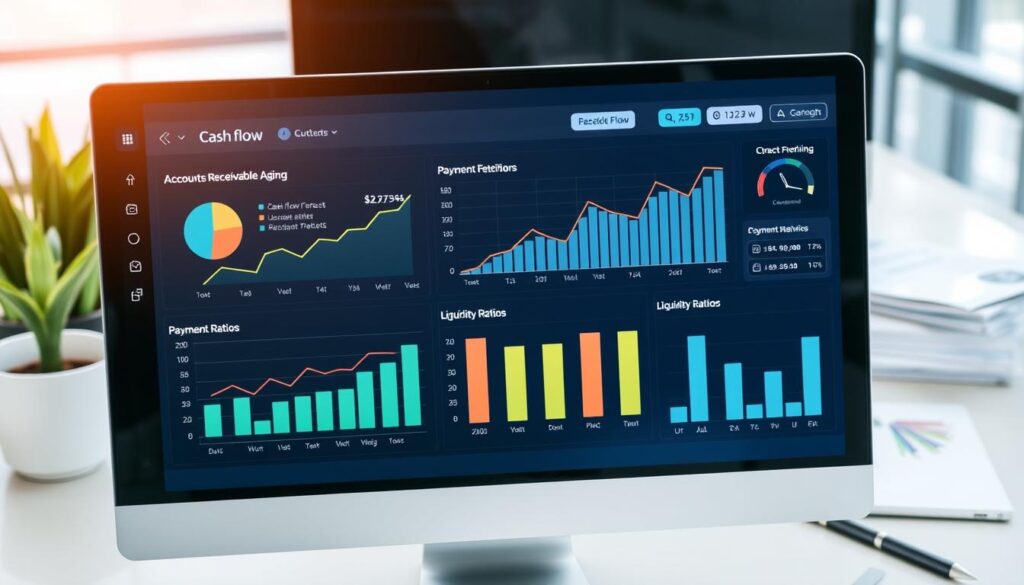
Cash flow is the lifeblood of any small business. Even profitable companies can fail if they run out of cash. Implementing strategies to optimize cash flow ensures your business has the liquidity needed for day-to-day operations and growth opportunities.
Cash Flow Acceleration Strategies
Accelerate Cash Inflows
- Optimize Invoicing Processes – Send invoices immediately after delivering products or services rather than batching them.
- Offer Early Payment Incentives – Provide small discounts (1-2%) for customers who pay before the due date.
- Implement Deposits and Milestone Payments – Require upfront payments for large orders or projects.
- Streamline Payment Methods – Offer multiple convenient payment options, including digital and mobile payments.
- Follow Up on Overdue Accounts – Establish a systematic process for following up on late payments.
Manage Cash Outflows
- Negotiate Favorable Payment Terms – Work with suppliers to extend payment terms where possible.
- Schedule Payments Strategically – Time payments to coincide with cash inflows while still meeting obligations.
- Review Recurring Expenses – Regularly audit subscription services and recurring costs for necessity.
- Lease vs. Buy Analysis – Consider leasing equipment instead of purchasing to preserve capital.
- Implement Approval Thresholds – Establish spending limits and approval requirements for different expense levels.
Cash Flow Forecasting and Management
- Develop a Cash Flow Forecasting SystemCreate a rolling 13-week cash flow forecast that includes:
- Expected customer payments based on invoicing terms
- Scheduled bill payments and payroll obligations
- Planned capital expenditures
- Tax payments and other periodic outflows
- Seasonal fluctuations in revenue and expenses
Update this forecast weekly to maintain accuracy and identify potential cash shortages in advance.
- Establish Cash ReservesBuild a cash buffer to handle unexpected expenses or revenue shortfalls:
- Aim for 3-6 months of operating expenses in reserve
- Consider a business line of credit as a backup funding source
- Create a separate account for tax obligations to ensure funds are available when needed
- Implement Cash Flow Monitoring SystemsSet up processes to track cash position in real-time:
- Daily cash balance reporting
- Weekly cash flow statement review
- Accounts receivable aging analysis
- Cash conversion cycle monitoring
- Develop Contingency PlansCreate strategies for managing potential cash shortages:
- Prioritized payment schedules for critical vs. deferrable expenses
- Pre-arranged financing options that can be quickly activated
- Expense reduction plans that can be implemented if necessary
- Communication templates for transparent vendor discussions
Cash Flow Improvement Case Study
| Challenge | Strategy Implemented | Results |
| 30% of invoices paid 15+ days late | – Implemented automated invoice delivery – Added online payment options – Established systematic follow-up process – Offered 2% discount for payments within 10 days |
– Reduced average payment time from 45 to 28 days – 40% of customers now pay within 10 days – Improved cash flow by $25,000 per month – Reduced time spent on collections by 60% |
| Seasonal cash flow gaps during slow periods | – Created detailed 12-month cash flow forecast – Negotiated seasonal payment terms with key suppliers – Implemented deposit requirements for large orders – Established $50,000 line of credit as backup |
– Eliminated need for owner cash injections – Reduced stress during seasonal downturns – Improved supplier relationships through transparency – Line of credit remained unused due to improved planning |
| High inventory levels tying up cash | – Analyzed sales data to identify optimal stock levels – Implemented just-in-time inventory system – Negotiated consignment arrangements with suppliers – Developed faster-moving product bundles |
– Reduced inventory by 35% while maintaining service levels – Freed up $75,000 in cash previously tied up in inventory – Decreased storage costs by $1,200 monthly – Improved inventory turnover from 4x to 7x annually |
Cash Flow Warning Signs: Be vigilant for these indicators of potential cash flow problems: consistently paying bills at the last minute, regularly tapping into lines of credit for operating expenses, extending vendor payment terms without communication, accumulating aged accounts receivable, or seeing a widening gap between paper profits and available cash. Addressing these warning signs early can prevent more serious cash flow crises.
Financial Business Tools for Entrepreneurs: Essential Resources
The right financial tools can dramatically improve how entrepreneurs manage their business finances. From basic accounting software to specialized financial analysis applications, these resources help streamline processes, improve accuracy, and provide valuable insights for decision-making.
Essential Financial Software for Small Businesses
Accounting Software
Core financial management platforms that handle bookkeeping, financial statements, and basic reporting.
- QuickBooks Online: Comprehensive accounting with extensive integration options
- Xero: User-friendly interface with strong collaboration features
- FreshBooks: Particularly good for service-based businesses
- Wave: Free basic accounting suitable for very small businesses
Key Features to Look For: Bank reconciliation, invoicing, expense tracking, financial reporting, tax preparation support, and integration capabilities.
Financial Planning Tools
Specialized applications for budgeting, forecasting, and scenario planning.
- PlanGuru: Detailed budgeting and forecasting with multiple methods
- Float: Cash flow forecasting and scenario planning
- LivePlan: Business planning with financial projections
- Adaptive Planning: Enterprise-level budgeting and forecasting
Key Features to Look For: Multiple forecasting methods, scenario analysis, variance reporting, customizable assumptions, and visual dashboards.
Financial Analysis Tools
Solutions for deeper financial analysis, metrics tracking, and performance evaluation.
- Fathom: Financial analysis and performance tracking
- Spotlight Reporting: Customizable dashboards and KPI monitoring
- Jirav: Financial planning and analysis with driver-based modeling
- Tableau: Powerful data visualization for financial insights
Key Features to Look For: KPI tracking, benchmark comparisons, trend analysis, customizable reporting, and data visualization capabilities.
Financial Templates and Spreadsheets
For businesses with budget constraints or specific needs, well-designed spreadsheet templates offer cost-effective solutions:
| Template Type | Description | Best For | Key Components |
| Financial Dashboard Template | Consolidated view of key financial metrics with visual representations | Business owners who need quick financial insights | – Revenue and profit trends – Cash position tracking – Key ratio calculations – Performance vs. budget comparisons |
| Cash Flow Forecast Template | Detailed projection of cash inflows and outflows over time | Businesses with irregular cash flows or seasonal patterns | – Weekly/monthly cash projections – Receivables and payables timing – Cash balance calculations – Variance analysis |
| Budget Management Template | Comprehensive budget creation and tracking system | Businesses needing structured expense management | – Expense categorization – Budget vs. actual comparison – Variance calculations – Trend analysis |
| Financial Projection Model | Multi-year financial forecasting with scenario capabilities | Startups and growing businesses planning for the future | – Revenue growth modeling – Expense projections – Projected financial statements – Scenario analysis |
| Break-Even Analysis Template | Calculator to determine sales volume needed to cover costs | New product launches or business model changes | – Fixed and variable cost inputs – Contribution margin calculations – Break-even point determination – What-if scenario testing |
Mobile Financial Tools for Entrepreneurs
Mobile applications enable financial management on the go, providing flexibility for busy entrepreneurs:
Expense Management Apps
- Expensify: Receipt scanning and expense report creation
- Receipts by Wave: Free receipt scanning linked to Wave accounting
- Zoho Expense: Comprehensive expense tracking and management
Key Benefit: Capture expenses in real-time to improve accuracy and reduce administrative work.
Financial Dashboard Apps
- Pulse: Simple cash flow monitoring and forecasting
- inDinero: Financial reporting and insights for small businesses
- Futrli: Predictive financial dashboards and alerts
Key Benefit: Monitor critical financial metrics anytime, anywhere to make timely decisions.
Payment & Invoicing Apps
- Square: Mobile payment processing and basic invoicing
- Invoice2go: Professional invoice creation and tracking
- PayPal Business: Payment processing and basic financial management
Key Benefit: Create and send invoices immediately after service delivery to improve cash flow.
Access Our Complete Financial Toolkit
Download our comprehensive collection of financial templates, tools, and resources designed specifically for small business owners and entrepreneurs.
Templates You Can Use: Ready-Made Financial Management Tools
Implementing the financial strategies discussed in this article is easier with the right tools. These Excel-based templates provide ready-to-use frameworks for various aspects of financial management, saving you time and ensuring consistency in your approach.
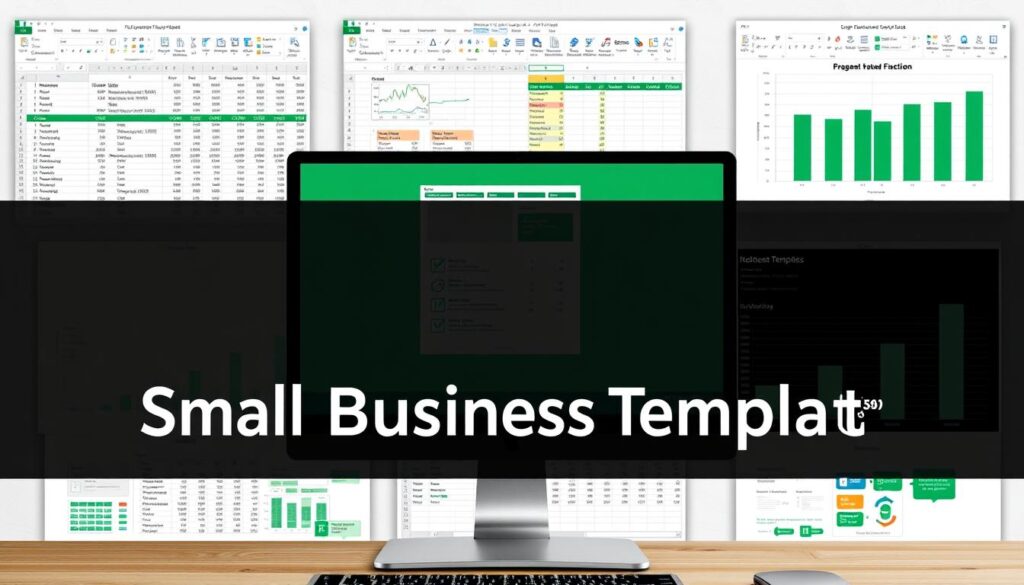
Essential Financial Templates for Small Businesses
Financial Planning Templates
- Annual Budget Template – Comprehensive budget planning with monthly breakdowns
- 3-Year Financial Projection – Multi-year forecasting with scenario analysis
- Business Plan Financial Section – Complete financials for business plan development
- Startup Cost Calculator – Detailed estimation of initial business costs
- Break-Even Analysis Tool – Calculate sales volume needed to cover costs
Cash Flow Management Templates
- 13-Week Cash Flow Forecast – Detailed short-term cash projection tool
- Accounts Receivable Tracker – Monitor customer payments and aging
- Accounts Payable Schedule – Organize vendor payments strategically
- Cash Flow Dashboard – Visual representation of cash position
- Cash Conversion Cycle Calculator – Analyze efficiency of cash management
Financial Analysis Templates
- Financial Ratio Calculator – Comprehensive ratio analysis with benchmarks
- Profit & Loss Analyzer – Detailed income statement with trend analysis
- Balance Sheet Reviewer – Asset and liability analysis tool
- Financial KPI Dashboard – Track key performance indicators visually
- Variance Analysis Template – Compare actual vs. budget performance
Featured Template: 13-Week Cash Flow Forecast
Our most popular template helps small businesses manage cash flow effectively with a detailed 13-week projection system:
| Template Feature | Description | Business Benefit |
| Weekly Cash Projection | Detailed week-by-week forecast of cash inflows and outflows for a 13-week period | Identifies potential cash shortages before they occur, allowing time for corrective action |
| Customer Payment Forecasting | Projects when customer payments will be received based on invoice dates and payment terms | Creates realistic expectations for cash inflows based on actual customer behavior |
| Expense Scheduling | Organizes upcoming expenses by due date with priority flagging | Enables strategic payment timing to align with cash availability |
| Scenario Analysis | Allows creation of best-case, worst-case, and most likely scenarios | Prepares the business for various potential outcomes and tests the impact of different assumptions |
| Visual Dashboard | Graphical representation of projected cash position over time | Provides at-a-glance understanding of cash trends and potential issues |
Download Our Complete Template Package
Get instant access to all 15 financial management templates mentioned above, plus bonus tools and implementation guides. These professionally designed Excel templates are ready to use with minimal customization.
Step-by-Step Strategy: Implementing Financial Management Improvements
Transforming your business’s financial management practices requires a systematic approach. This step-by-step implementation plan helps you prioritize actions and create sustainable improvements without overwhelming your resources.
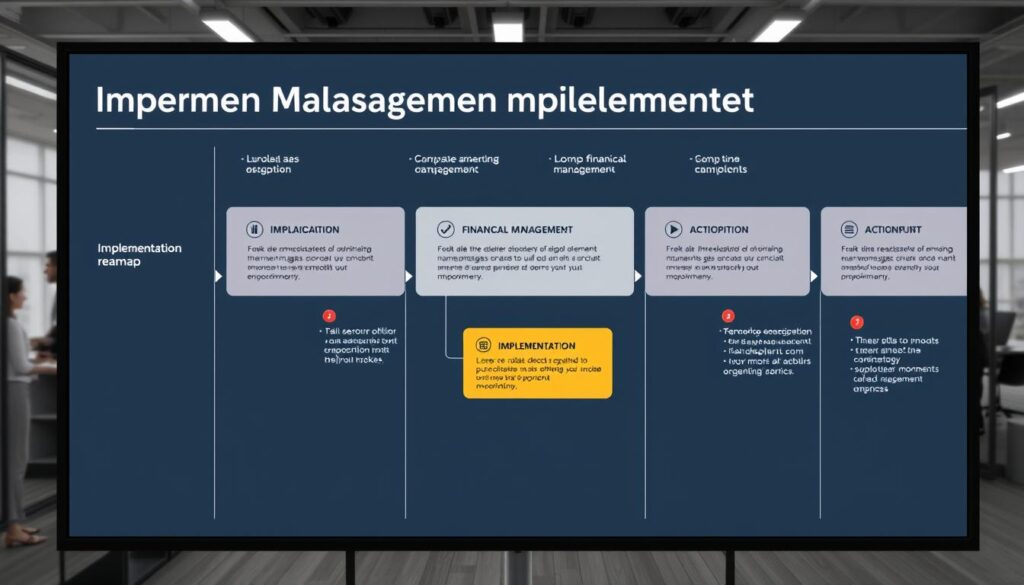
Phase 1: Assessment and Foundation (Weeks 1-4)
- Conduct Financial Health CheckEvaluate your current financial management practices and identify strengths and weaknesses:
- Review existing financial statements and reports
- Assess accuracy and timeliness of financial information
- Identify gaps in financial processes and controls
- Benchmark key financial metrics against industry standards
- Establish Financial InfrastructureEnsure you have the necessary systems and tools in place:
- Select and implement appropriate accounting software
- Set up chart of accounts aligned with your business needs
- Establish separate business bank accounts if not already in place
- Implement basic financial controls and procedures
- Develop Financial GoalsCreate specific, measurable objectives for financial improvement:
- Define short-term (3-6 months) and long-term (1-3 years) financial goals
- Establish key performance indicators (KPIs) to track progress
- Align financial goals with overall business objectives
- Document goals and share with relevant team members
Phase 2: Process Optimization (Weeks 5-8)
- Streamline Financial WorkflowsImprove efficiency of core financial processes:
- Document current financial workflows (invoicing, payables, reporting)
- Identify bottlenecks and inefficiencies
- Redesign processes for greater efficiency and control
- Implement automation where appropriate
- Enhance Cash Flow ManagementImplement strategies to optimize cash position:
- Create 13-week cash flow forecast
- Review and optimize accounts receivable processes
- Evaluate and adjust accounts payable timing
- Establish cash reserve targets and funding plan
- Develop Budget and Forecasting SystemCreate framework for financial planning:
- Develop comprehensive budget aligned with business goals
- Implement regular budget vs. actual review process
- Create financial forecasting model with scenario capabilities
- Establish routine for updating forecasts based on actual results
Phase 3: Analysis and Strategy (Weeks 9-12)
- Implement Financial Analysis FrameworkDevelop systems for deeper financial insights:
- Identify key financial ratios and metrics for regular tracking
- Create financial dashboard for monitoring critical indicators
- Establish process for regular financial performance reviews
- Develop action protocols for addressing negative trends
- Optimize Tax StrategyEnsure tax efficiency while maintaining compliance:
- Review business structure for tax optimization
- Implement tax planning calendar with key deadlines
- Identify and document potential tax deductions
- Establish system for tax documentation and record-keeping
- Develop Risk Management PlanIdentify and mitigate financial risks:
- Conduct financial risk assessment
- Develop contingency plans for identified risks
- Review insurance coverage for adequacy
- Establish emergency fund with appropriate funding level
Phase 4: Integration and Refinement (Ongoing)
- Integrate Financial Management with Business StrategyAlign financial practices with overall business direction:
- Incorporate financial analysis into business decision-making
- Develop financial models for evaluating new opportunities
- Create financial metrics for strategic initiatives
- Align resource allocation with strategic priorities
- Establish Continuous Improvement SystemCreate framework for ongoing financial management enhancement:
- Schedule regular reviews of financial management practices
- Benchmark against industry best practices
- Solicit feedback from team members and advisors
- Implement incremental improvements based on lessons learned
- Develop Financial Leadership CapabilitiesEnhance financial management skills within the organization:
- Identify financial knowledge gaps among key team members
- Provide targeted financial training and resources
- Consider engaging financial advisors for specialized expertise
- Create culture of financial awareness throughout the organization
Implementation Tip: Don’t try to implement all financial management improvements simultaneously. Focus on addressing your most critical financial challenges first, then build on those successes. This phased approach prevents overwhelm and allows you to develop competence in one area before moving to the next. Remember that financial management improvement is a journey, not a destination—continuous refinement is key to long-term success.
Frequently Asked Questions About Business Finance Management
What are the most important financial statements for small businesses?
The three most critical financial statements for small businesses are:
- Income Statement (Profit & Loss) – Shows revenue, expenses, and profit over a specific period, helping you understand your business’s profitability.
- Balance Sheet – Provides a snapshot of your assets, liabilities, and equity at a specific point in time, showing your overall financial position.
- Cash Flow Statement – Tracks the movement of cash in and out of your business, helping you understand liquidity and cash management.
These statements work together to provide a comprehensive view of your business’s financial health. For small businesses, it’s advisable to review these statements monthly to identify trends and make timely adjustments to your financial strategy.
How much should I keep in my business emergency fund?
Most financial experts recommend that small businesses maintain an emergency fund covering 3-6 months of operating expenses. However, the optimal amount depends on several factors specific to your business:
- Business Volatility – Businesses with unpredictable revenue or seasonal fluctuations should aim for the higher end of the range (6+ months).
- Fixed Cost Structure – If your business has high fixed costs that can’t easily be reduced, a larger emergency fund is advisable.
- Industry Stability – Businesses in volatile industries should maintain larger reserves than those in stable sectors.
- Access to Capital – If you have limited access to additional funding sources, a larger emergency fund provides crucial protection.
Start by building a minimum 3-month reserve, then gradually increase it as your business stabilizes. Keep these funds in a liquid but interest-bearing account that’s separate from your operating accounts to prevent unintentional spending.
What’s the difference between cash flow and profit?
Cash flow and profit are distinct financial concepts that often cause confusion among small business owners:
Profit represents the financial gain after subtracting all expenses from revenue over a specific period. It’s calculated on an accrual basis, meaning revenue is recognized when earned (not necessarily when payment is received) and expenses when incurred (not necessarily when paid).
Cash flow represents the actual movement of money in and out of your business. It tracks when cash is received and when it’s disbursed, regardless of when the corresponding revenue was earned or expense incurred.
A business can be profitable on paper but still face cash flow problems if, for example, customers are slow to pay or if the business invests heavily in inventory or equipment. Conversely, a business might have positive cash flow temporarily even while operating at a loss, such as when receiving advance payments or loan proceeds.
Both metrics are crucial: profit indicates business viability over time, while cash flow determines day-to-day operational capability. Successful businesses manage both simultaneously.
How often should I review my business’s financial performance?
Financial review frequency should follow a multi-tiered approach to balance timely insights with strategic perspective:
- Daily – Check cash balances and critical operational metrics
- Weekly – Review cash flow, accounts receivable aging, and sales performance
- Monthly – Conduct comprehensive review of income statement, balance sheet, and budget vs. actual performance
- Quarterly – Perform deeper analysis of financial trends, ratios, and progress toward annual goals
- Annually – Complete thorough financial assessment, strategic planning, and goal setting
This tiered approach ensures you maintain day-to-day financial control while also stepping back periodically to assess broader patterns and strategic implications. For very small businesses, weekly and monthly reviews may be combined, but the principle of regular monitoring remains essential.
Consider scheduling these reviews on your calendar as recurring appointments to ensure they become a consistent practice. Many successful business owners dedicate specific days each month for financial review, treating these sessions as non-negotiable commitments.
Should I hire a bookkeeper or accountant for my small business?
Whether to hire financial professionals depends on your business complexity, your financial expertise, and available time. Consider this framework:
Bookkeeper – Handles day-to-day transaction recording, reconciliations, and basic financial reports. Consider hiring a part-time bookkeeper when:
- You have more than 100 monthly transactions
- You’re spending more than 5 hours weekly on bookkeeping tasks
- You’re falling behind on financial record-keeping
- Basic bookkeeping tasks are diverting you from revenue-generating activities
Accountant – Provides higher-level financial analysis, tax planning, and strategic guidance. Consider engaging an accountant when:
- You need help with tax planning and preparation
- Your business structure or tax situation is complex
- You require financial analysis beyond basic reports
- You need assistance with financial forecasting and planning
- You’re seeking funding or considering major business changes
Many small businesses start with DIY bookkeeping using accounting software, then hire a part-time bookkeeper as they grow, while engaging an accountant quarterly or annually for tax planning and financial review. This tiered approach balances cost with financial management needs.
What financial metrics should I track for my small business?
While specific metrics vary by industry, these core financial metrics are valuable for most small businesses:
Profitability Metrics:
- Gross Profit Margin – (Revenue – COGS) ÷ Revenue
- Net Profit Margin – Net Income ÷ Revenue
- Return on Investment (ROI) – Net Profit ÷ Investment
Liquidity Metrics:
- Current Ratio – Current Assets ÷ Current Liabilities
- Quick Ratio – (Current Assets – Inventory) ÷ Current Liabilities
- Days Sales Outstanding – (Accounts Receivable ÷ Annual Revenue) × 365
Operational Metrics:
- Revenue Growth Rate – (Current Period Revenue – Prior Period Revenue) ÷ Prior Period Revenue
- Customer Acquisition Cost – Marketing & Sales Expenses ÷ Number of New Customers
- Average Transaction Value – Total Revenue ÷ Number of Sales
Cash Flow Metrics:
- Operating Cash Flow – Cash generated from core business operations
- Cash Conversion Cycle – Days Inventory Outstanding + Days Sales Outstanding – Days Payables Outstanding
- Burn Rate – How quickly you’re spending available cash
Track these metrics consistently over time to identify trends and make data-driven decisions. Consider creating a dashboard that displays these key metrics for easy monitoring.
How can I improve my business’s cash flow?
Improving cash flow requires a multi-faceted approach addressing both cash inflows and outflows:
Accelerate Cash Inflows:
- Invoice promptly – Send invoices immediately after delivering products or services
- Offer early payment incentives – Consider 2-3% discounts for payments within 10 days
- Streamline payment processes – Accept electronic payments and credit cards
- Implement deposits or milestone payments for large projects
- Follow up proactively on overdue accounts with a systematic collection process
Manage Cash Outflows:
- Negotiate favorable payment terms with suppliers (Net-30 or longer)
- Time major payments to align with cash inflow cycles
- Review and eliminate unnecessary subscriptions and services
- Consider leasing equipment instead of purchasing outright
- Maintain optimal inventory levels to avoid tying up cash
Strategic Approaches:
- Develop and regularly update a rolling 13-week cash flow forecast
- Establish a cash reserve to handle fluctuations
- Consider a business line of credit as a backup funding source
- Review pricing strategy to ensure adequate margins
- Focus on high-margin products or services that generate better cash flow
Implement these strategies systematically rather than as one-time fixes. Sustainable cash flow improvement requires consistent attention and process refinement.
What’s the best way to finance business growth?
The optimal financing approach depends on your business type, growth stage, and specific needs. Consider these common financing options with their respective advantages:
Self-Funding/Bootstrapping:
- Best for: Early-stage businesses with manageable growth rates
- Advantages: Maintains complete control, no debt obligations, forces disciplined growth
- Considerations: May limit growth rate, requires sufficient profit margins
Debt Financing:
- Best for: Established businesses with stable cash flow and tangible assets
- Options: Term loans, SBA loans, lines of credit, equipment financing
- Advantages: Maintains ownership, potential tax benefits from interest deductions
- Considerations: Requires repayment regardless of business performance, may require collateral
Equity Financing:
- Best for: High-growth businesses needing substantial capital
- Options: Angel investors, venture capital, private equity
- Advantages: No repayment obligation, potential strategic guidance from investors
- Considerations: Dilutes ownership, may influence business decisions
Alternative Financing:
- Best for: Businesses with specific needs or unable to access traditional financing
- Options: Revenue-based financing, invoice factoring, merchant cash advances
- Advantages: Often faster approval, flexible requirements
- Considerations: Typically higher costs than traditional financing
Many successful businesses use a strategic combination of these approaches at different growth stages. The best financing strategy aligns with your growth rate, risk tolerance, and long-term ownership goals.
How do I determine the right pricing for my products or services?
Effective pricing requires balancing multiple factors to find the optimal price point that maximizes profitability while remaining competitive. Consider these approaches:
Cost-Based Pricing:
- Calculate all direct costs associated with your product/service
- Add indirect costs (overhead) allocated appropriately
- Apply your target profit margin (industry-specific, typically 10-40%)
- Formula: Price = (Direct Costs + Indirect Costs) ÷ (1 – Desired Profit Margin)
Value-Based Pricing:
- Determine the tangible and intangible value your offering provides to customers
- Quantify the problem your product/service solves (time saved, revenue increased, etc.)
- Price based on a portion of that value delivered rather than your costs
- Requires deep understanding of customer needs and competitive alternatives
Market-Based Pricing:
- Research competitor pricing for similar offerings
- Position your price based on your competitive advantages/disadvantages
- Consider your brand positioning (premium, mid-market, value)
- Adjust based on market conditions and competitive responses
Practical Approach:
- Start with cost-based calculation to establish your price floor
- Research market pricing to understand competitive landscape
- Consider the unique value you provide to determine premium potential
- Test different price points with small customer segments if possible
- Regularly review and adjust pricing based on performance data
Remember that pricing is not static—it should evolve with your costs, market conditions, and business strategy. Many successful businesses implement regular pricing reviews as part of their financial management process.
What tax deductions are commonly overlooked by small businesses?
Small businesses often miss valuable tax deductions that could significantly reduce their tax liability. Here are frequently overlooked deductions to discuss with your tax professional:
Home Office Deduction:
- Available if you regularly and exclusively use part of your home for business
- Can deduct a percentage of rent/mortgage, utilities, insurance, and maintenance
- Simplified option allows standard deduction based on square footage
Vehicle Expenses:
- Business mileage (using standard mileage rate or actual expense method)
- Parking fees and tolls for business trips
- Vehicle maintenance and repairs (if using actual expense method)
Health Insurance Premiums:
- Self-employed individuals can deduct premiums for themselves and family
- Small businesses may qualify for the Small Business Health Care Tax Credit
Retirement Plan Contributions:
- Contributions to SEP IRAs, SIMPLE IRAs, or Solo 401(k)s
- Both employer contributions and administrative costs may be deductible
Professional Development:
- Business-related education and training
- Professional subscriptions and books
- Conference and seminar expenses
Banking and Credit Card Fees:
- Business account maintenance fees
- Merchant processing fees
- Interest on business loans and credit cards
Insurance Premiums:
- Business liability insurance
- Professional liability/E&O insurance
- Commercial property insurance
Maintain thorough documentation for all potential deductions, including receipts, invoices, and records showing the business purpose. Consult with a tax professional to ensure you’re claiming all eligible deductions while remaining compliant with tax regulations.
Conclusion: Building a Stronger Financial Foundation for Your Small Business
Implementing effective business finance management strategies is essential for the long-term success and sustainability of your small business. By adopting the approaches outlined in this guide—from creating comprehensive financial plans and budgets to implementing robust tracking systems and risk management practices—you can build a stronger financial foundation that supports your business goals.
Remember that financial management is not a one-time effort but an ongoing process that requires consistent attention and refinement. Start by addressing your most pressing financial challenges, then gradually implement additional strategies as your capabilities grow. Leverage the templates, tools, and step-by-step guidance provided to streamline implementation and achieve results more quickly.
With sound financial management practices in place, you’ll be better equipped to make informed decisions, navigate challenges, seize opportunities, and ultimately build a more profitable and resilient business. The time and effort invested in improving your financial management approach will yield returns far beyond the bottom line—providing peace of mind, strategic clarity, and a solid foundation for sustainable growth.
Take Your Business Finances to the Next Level
Ready to implement these strategies in your business? Download our comprehensive Financial Management Implementation Kit, complete with templates, checklists, and step-by-step guides tailored for small business owners.